
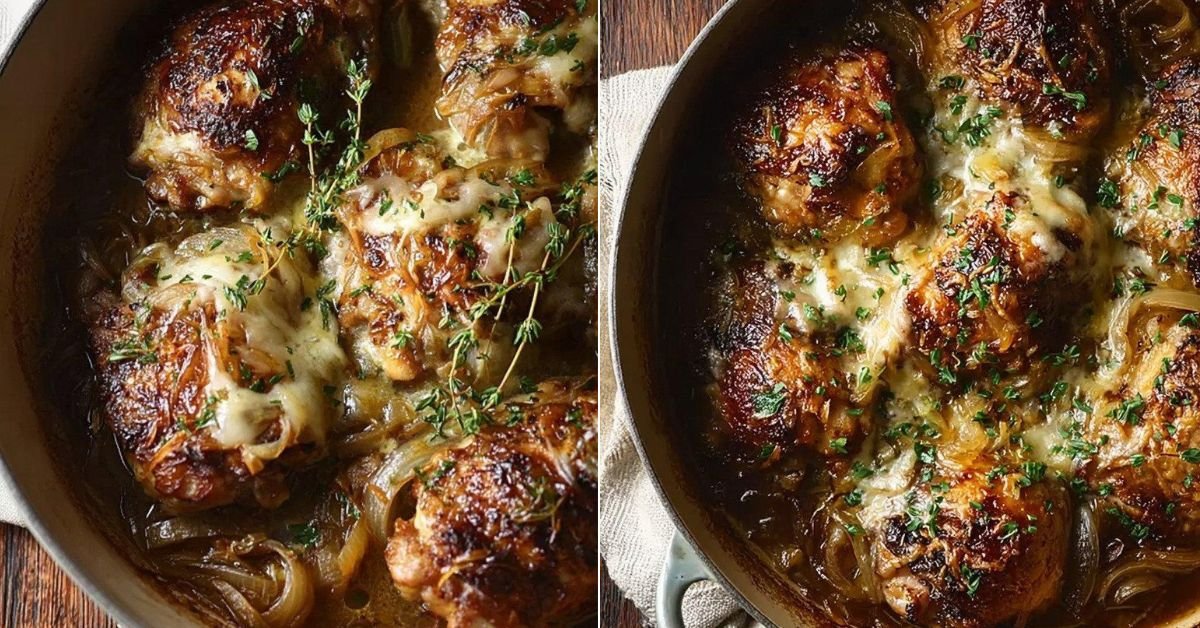
1) What I Learned Testing French Onion Chicken Thighs
Dry chicken with pale onions is the kind of dinner disappointment that makes you stare at the skillet and wonder what went wrong. I’m Denise, and I learned that french onion chicken thighs only work when the onions are given time to become sweet, dark, and silky before the chicken finishes in the oven. My first rushed batch tasted sharp and watery, so I tested the heat, the sear, and the wine reduction until the sauce finally clung to the spoon. Now this french onion chicken feels like the cozy chicken thighs dinner I want on a calm Sunday night.
Table of Contents
- 1) What I Learned Testing French Onion Chicken Thighs
- 2) Key Takeaways
- 3) Easy French Onion Chicken Thighs Recipe
- 4) Why Most French Onion Chicken Thighs Recipes Fail
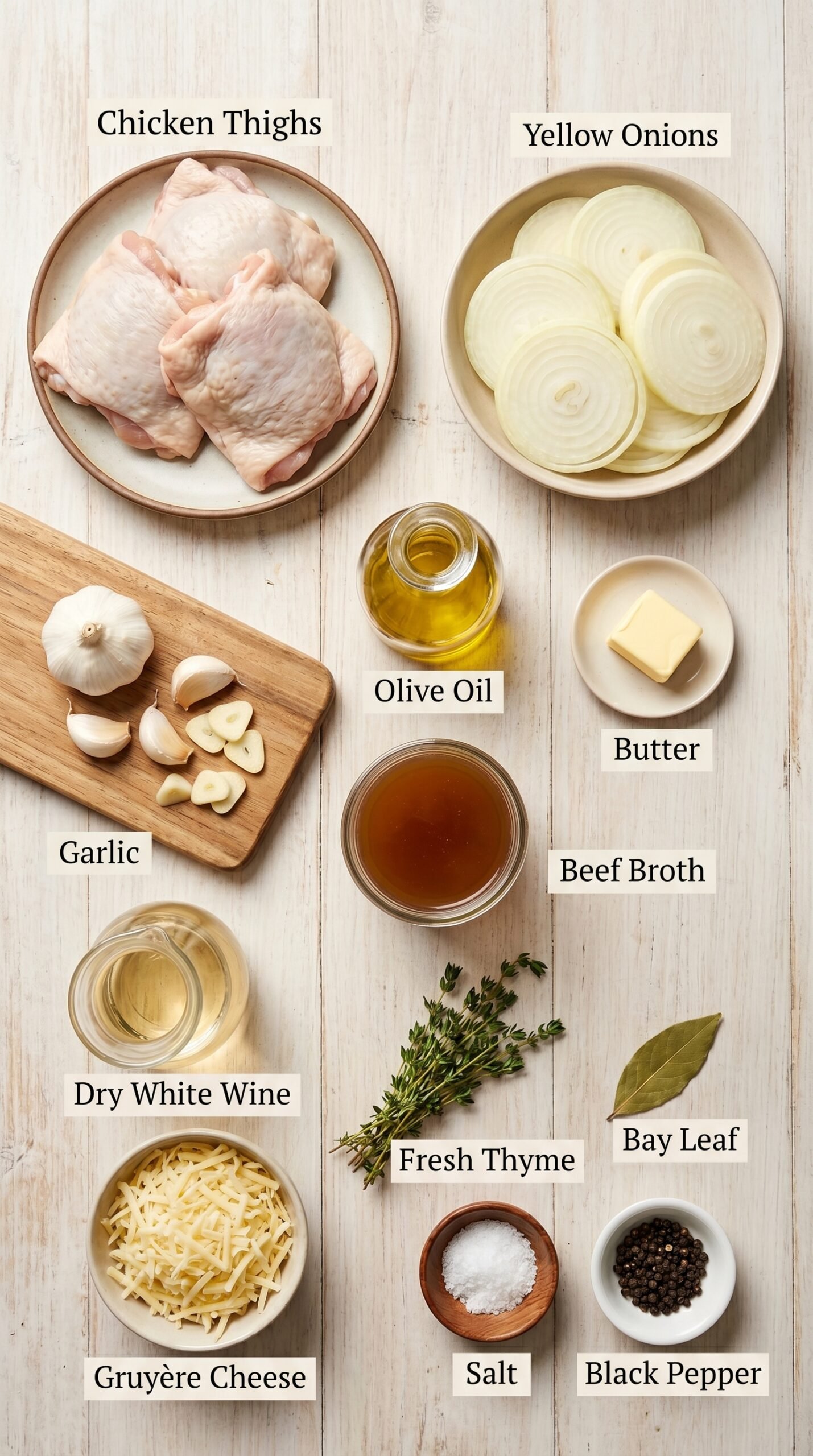
- 5) Ingredients for French Onion Chicken Thighs
- 6) How to Make French Onion Chicken Thighs
- 7) Recipe Card: French Onion Chicken Thighs
- 8) Tips for Making French Onion Chicken Thighs
- 9) Common Mistakes & Fixes
- 10) How to Tell French Onion Chicken Thighs Are Done
- 11) Professional Secrets Behind Better French Onion Chicken Thighs
- 12) Best Dishes or Pairings to Serve With French Onion Chicken Thighs
- 13) Making French Onion Chicken Thighs Ahead of Time
- 14) Storing Leftover French Onion Chicken Thighs
- 15) FAQ (Real Cooking Questions)
- 16) Save This French Onion Chicken Thighs Recipe
- 17) Conclusion
- 18) Nutrition
2) Key Takeaways
- The onions decide the flavor: Cook them slowly until golden and sweet, not just soft, or the sauce will taste flat and sharp.
- The chicken skin needs dryness: Patting bone-in, skin-on thighs dry before searing helps create crisp skin instead of a steamed surface.
- The pan matters: A heavy oven-safe skillet or Dutch oven holds heat well, making dutch oven chicken thighs easier to brown and finish evenly.
- The broiler is the final touch: Gruyère only needs a few watched minutes under the broiler to become melted, bubbly, and browned without drying the chicken.
3) Easy French Onion Chicken Thighs Recipe
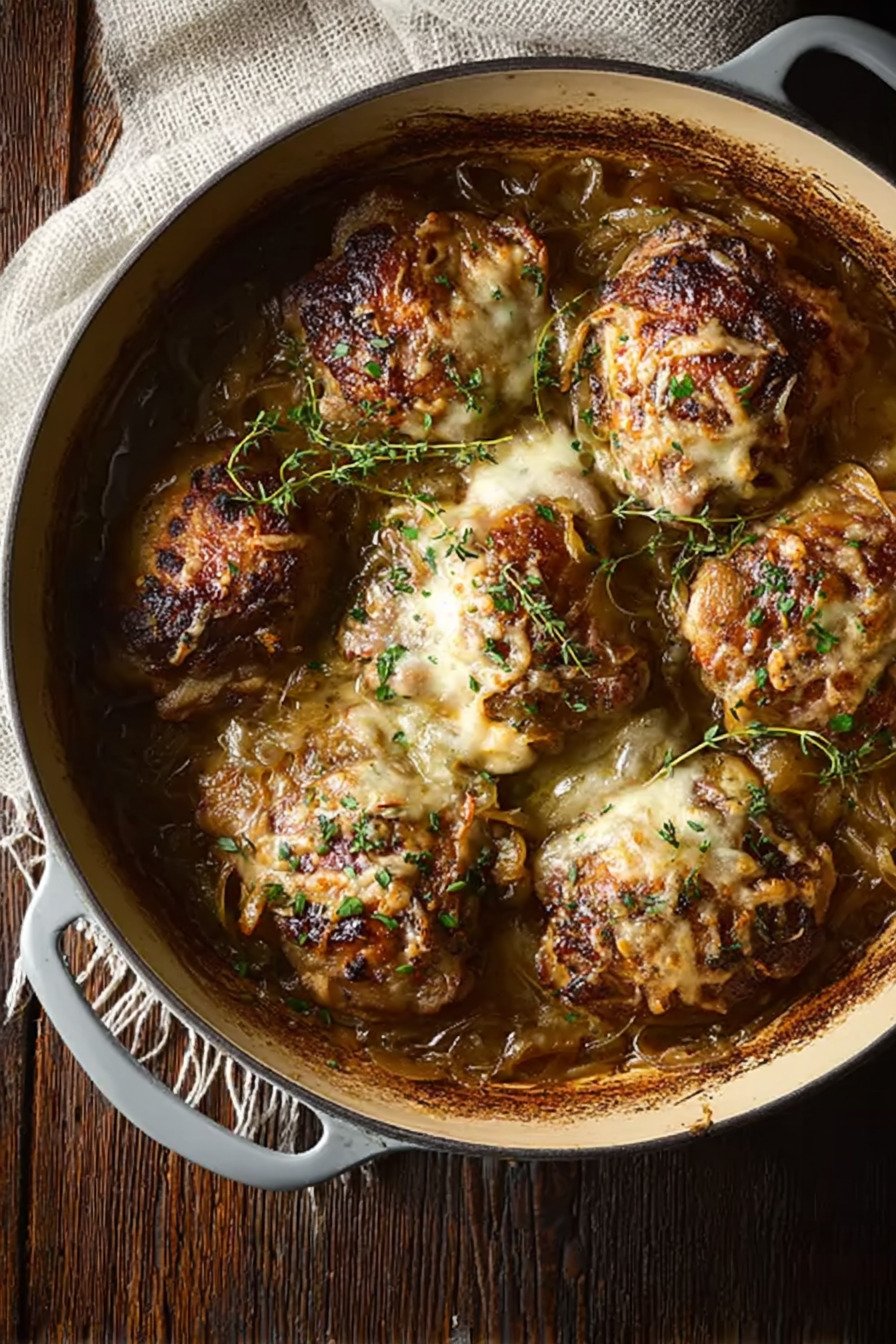
French onion chicken thighs borrow the best parts of French onion soup: deeply caramelized yellow onions, a savory broth base, thyme, wine, and a blanket of nutty Gruyère. The difference is that the chicken brings its own richness through browned skin and juicy dark meat. That means the recipe needs two types of patience. First, the onions need time to cook down until their moisture evaporates and their natural sugars concentrate. Second, the chicken needs to finish gently in the oven instead of being blasted over high stovetop heat until dry.
The method works because it builds flavor in layers. Searing the chicken first leaves browned bits in the pan. Those browned bits dissolve into the wine when you deglaze, giving the onion gravy a deeper taste. Beef broth adds savory body, thyme adds a woodsy aroma, and the bay leaf gives the sauce quiet background depth. When the chicken thighs in oven heat finish skin-side up, the meat cooks through while the sauce bubbles around it. The cheese goes on only at the end, so it melts beautifully instead of disappearing into the sauce.
4) Why Most French Onion Chicken Thighs Recipes Fail
Most french onion chicken thighs fail because the onions are rushed. Thinly sliced onions may look like a lot at first, but they need 30 to 40 minutes over medium-low heat to soften, shrink, and turn golden. If the heat is too high, the edges scorch before the centers become sweet. If the heat is too low and the pan stays wet, the onions steam rather than caramelize. The right sign is a silky mound of onions with a sweet aroma and deep golden color.
Another common failure is soggy chicken skin. Skin-on thighs must be patted completely dry before they touch the hot oil. Moisture on the surface turns to steam, and steam blocks browning. Crowding the skillet causes the same problem because too many thighs lower the pan temperature. If the skin sticks, it usually needs another minute; properly browned chicken releases more easily from the pan.
The sauce can also taste thin when the wine is not reduced. After adding dry white wine, scrape up the browned bits and let the wine reduce by about half. This cooks off the raw edge and concentrates the pan flavor. Beef broth should simmer briefly with the bay leaf before the chicken returns, so the sauce tastes rounded instead of separate.
Dry meat happens when chicken thighs are cooked by guesswork. Bone-in thighs are forgiving, but they still need a doneness check. An instant-read thermometer should register 165°F at the thickest part. After baking, let the dish rest for about 5 minutes. That short pause helps the juices settle and gives the onion gravy a slightly thicker, spoonable texture.
5) Ingredients for French Onion Chicken Thighs
Bone-in, skin-on chicken thighs: These are the backbone of the recipe because the skin browns, the bone helps protect moisture, and the dark meat stays juicy during oven cooking. Boneless thighs cook faster, but they will not give the same crisp-skin result or deep pan flavor.
Yellow onions: Yellow onions are the best choice when you want that classic French onion sweetness. Add them after searing the chicken, when the pan already has flavorful browned bits. If you swap in red onions, the flavor becomes sharper and slightly fruitier.
Garlic: Garlic goes in after the onions caramelize because minced garlic burns quickly. One minute is enough to make it fragrant. If it goes in too early, it can turn bitter and distract from the mellow onion base.
Olive oil: Olive oil helps sear the chicken skin before the lower, slower onion stage begins. Add it before the chicken, not during the onion step. If you use too little oil, the skin can patchily brown or stick.
Butter: Butter enriches the onions and rounds out the sauce. It goes in after the chicken is removed, so it does not burn during the high-heat sear. Replacing it with more oil works, but the onion gravy will taste less rounded.
Beef broth: Beef broth gives the sauce a deeper French onion character than chicken broth. Add it after the wine reduces so the sauce does not taste diluted. Low-sodium broth gives you more control over final seasoning.
Dry white wine: Wine loosens the browned bits from the pan and adds acidity that balances the rich chicken and cheese. Sauvignon Blanc works well because it is crisp, not sweet. If you avoid wine, use extra broth with a small splash of acidity in the notes or serving sauce, but expect a softer flavor.
Fresh thyme: Thyme gives the onion gravy an earthy, savory aroma. Add it with the garlic so it blooms briefly before the liquid goes in. Dried thyme can be stronger, so use a lighter hand if substituting.
Bay leaf: The bay leaf simmers in the broth to add subtle background flavor. Remove it before serving because it is not meant to be eaten. Skipping it will not ruin the dish, but the sauce may taste less layered.
Gruyère cheese: Gruyère melts smoothly and brings a nutty, slightly salty finish. Add it only after the chicken is cooked through, then broil briefly. A milder melting cheese works in a pinch, but Gruyère gives the most classic French onion flavor.
Salt and black pepper: Season the chicken before searing and adjust the onion gravy after it simmers. Salt helps onions release moisture, while black pepper keeps the richness from tasting heavy. Under-seasoning is one of the fastest ways to make french onion chicken taste flat.
- Bone-in thighs vs boneless thighs: Bone-in thighs take longer, but they stay juicier and create a deeper chicken flavor in the pan sauce.
- Warm caramelized onions vs rushed onions: Slow onions taste sweet and savory; rushed onions taste sharp, pale, and watery.
- Gruyère vs mozzarella: Gruyère adds nuttiness and browns well, while mozzarella melts but tastes much milder.
- Skillet vs Dutch oven: A heavy skillet gives more surface area for browning, while a Dutch oven holds heat steadily and works well for dutch oven chicken thighs.
6) How to Make French Onion Chicken Thighs
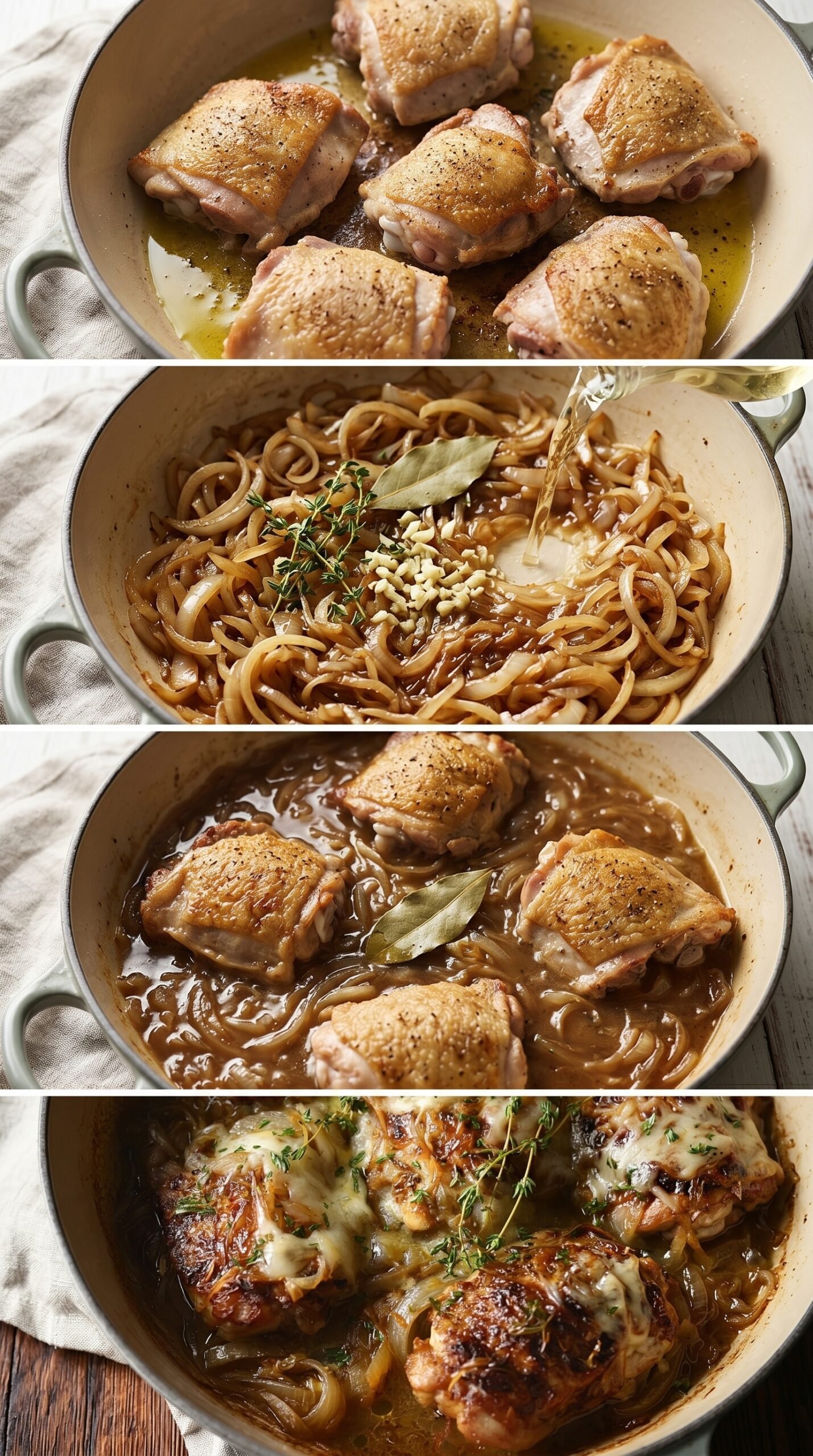
Step 1: Start with a hot oven at 375°F and dry chicken thighs. Blot the skin thoroughly with paper towels, then season both sides with salt and black pepper. The skin should feel dry to the touch before it goes into the pan.
Step 2: Heat olive oil in a large oven-safe skillet over medium-high heat. Add the chicken skin-side down without crowding. Let it sear for 6 to 7 minutes until the skin is golden and releases easily, then flip for another 3 minutes. If the skin resists, wait; forcing it can tear the browned layer.
Step 3: Lower the heat and add butter, onions, and a pinch of salt. Stir occasionally for 30 to 40 minutes. At first, the onions will look bulky and wet. As they cook, they should collapse, deepen in color, and smell sweet instead of sharp.
Step 4: Add garlic and thyme for just one minute, then pour in the dry white wine. Scrape the bottom of the pan to pull up the browned bits. Let the wine reduce by half so the sauce tastes concentrated rather than raw.
Step 5: Stir in beef broth and add the bay leaf. Simmer briefly, taste, and adjust the seasoning. Nestle the chicken back into the onions skin-side up, then bake until the thickest part reaches 165°F.
Step 6: Remove the skillet from the oven, sprinkle Gruyère over the chicken, and broil for 2 to 3 minutes. Watch closely because cheese can go from browned to burnt fast. Rest for 5 minutes, discard the bay leaf, and serve with plenty of onion gravy.
7) Recipe Card: French Onion Chicken Thighs
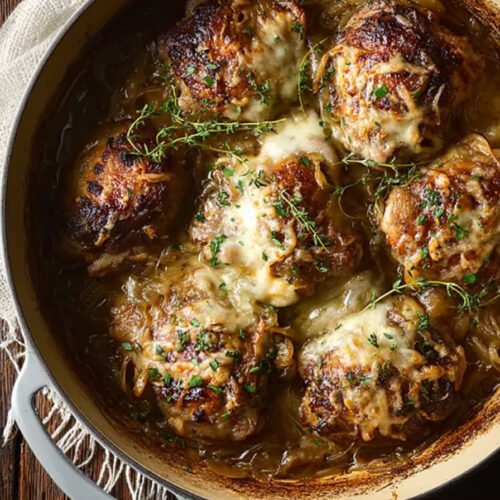
French Onion Chicken Thighs with Gruyère and Caramelized Onions
Ingredients
- 1.5 lbs bone-in, skin-on chicken thighs, patted very dry so the skin browns instead of steaming
- 3 large yellow onions, thinly sliced for even caramelizing
- 4 cloves garlic, minced so it melts quickly into the onion base
- 2 tbsp olive oil, for searing the chicken skin
- 1 tbsp butter, to enrich the onions as they caramelize
- 1 cup beef broth, for a savory French onion-style pan sauce
- 0.5 cup dry white wine, like Sauvignon Blanc, to deglaze the browned bits
- 1 tsp fresh thyme leaves, for an earthy aroma
- 1 bay leaf, removed before serving
- 1 cup shredded Gruyère cheese, for a nutty melted topping
- Salt and black pepper, to taste, added in layers for better seasoning
Instructions
- Preheat the oven to 375°F (190°C). Pat the chicken thighs completely dry with paper towels, then season both sides generously with salt and black pepper. Dry skin is the first checkpoint for crisp, golden browning.
- Heat the olive oil in a large oven-safe skillet or Dutch oven over medium-high heat until shimmering. Add the chicken thighs skin-side down without crowding the pan, working in batches if needed. Sear for 6–7 minutes, until the skin is deep golden and releases easily, then flip and cook for 3 minutes more. Transfer the chicken to a plate.
- Reduce the heat to medium-low and add the butter to the same skillet. Add the sliced onions with a big pinch of salt and cook for 30–40 minutes, stirring occasionally, until they soften, shrink, and turn deeply golden. Do not rush this step; pale onions will taste sharp instead of sweet.
- Add the minced garlic and fresh thyme to the caramelized onions. Cook for 1 minute, just until fragrant. Pour in the white wine and scrape the bottom of the pan to loosen the browned bits. Simmer for 3–4 minutes, until the wine reduces by about half.
- Stir in the beef broth and add the bay leaf. Simmer the onion mixture for about 5 minutes so the sauce tastes savory and cohesive. Taste carefully and adjust with salt and black pepper as needed.
- Nestle the seared chicken thighs back into the skillet, skin-side up, settling them into the onion gravy without covering the crisp skin. Transfer the skillet to the oven and bake for 20–25 minutes, until the chicken reaches 165°F (74°C) at the thickest part on an instant-read thermometer.
- Remove the skillet from the oven and carefully switch the oven to broil. Sprinkle the shredded Gruyère evenly over the chicken thighs. Return the skillet to the broiler for 2–3 minutes, watching closely, until the cheese melts, bubbles, and develops browned spots.
- Let the dish rest for about 5 minutes before serving so the juices settle and the sauce thickens slightly. Discard the bay leaf before plating.
8) Tips for Making French Onion Chicken Thighs
The best tip for french onion chicken thighs is to treat the onion stage like the main event, not a pause between chicken steps. Onions contain a lot of water, so they must first release moisture before they can brown. Stir them often enough to prevent scorching, but not so often that they never develop color against the pan. If you notice dark patches forming too quickly, lower the heat rather than adding a lot of liquid.
Use a pan that gives the chicken enough room. If the thighs are crowded, the oil temperature drops and the skin steams. Two batches are better than one crowded batch. When you return the chicken to the skillet, keep the skin above the onion gravy. The sauce should surround the meat, not cover the browned skin. That small placement detail helps preserve the contrast between crisp top, juicy meat, and silky onions.
Season in layers. Salt on the chicken improves the first bite, a pinch of salt on the onions helps draw out moisture, and a final taste after the broth simmers keeps the sauce balanced. Gruyère brings salt too, so do not overcorrect before the cheese goes on. For a richer french onion chicken recipe, let the sauce simmer until it coats the spoon lightly before baking.
9) Common Mistakes & Fixes
Problem: The onions taste sharp. Cause: They were cooked too quickly or not long enough. Fix: Keep the heat at medium-low and cook until the onions are soft, reduced, and golden. Their aroma should be sweet and savory before you add garlic.
Problem: The chicken skin turns soggy. Cause: The thighs were wet, crowded, or submerged in sauce after searing. Fix: Pat the chicken dry, sear in batches, and return it to the pan skin-side up with the onion gravy underneath.
Problem: The sauce tastes thin. Cause: The wine was not reduced enough or the broth was added too soon. Fix: Deglaze thoroughly, scrape the pan, and let the wine reduce by half before adding beef broth.
Problem: The cheese burns before it melts evenly. Cause: The skillet was too close to the broiler or left unattended. Fix: Broil briefly and watch constantly. Pull the skillet when the cheese is bubbly with browned spots.
Problem: The chicken is dry near the bone. Cause: It baked too long or skipped the temperature check. Fix: Use an instant-read thermometer and remove the skillet when the thickest part reaches 165°F, then rest before serving.
10) How to Tell French Onion Chicken Thighs Are Done
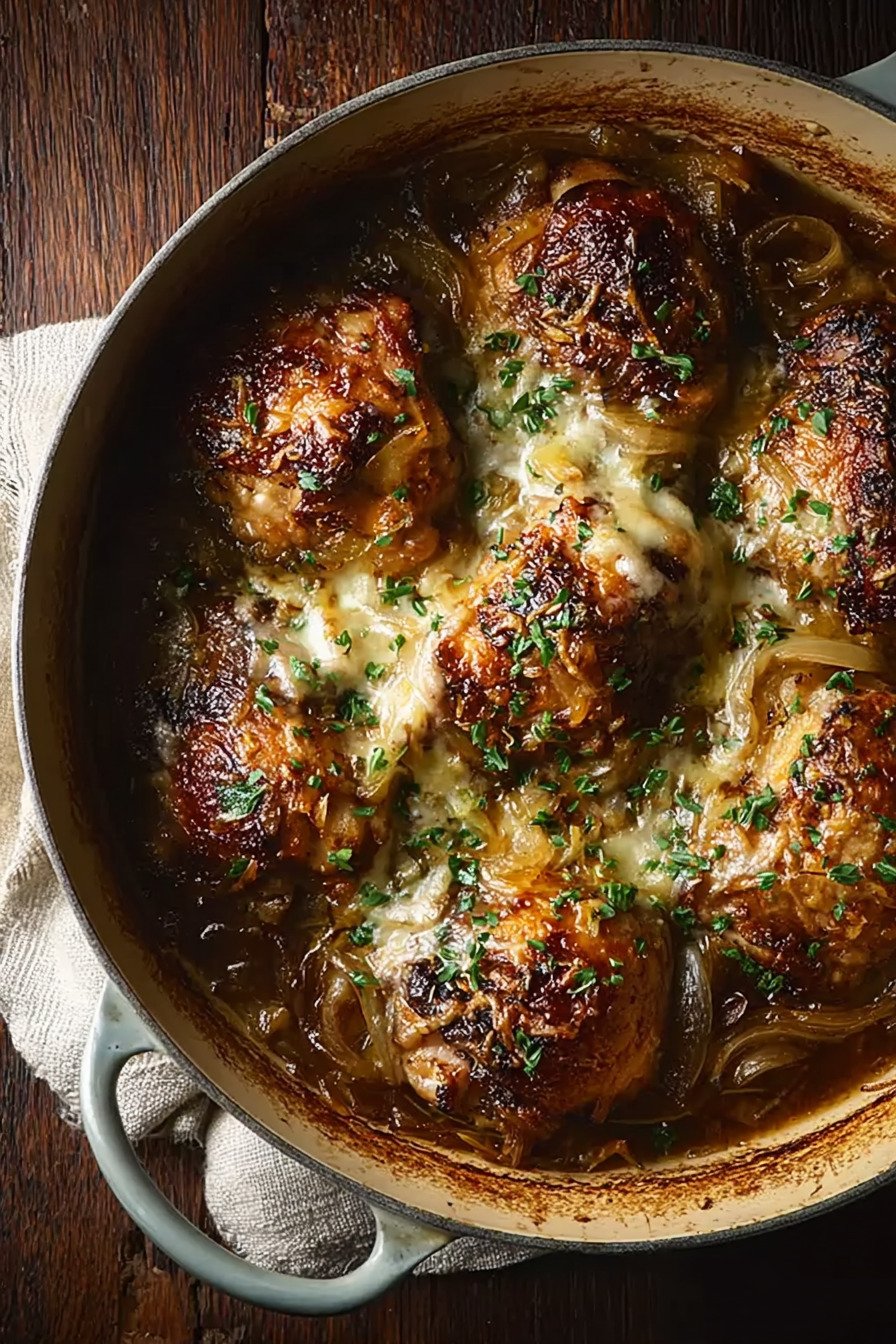
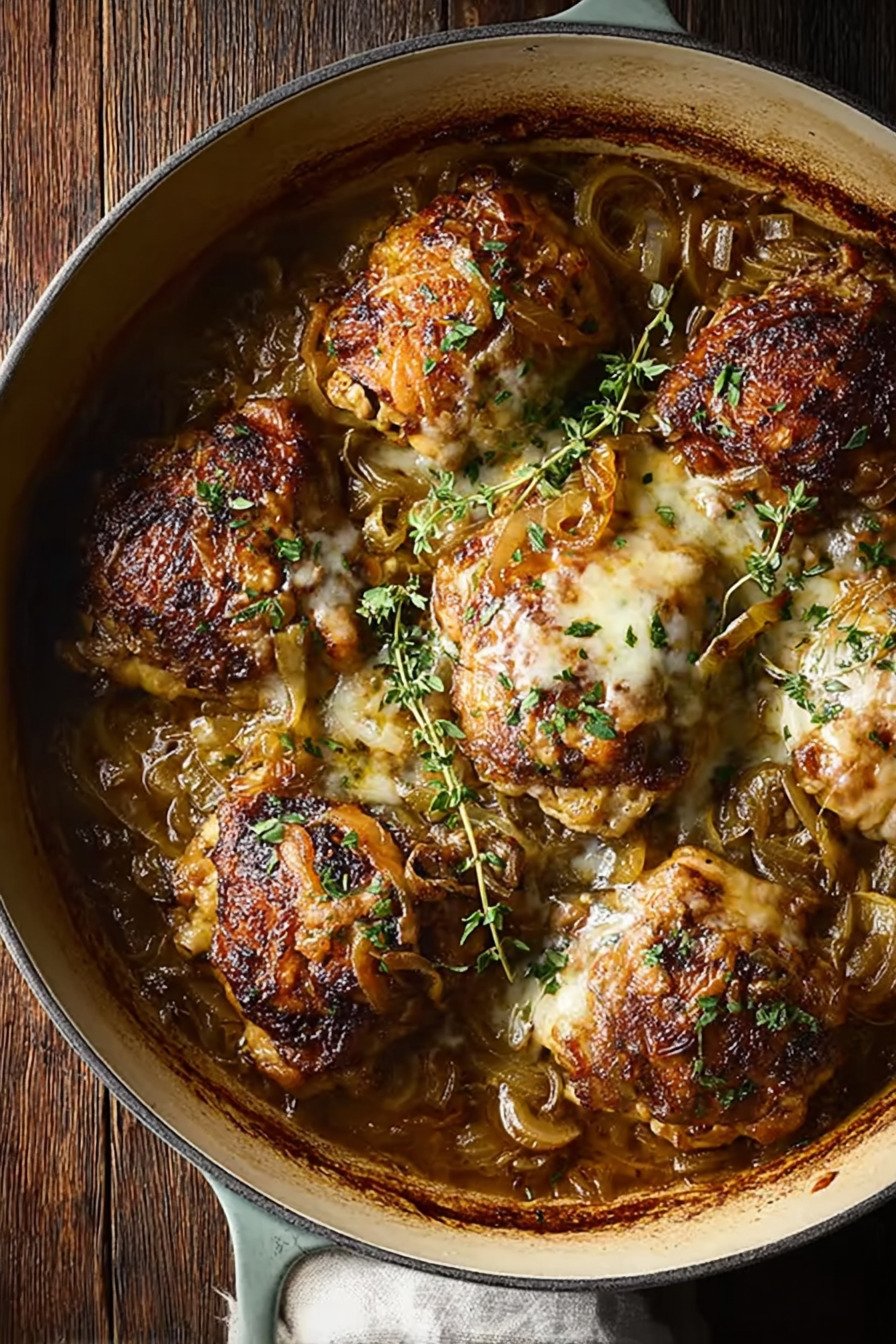
French onion chicken thighs are done when the skin is browned, the cheese is melted and spotted with color, and the meat reaches 165°F at the thickest part. The onions should look glossy and soft, not watery or pale. The sauce should bubble around the chicken and coat a spoon lightly, with no raw wine smell. When you cut near the bone, the meat should be juicy and opaque, not rubbery or pink. The aroma should be savory, sweet, and slightly nutty from the Gruyère. If the sauce pools like broth, simmer it briefly before serving. If the skin looks limp, it may have been covered by too much onion gravy during baking.
11) Professional Secrets Behind Better French Onion Chicken Thighs
Professional-style flavor comes from managing fond, moisture, and timing. Fond is the browned layer left in the pan after searing chicken. It looks like stuck-on bits, but it is concentrated flavor. Deglazing with wine dissolves it into the onions and gives the sauce a deeper taste than broth alone could provide. Do not wipe the skillet after searing unless something has burned black.
The second secret is letting ingredients enter the pan when they can do their best work. Garlic goes in after caramelizing because it burns quickly. Wine goes in before broth because it needs to reduce. Cheese goes on after the chicken is fully cooked because broiling is for browning, not for cooking the meat through. These small timing choices are what make onion chicken thighs taste layered instead of one-note.
The third secret is contrast. A good chicken thighs dinner should not be soft everywhere. This dish works because the skin is crisp, the meat is juicy, the onions are silky, and the cheese is bubbly. Protecting that contrast is why the chicken is baked skin-side up and why the broiler step stays short.
12) Best Dishes or Pairings to Serve With French Onion Chicken Thighs
French onion chicken thighs are rich, savory, and sauce-heavy, so the best pairings either catch the onion gravy or add freshness. Mashed potatoes are a natural match because they soak up the broth and melted cheese without competing with the onions. Buttered egg noodles also work well, especially when you want a cozy skillet dinner that feels hearty but not complicated.
For a lighter plate, serve the chicken with roasted green beans, a crisp green salad, steamed asparagus, or lemony broccoli. The fresh bite balances the Gruyère and beef broth. Crusty bread is also useful because the sauce is too good to leave in the pan. If you want a more complete comfort meal, pair the chicken with rice pilaf or roasted root vegetables.
13) Making French Onion Chicken Thighs Ahead of Time
The most make-ahead friendly part of this recipe is the onions. You can caramelize them earlier in the day, cool them, and refrigerate them until dinner. This saves the longest hands-on stretch and makes the final cooking feel much easier. You can also sear the chicken ahead, but store it separately from the onions so the skin does not soften too much.
For the best texture, assemble and bake shortly before serving. Add the Gruyère only at the end, right before broiling. If the onion mixture has thickened in the refrigerator, warm it gently with a splash of broth before nestling the chicken back in. This keeps the sauce loose enough to bubble around the chicken thighs in oven heat without drying out.
14) Storing Leftover French Onion Chicken Thighs
Store leftover french onion chicken thighs in an airtight container in the refrigerator for up to 3 days. The sauce will thicken as it chills, and the cheese will firm up. Reheat gently in a covered oven-safe dish at 325°F until warmed through, adding a small splash of broth if the onions look too thick. For better skin texture, uncover near the end of reheating.
Freezing is possible, but the cheese and onions may change texture after thawing. If you plan to freeze leftovers, remove any loose cheese topping you can and freeze the chicken with the onion sauce for up to 2 months. Thaw overnight in the refrigerator and reheat slowly. Leftover onion gravy is excellent spooned over toast, rice, noodles, or roasted vegetables.
15) FAQ (Real Cooking Questions)
Can I make french onion chicken thighs without wine? Yes. Replace the wine with extra broth, but remember that wine adds acidity and helps balance the richness. If the finished sauce tastes too heavy, add a small splash of vinegar or lemon juice off the heat.
Can I use boneless chicken thighs? You can, but reduce the oven time and check early because boneless thighs cook faster. Bone-in thighs give better structure, deeper flavor, and a juicier result for this style of french onion chicken.
What pan should I use? A large oven-safe skillet works well because it gives the onions room to caramelize. A Dutch oven also works, especially for dutch oven chicken thighs, but avoid crowding the chicken during searing.
Why are my onions not browning? The heat may be too low, the pan may be crowded, or the onions may still be releasing moisture. Keep cooking patiently and stir occasionally. Browning starts after much of the water has cooked off.
Can I use another cheese instead of Gruyère? Yes, but choose a good melting cheese with some flavor. Swiss-style cheese is closest. Mozzarella melts well but tastes milder, so the final dish will be less nutty.
16) Save This French Onion Chicken Thighs Recipe
If this French Onion Chicken Thighs recipe helped you solve dry chicken, sharp onions, or flat sauce, save it for your next cozy dinner. The key reminder is: sear the chicken first, caramelize the onions slowly, and broil the Gruyère only after the thighs are fully cooked.

17) Conclusion
French onion chicken thighs are not difficult, but they do ask you to respect the order of flavor. Dry the chicken before searing. Give the onions time to become sweet. Reduce the wine before adding broth. Keep the skin above the sauce. Finish with Gruyère only when the chicken is already juicy and done. Once you understand those checkpoints, the recipe stops feeling like guesswork. You get crisp skin, tender meat, silky onions, and a bubbling cheese top that tastes intentional from the first bite to the last spoonful of gravy.
18) Nutrition
Serving Size 1 portion Calories 545 Sugar 7 g Sodium 690 mg Fat 36 g Saturated Fat 13 g Carbohydrates 14 g Fiber 2 g Protein 39 g Cholesterol 165 mg





Leave a Comment