
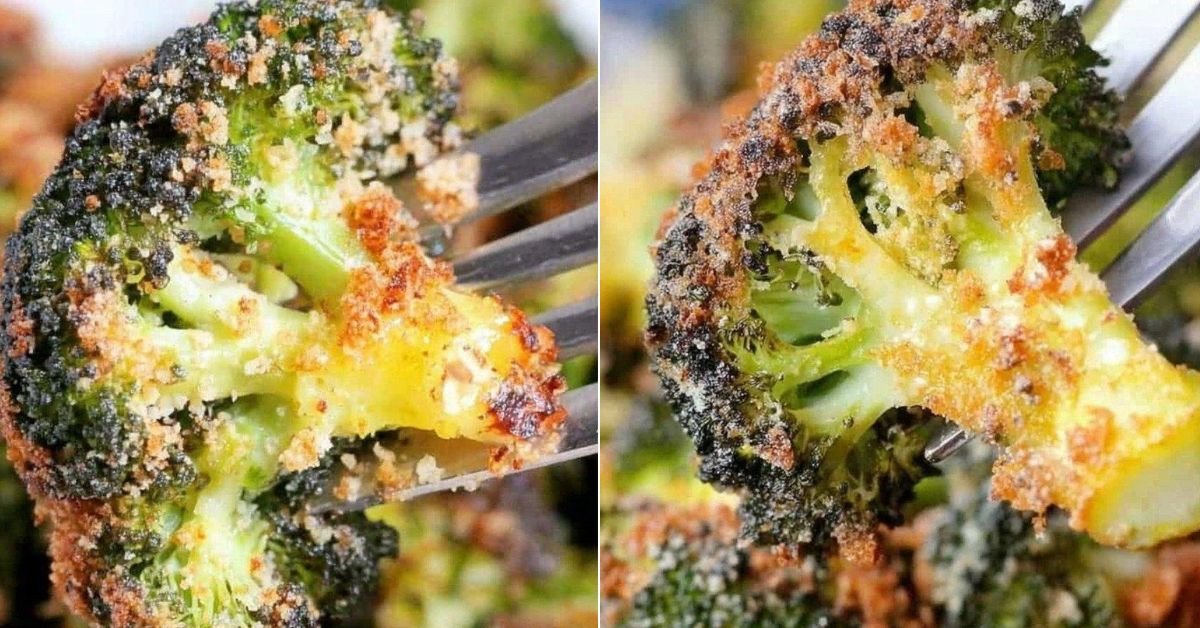
What I Learned Testing Parmesan Roasted Broccoli
Soggy roasted broccoli is usually a pan problem, not a broccoli problem. I’m Denise, and after a few batches that came out steamed, pale, and not very exciting, I started testing heat, spacing, and topping coverage until the answer clicked: high oven heat, dry florets, and enough room on the pan. This parmesan roasted broccoli became the side dish I make when dinner needs something crisp-edged, garlicky, and comforting without feeling heavy. It is an easy roasted broccoli recipe that turns a basic vegetable into something I feel calm serving for Sunday dinner or a simple weeknight plate.
Table of Contents
- 1) What I Learned Testing Parmesan Roasted Broccoli
- 2) Key Takeaways
- 3) Easy Parmesan Roasted Broccoli Recipe
- 4) Why Most Parmesan Roasted Broccoli Recipes Fail
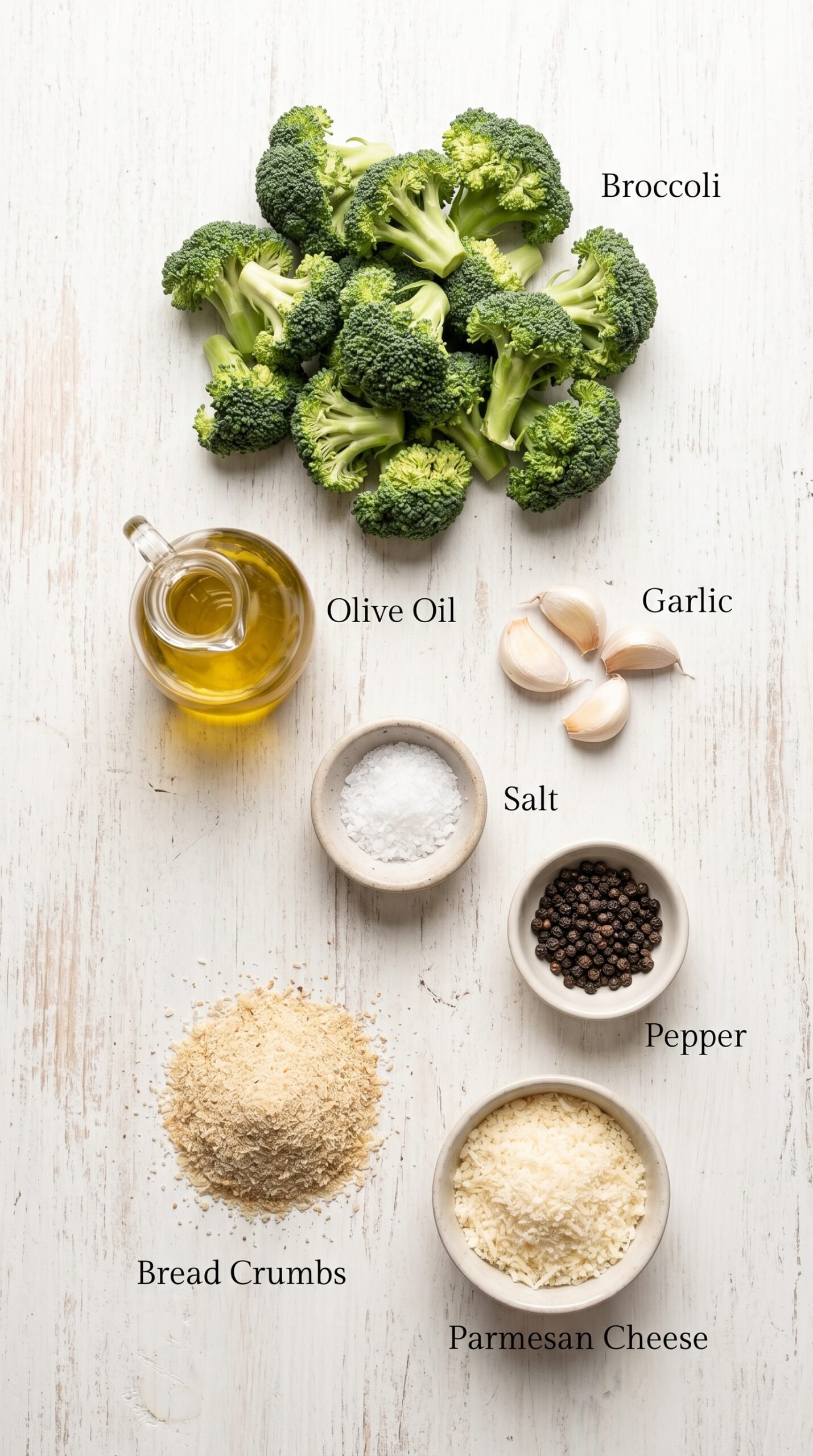
- 5) Ingredients for Parmesan Roasted Broccoli
- 6) How to Make Parmesan Roasted Broccoli
- 7) Recipe Card: Parmesan Roasted Broccoli Recipe
- 8) Tips for Making Parmesan Roasted Broccoli
- 9) Common Mistakes & Fixes
- 10) How to Tell Parmesan Roasted Broccoli Is Done
- 11) Professional Secrets Behind Better Parmesan Roasted Broccoli
- 12) Best Dishes or Pairings to Serve With Parmesan Roasted Broccoli
- 13) Making Parmesan Roasted Broccoli Ahead of Time
- 14) Storing Leftover Parmesan Roasted Broccoli
- 15) FAQ (Real Cooking Questions)
- 16) Save This Parmesan Roasted Broccoli Recipe
- 17) Conclusion
- 18) Nutrition
2) Key Takeaways
- Dry broccoli browns better: Moisture on the florets turns into steam, which softens the edges before they can roast.
- The top rack matters: Baking near the top of the oven helps the Parmesan and bread crumbs turn golden without overcooking the stems.
- Fresh grated Parmesan clings better: It melts into the crumb coating and gives this parmesan cheese broccoli dish a cleaner, saltier finish.
- Spacing prevents sogginess: A crowded pan traps moisture, while a single layer gives the broccoli crisp-tender edges and roasted flavor.
3) Easy Parmesan Roasted Broccoli Recipe
This easy roasted broccoli recipe works because it treats broccoli like a vegetable that needs heat and airflow, not just seasoning. Broccoli has tiny flower buds that catch oil, garlic, crumbs, and Parmesan beautifully, but those same spaces can also hold water. That is why drying and tossing well matter so much. When the florets hit a 425 degree oven in a single layer, the outer tips brown while the stems stay tender.
The flavor goal is simple: savory garlic, salty Parmesan, lightly toasted crumbs, and broccoli that tastes roasted instead of boiled. The olive oil helps conduct heat and carry the garlic flavor. The bread crumbs add a thin crisp layer. The Parmesan gives the dish its nutty, golden finish. This is one of those broccoli and parmesan recipes where the method is just as important as the ingredient list.
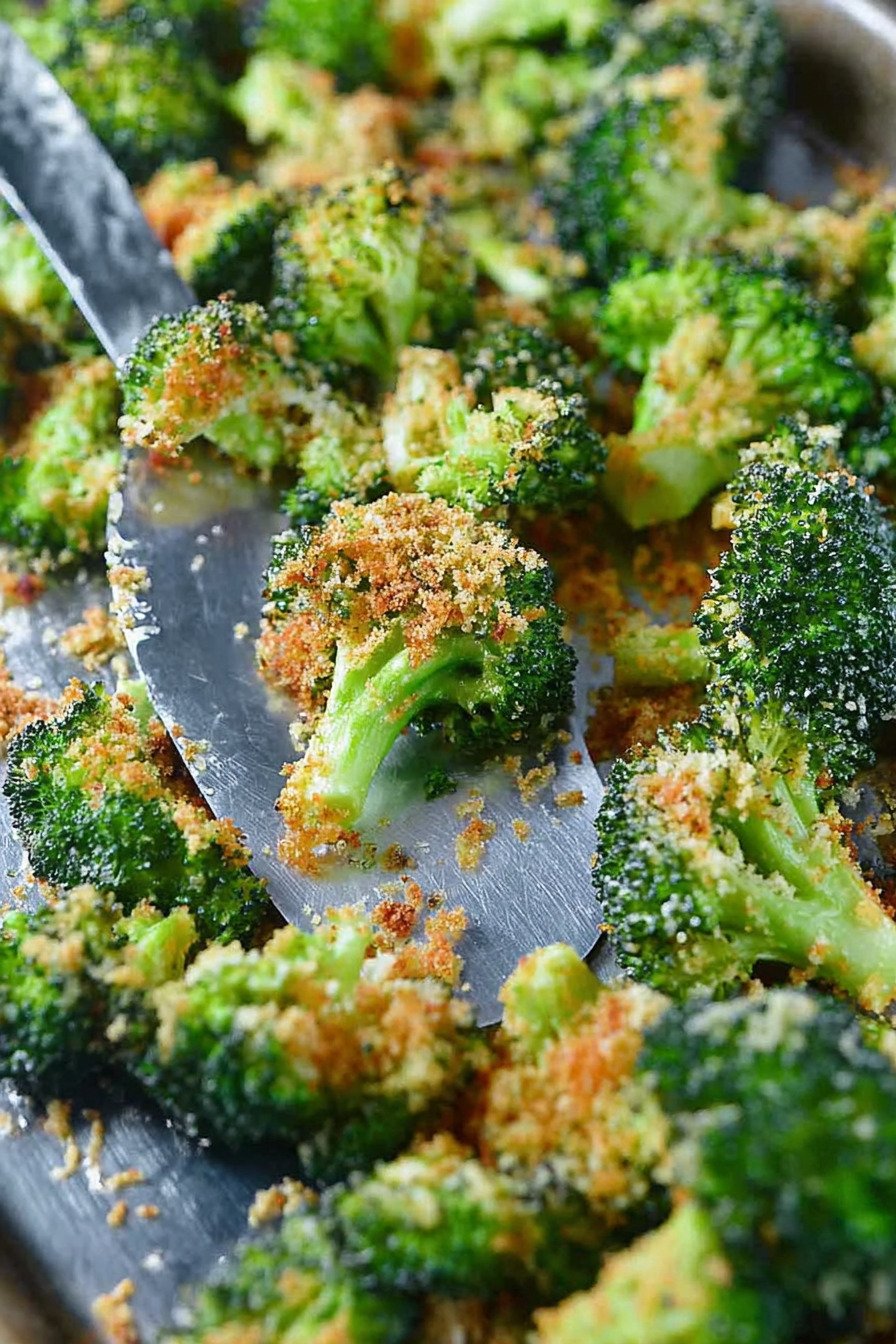
4) Why Most Parmesan Roasted Broccoli Recipes Fail
Most parmesan roasted broccoli recipes fail for one of five reasons: the broccoli is too wet, the pan is too crowded, the oven is not hot enough, the cheese is added unevenly, or the broccoli bakes too low in the oven. Each problem changes the final texture. Wet broccoli steams. Crowded broccoli sweats. Low heat softens the stems before the edges brown. Uneven cheese creates salty patches instead of a balanced coating.
The most common sign is broccoli that looks dull green and limp with crumbs sliding onto the pan. That usually means excess moisture kept the coating from gripping the florets. Another failure sign is burnt garlic with under-browned broccoli, which can happen when minced garlic sits exposed on the pan instead of being tossed into the oil-coated florets. The fix is to mix everything thoroughly in a large bowl, then scatter the leftover Parmesan crumb mixture over the top.
Flat flavor comes from under-seasoning before roasting. Salt added after baking sits on the surface, while salt added before baking seasons the broccoli as it softens. A properly roasted pan smells nutty, garlicky, and savory. If it smells sharp or raw, the garlic may not have had enough time to mellow. If it smells overly dark, the crumbs or cheese may have browned too aggressively, usually from small florets or uneven pan placement.
5) Ingredients for Parmesan Roasted Broccoli
Fresh broccoli florets: Broccoli is the structure of the dish, so use firm, fresh florets with tight crowns. Smaller florets roast faster and get more browned edges, while very large pieces may stay firm in the center. If using pre-cut broccoli, trim oversized pieces so everything cooks at the same pace.
Olive oil: Olive oil coats the broccoli, helps the crumbs and cheese stick, and encourages browning. Use it before roasting, not after, because the oil needs to sit on the surface of the florets as they bake. Using too little oil can make the topping dry and dusty; using too much can make the pan feel greasy.
Minced garlic: Garlic gives this parmesan broccoli baked side dish its savory aroma. Minced garlic should be tossed well with the oil and broccoli so it does not sit in bare clumps on the baking sheet. Raw garlic would taste sharp if added at the end, but roasted garlic softens into a sweeter, rounder flavor.
Salt: Salt wakes up the broccoli and balances the richness of the cheese. Add it before baking so the seasoning reaches the vegetable as it roasts. If you use a very salty Parmesan, taste before adding extra salt at the table.
Pepper: Pepper adds gentle warmth and keeps the flavor from tasting one-note. Freshly cracked pepper gives a cleaner aroma, but regular ground pepper still works. Add it before roasting so it blends into the oil and crumb coating.
Italian style bread crumbs: Bread crumbs add light crunch and help create the toasted coating. Italian style crumbs bring built-in seasoning, so they work especially well in a quick vegetable side. If replaced with plain crumbs, the flavor will be milder and may need a small adjustment of seasoning.
Fresh grated Parmesan cheese: Parmesan gives salty, nutty depth and browns beautifully at high heat. Fresh grated cheese clings better than large shreds and melts more evenly into the crumbs. Pre-grated cheese can work in a pinch, but the coating may be drier and less cohesive.
- Fresh florets vs frozen broccoli: Fresh broccoli roasts with better edges because it contains less surface moisture. Frozen broccoli can become softer unless thawed and dried extremely well.
- Fresh grated Parmesan vs packaged Parmesan: Fresh grated Parmesan melts into the crumbs, while drier packaged cheese can stay grainy and less fragrant.
- Top rack vs middle rack: The top rack encourages better browning on the Parmesan crumb coating, while the middle rack gives a softer, less toasted result.
- Single layer vs crowded pan: A single layer roasts; a crowded pan steams. That one choice often decides whether the broccoli tastes crisp-edged or limp.
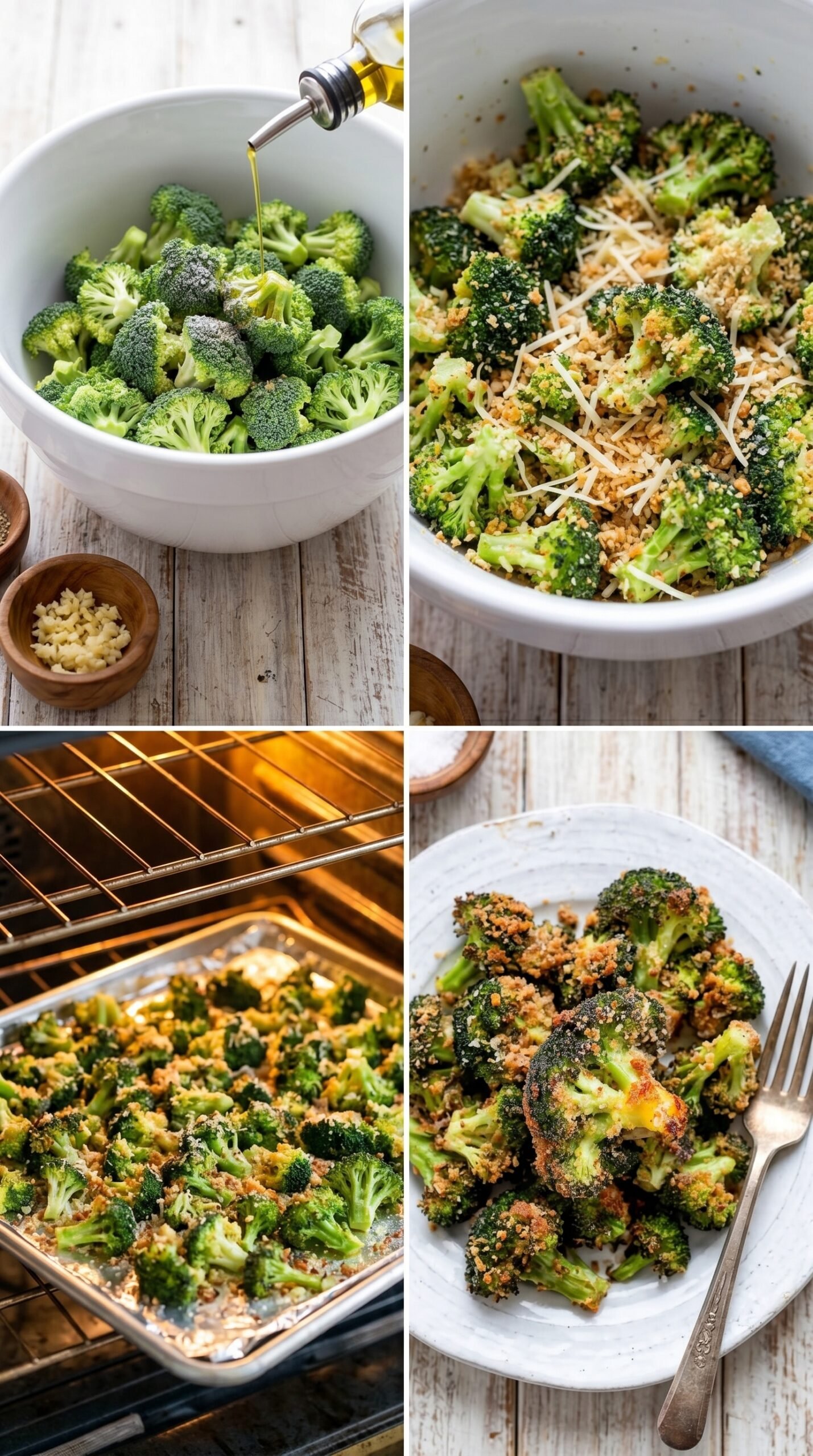
6) How to Make Parmesan Roasted Broccoli
Step 1: Preheat the oven to 425 degrees and prepare a foil-lined baking sheet with a generous coating of nonstick cooking spray. This protects the Parmesan and bread crumbs from welding themselves to the foil as they brown.
Step 2: Add the broccoli, olive oil, minced garlic, salt, pepper, bread crumbs, and Parmesan to a large bowl. Toss until the crowns are evenly coated. The visual signal to look for is broccoli that looks lightly glossy, with crumb and cheese mixture caught in the tops of the florets.
Step 3: Pour the broccoli onto the baking sheet and spread it into a single layer. Sprinkle any leftover crumb mixture over the top instead of leaving it in the bowl. Avoid piling pieces together because trapped steam will soften the edges.
Step 4: Bake on the top rack for 18 to 20 minutes. The broccoli should smell garlicky and nutty, the tips should show browning, and the crumb coating should look lightly golden. If the broccoli is cut very small, begin checking closer to 16 minutes.
Step 5: Remove the pan from the oven and let the broccoli set for 1 to 2 minutes. This short rest lets the cheese coating firm slightly, so the texture feels crisp instead of loose when served.
7) Recipe Card: Parmesan Roasted Broccoli Recipe
Parmesan Roasted Broccoli Recipe
Ingredients
- 6 cups fresh broccoli florets, cut into similar-size pieces so they roast evenly
- 3 tablespoons olive oil, enough to lightly coat the broccoli and help the edges brown
- 3 cloves garlic minced, fresh for the best aroma and savory flavor
- 1/2 teaspoon salt, to season the broccoli before roasting
- 1/4 teaspoon pepper, freshly cracked if possible for cleaner flavor
- 1/4 cup Italian style bread crumbs, for a light seasoned crunch
- 1/2 cup fresh grated Parmesan cheese, grated finely so it clings to the florets
Instructions
- Preheat the oven to 425 degrees. Line a baking sheet with foil and spray it generously with nonstick cooking spray so the Parmesan and crumbs brown instead of sticking.
- In a large bowl, add the broccoli, olive oil, garlic, salt, pepper, Italian style bread crumbs, and Parmesan cheese. Toss until the florets are evenly coated, paying attention to the crowns where the cheese and crumbs can cling.
- Pour the broccoli onto the prepared baking sheet in a single layer, then sprinkle any leftover crumb and Parmesan mixture from the bowl over the top. Avoid crowding the pan, since tight spacing traps steam and softens the edges.
- Bake on the top rack for 18 to 20 minutes, until the broccoli is crisp-tender, the tips are browned, and the Parmesan crumb coating looks lightly golden and fragrant.
- Remove the pan from the oven and let the broccoli set for 1 to 2 minutes before serving so the cheese coating firms slightly and the texture stays crisp around the edges.
8) Tips for Making Parmesan Roasted Broccoli
The biggest tip is to dry the broccoli before it goes into the bowl. Even a little surface water can fight the olive oil and keep the Parmesan crumb mixture from sticking. If you washed the broccoli right before cooking, spread it on a towel and pat the crowns gently. The drier the surface, the better the browning.
Use a bowl that feels too large rather than too small. A cramped bowl makes it hard to coat the florets evenly, and uneven coating leads to bland bites beside salty bites. Toss from the bottom up until the garlic, crumbs, and cheese are distributed through the broccoli instead of sitting in one heavy layer.
For better color, place the pan on the top rack and keep the oven fully preheated. Broccoli roasts best when it meets immediate heat. If it sits in a warming oven, it can start releasing moisture before the outside has a chance to brown. That is the small timing detail that helps answer how to roast broccoli perfectly.
9) Common Mistakes & Fixes
Problem: The broccoli turns soggy. Cause: The florets were wet, crowded, or piled too close together. Fix: Dry the broccoli well and spread it in a single layer with space between pieces.
Problem: The topping falls off. Cause: The broccoli was not coated evenly with oil before the crumbs and cheese tried to cling. Fix: Toss thoroughly in a large bowl until the florets look lightly glossy and speckled with topping.
Problem: The garlic tastes harsh. Cause: Garlic clumped together or did not roast evenly with the oil-coated broccoli. Fix: Mince it finely and mix it well so the garlic flavor spreads through the dish.
Problem: The Parmesan browns too much before the broccoli is tender. Cause: The florets may be too large, or the topping may be concentrated in one spot. Fix: Cut the broccoli more evenly and sprinkle leftover crumbs lightly across the whole pan.
10) How to Tell Parmesan Roasted Broccoli Is Done
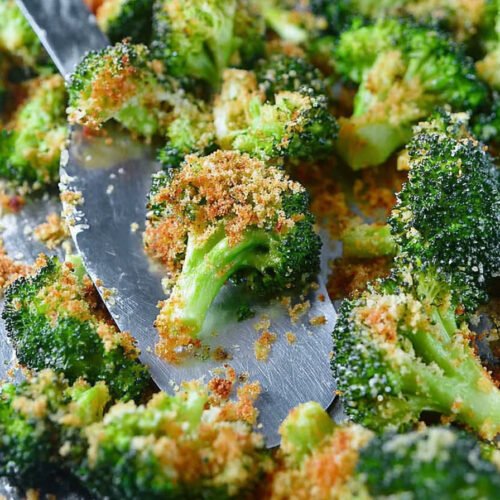
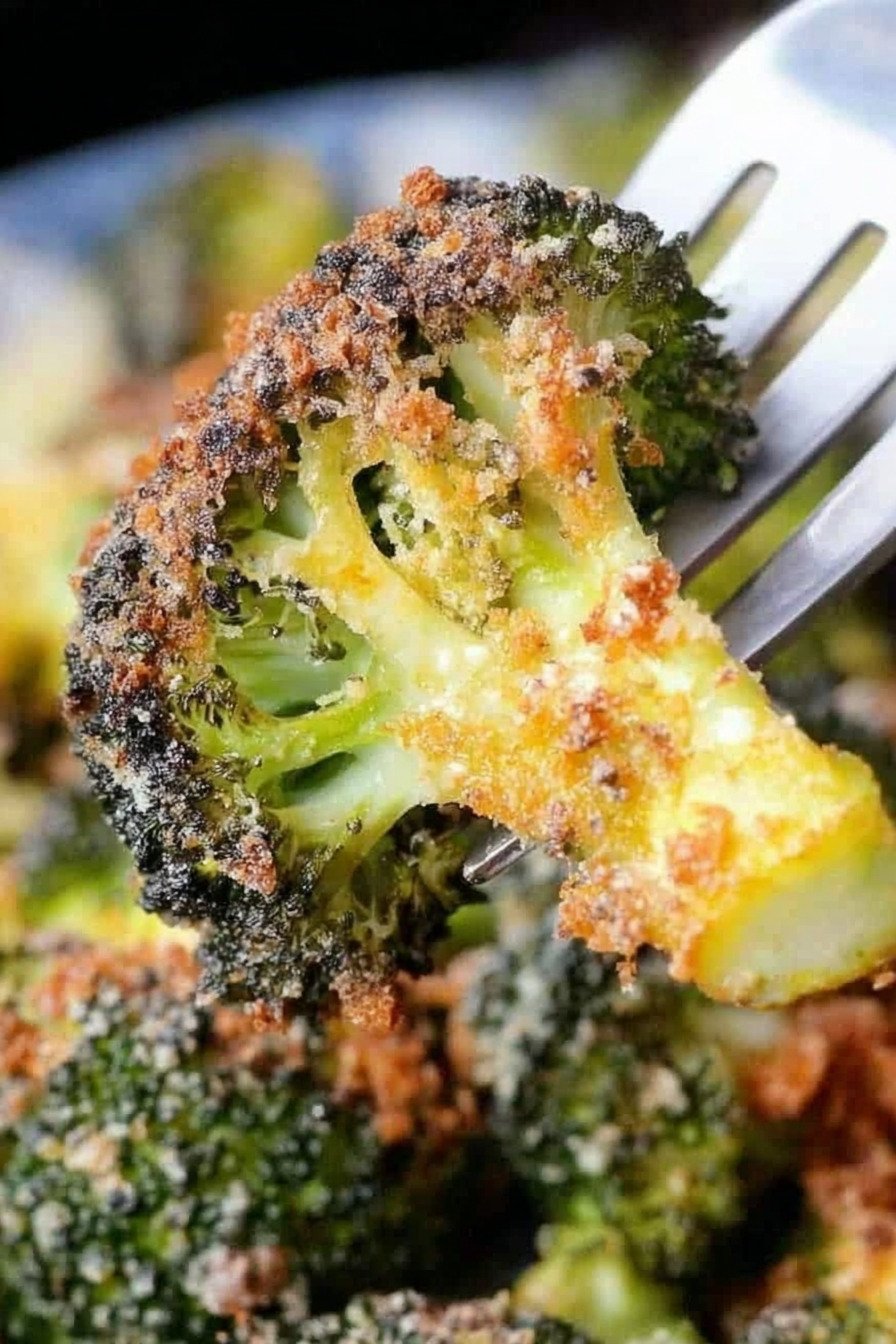
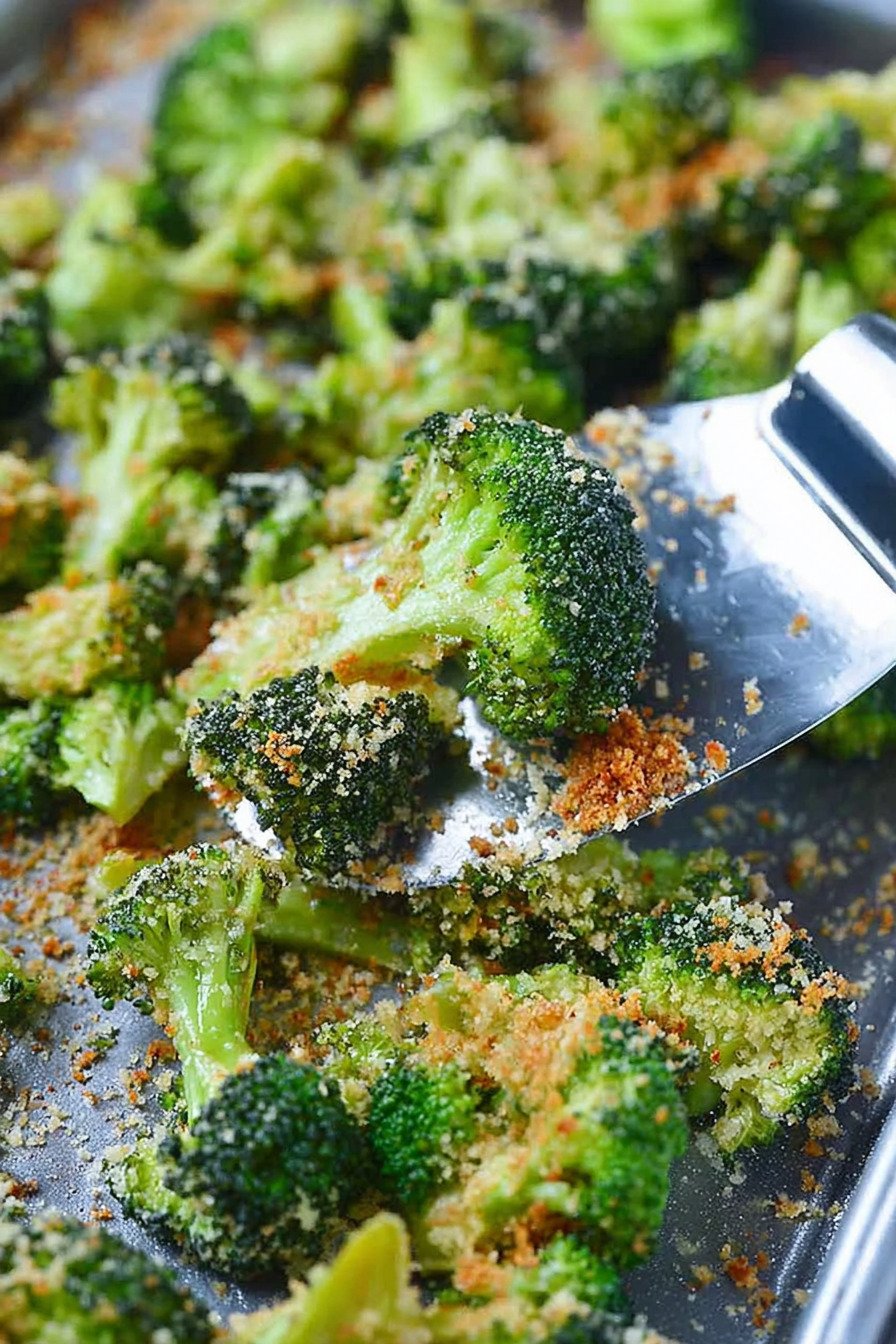
Parmesan roasted broccoli is done when the stems are tender enough to pierce but still hold their shape, and the crowns have browned tips. The broccoli should not look wet or collapsed. A good pan has contrast: deep green stems, darker roasted edges, and a lightly golden Parmesan crumb coating.
The texture should be crisp-tender, not raw and not mushy. When you lift a piece, the topping should cling in small toasted bits rather than slide off in damp clumps. The aroma should be savory, garlicky, and nutty from the Parmesan. If the broccoli smells watery or grassy, it likely needed more roasting time or better pan spacing.
Failure indicators are easy to spot. Pale broccoli with no browning usually means too much steam. Blackened crumbs with hard stems mean the pieces were too large or the topping browned faster than the vegetable cooked. A greasy surface means too much oil was used, while a dusty topping means the broccoli needed a better coating before baking.
11) Professional Secrets Behind Better Parmesan Roasted Broccoli
The professional move is to think about contact, airflow, and coating. Broccoli does not need complicated seasoning to taste good, but it does need enough dry heat around each piece. That is why a single layer matters more than adding more cheese. If the pan is crowded, the oven cannot do its job.
Another useful trick is to let the Parmesan and bread crumbs sit mostly on the upper surfaces of the florets. The crowns act like tiny shelves that hold the topping where heat can brown it. If too much crumb mixture falls directly onto the foil, it can toast separately instead of becoming part of the broccoli.
Finally, give the broccoli that 1 to 2 minute rest after baking. It seems small, but hot cheese is softer right out of the oven. A brief pause helps the coating set, making the finished side dish feel more intentional and less messy on the plate.
12) Best Dishes or Pairings to Serve With Parmesan Roasted Broccoli
This healthy broccoli parmesan recipe pairs well with simple proteins because it already brings garlic, salt, and toasted flavor. Serve it with roasted chicken, grilled steak, baked salmon, turkey meatballs, or a simple omelet for a vegetable side that does not feel plain.
It also works beside pasta dishes, especially creamy or tomato-based sauces, because the crisp-tender broccoli adds texture to the plate. For a lighter dinner, serve it with rice, quinoa, or a baked potato. For a holiday meal, it brings color and savory crunch without requiring a heavy casserole sauce.
13) Making Parmesan Roasted Broccoli Ahead of Time
Parmesan roasted broccoli is best cooked close to serving time, but you can prep the broccoli ahead. Cut the florets, dry them well, and store them in a covered container lined with a paper towel. Keep the bread crumbs and Parmesan separate until just before baking so the topping does not absorb moisture.
If you need to serve it later, roast the broccoli slightly under the deepest browning stage, then rewarm it on a baking sheet in a hot oven. Avoid covering it tightly while hot because trapped steam softens the crumb coating. For the cleanest texture, finish reheating uncovered so the edges can crisp again.
14) Storing Leftover Parmesan Roasted Broccoli
Store leftover parmesan roasted broccoli in an airtight container in the refrigerator for up to 3 days. The flavor stays savory, but the texture will soften because roasted broccoli continues to release moisture as it sits. Let leftovers cool before sealing the container to reduce condensation.
For reheating, use the oven or a dry skillet instead of the microwave when texture matters. A 375 degree oven helps bring back some of the roasted edges. The microwave works for speed, but it softens the crumb coating. Leftovers can be chopped into eggs, grain bowls, pasta, or a quick lunch wrap.
15) FAQ (Real Cooking Questions)
Can I use frozen broccoli? Fresh broccoli gives the best roasted texture. Frozen broccoli contains more moisture, so it can turn softer. If you use it, thaw it completely, press out excess water, and expect a less crisp result.
Why did my broccoli steam instead of roast? The pan was probably crowded or the florets were too wet. Roasting needs dry heat and space. Spread the broccoli into one layer and avoid piling pieces on top of each other.
Can I make this without bread crumbs? Yes, but the texture will change. The bread crumbs create a light toasted coating. Without them, the dish will taste more like roasted broccoli with Parmesan rather than a crisp parmesan cheese broccoli dish.
What kind of Parmesan works best? Fresh grated Parmesan works best because it clings to the broccoli and melts into the crumb coating. Large shreds may not coat as evenly, and very dry packaged Parmesan can taste grainier.
How do I keep the garlic from burning? Toss the minced garlic thoroughly with the oil and broccoli so it is distributed across the florets. Garlic that sits in dry clumps on the pan can brown too quickly and taste sharp.
16) Save This Parmesan Roasted Broccoli Recipe
If this parmesan roasted broccoli helped you solve soggy, bland roasted broccoli, save it for weeknight dinners, holiday sides, or any meal that needs a crisp-tender vegetable. The key reminder is: dry the florets, give them space, and let high heat brown the Parmesan crumb coating.
17) Conclusion
Once you understand why roasted broccoli fails, the fix becomes simple. Dry broccoli, a hot oven, even coating, and enough pan space turn basic florets into a side dish with crisp edges, savory garlic, and golden Parmesan flavor. This method gives you the confidence to look at the pan and know what is happening: steam means softness, space means browning, and a short rest helps the topping set. That is the quiet little secret behind better parmesan roasted broccoli.
18) Nutrition
Serving Size 1 portion Calories 178 Sugar 2 g Sodium 430 mg Fat 12 g Saturated Fat 3 g Carbohydrates 12 g Fiber 4 g Protein 8 g Cholesterol 10 mg
Leave a Comment