
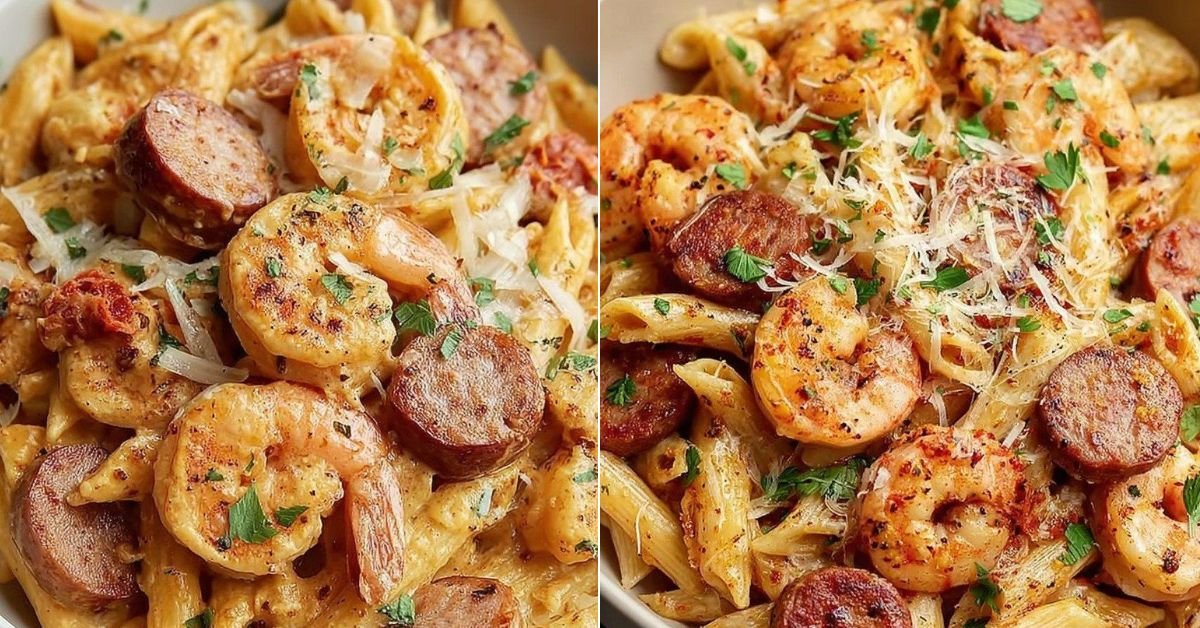
1) What I Learned Testing Cajun Shrimp and Sausage Pasta
Shrimp turns rubbery fast, and creamy pasta sauce can go from silky to heavy in minutes. I’m Denise, and after one bland batch and one skillet where the sauce tightened too much, I started testing the order: brown the Andouille first, cook the shrimp briefly, then build the sauce from the flavorful pan bits. That discovery changed this cajun shrimp and sausage pasta into the kind of creamy, spicy, family-dinner comfort I want on the table when everyone is hungry and the kitchen already smells like garlic, peppers, and smoky sausage.
Table of Contents
- 1) What I Learned Testing Cajun Shrimp and Sausage Pasta
- 2) Key Takeaways
- 3) Easy Cajun Shrimp and Sausage Pasta Recipe
- 4) Why Most Cajun Shrimp and Sausage Pasta Recipes Fail
- 5) Ingredients for Cajun Shrimp and Sausage Pasta
- 6) How to Make Cajun Shrimp and Sausage Pasta
- 7) Recipe Card: Cajun Shrimp and Sausage Pasta
- 8) Tips for Making Cajun Shrimp and Sausage Pasta
- 9) Common Mistakes & Fixes
- 10) How to Tell Cajun Shrimp and Sausage Pasta Has the Right Texture
- 11) Professional Secrets Behind Better Cajun Shrimp and Sausage Pasta
- 12) Best Dishes or Pairings to Serve With Cajun Shrimp and Sausage Pasta
- 13) Making Cajun Shrimp and Sausage Pasta Ahead of Time
- 14) Storing Leftover Cajun Shrimp and Sausage Pasta
- 15) FAQ (Real Cooking Questions)
- 16) Save This Cajun Shrimp and Sausage Pasta Recipe
- 17) Conclusion
- 18) Nutrition
2) Key Takeaways
- Brown the sausage first: Andouille releases smoky, seasoned fat that becomes the flavor base for the sauce.
- Pull the shrimp early: Shrimp should be pink, opaque, and tender before it goes back into the pasta at the end.
- Save pasta water: The starch helps loosen the sauce while keeping it glossy enough to cling to linguine or fettuccine.
- Add Parmesan gently: Stirring cheese into a low simmer keeps the creamy Cajun sauce smooth instead of grainy.
3) Easy Cajun Shrimp and Sausage Pasta Recipe
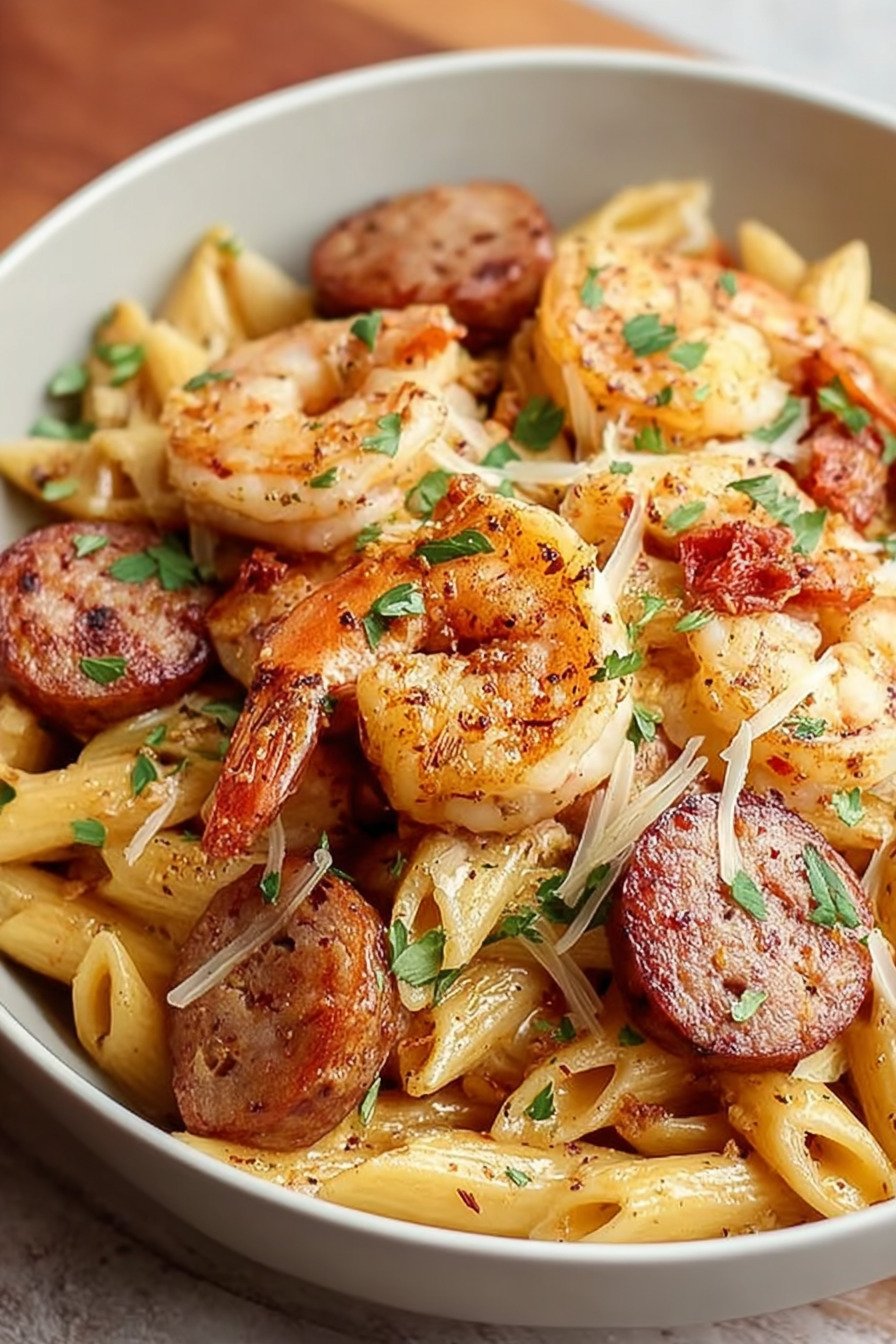
This cajun shrimp and sausage pasta works because it builds flavor in layers instead of relying only on Cajun seasoning. The sausage browns first, the shrimp cooks quickly in the same skillet, and the onion, bell pepper, celery, and garlic pick up all the browned bits left behind. That is what gives the sauce a deeper flavor without needing a long simmer.
The texture goal is simple: al dente pasta, tender shrimp, browned sausage, and a creamy sauce that coats instead of puddling. A good easy creamy cajun shrimp pasta should feel rich, but it should not taste greasy or pasty. The balance comes from broth, cream, Parmesan, and a splash of reserved pasta water when the sauce needs help moving through the noodles.
4) Why Most Cajun Shrimp and Sausage Pasta Recipes Fail
Most cajun shrimp and sausage pasta recipes fail because the shrimp is treated like chicken or sausage, but seafood needs a much shorter cooking window. When shrimp stays in the pan too long, it tightens, curls hard, and loses its delicate bite. Cooking it briefly and returning it at the end keeps it tender.
Another common problem is a sauce that turns either watery or too thick. Watery sauce often comes from skipping the roux or adding pasta without letting the broth and cream settle into a gentle simmer. A sauce that becomes too heavy usually needs a splash of starchy pasta water, not more cream.
Flat flavor happens when the vegetables are rushed. Onion, red bell pepper, and celery need several minutes to soften so they taste sweet and savory instead of raw. Harsh garlic usually comes from adding it too early; garlic only needs about a minute after the vegetables have softened.
The final failure is over-seasoning too soon. Andouille, Parmesan, Cajun seasoning, and chicken broth all bring salt. The smartest move is to season at the end, after the pasta, sausage, shrimp, and sauce have come together.
5) Ingredients for Cajun Shrimp and Sausage Pasta
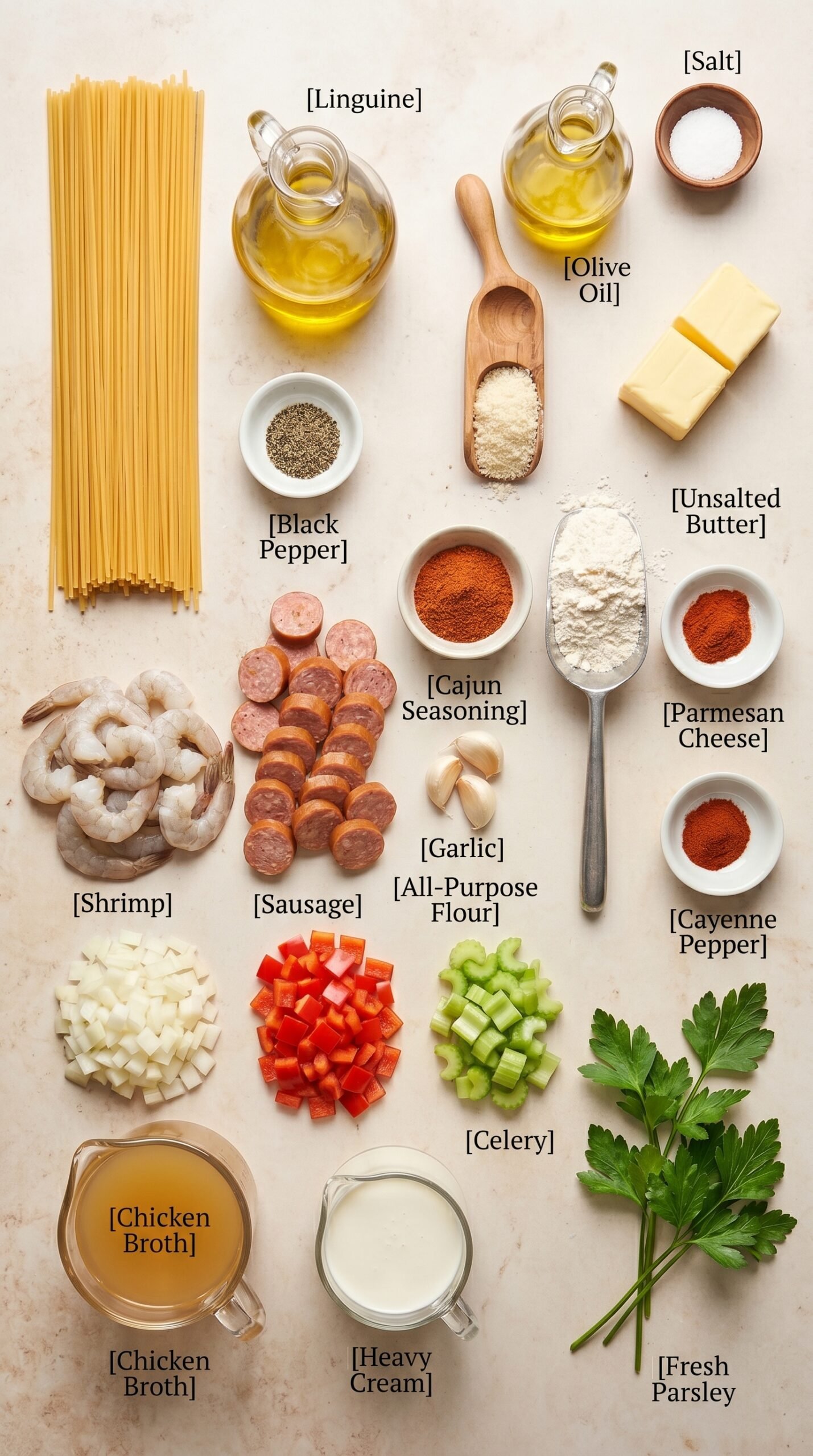
Linguine or fettuccine: Long pasta holds the creamy sauce well and gives each bite enough surface area for Cajun seasoning, Parmesan, and aromatics. Use it when you want a saucy skillet pasta rather than a dry toss. Short pasta can work, but it changes the eating texture.
Olive oil: A small amount keeps drained pasta from clumping and helps the sausage brown. Too much oil can make the final sauce feel slick, so use it as a tool, not as the main fat.
Andouille sausage: This is the smoky backbone of the dish. Browning it before the shrimp gives the skillet a seasoned base. If replaced with a mild sausage, the pasta will taste softer and less Cajun-inspired.
Large shrimp: Large shrimp give you enough time to sear lightly without overcooking instantly. Patting them dry helps them cook cleanly instead of steaming in the pan.
Cajun seasoning: Dividing the seasoning lets the shrimp and sauce both carry flavor. Add more only after tasting because different blends vary widely in salt and heat.
Butter, onion, red bell pepper, celery, and garlic: These create the aromatic base for the creamy Cajun sauce. The vegetables need time to soften before the flour goes in, and the garlic should be added late so it stays fragrant rather than bitter.
All-purpose flour: Flour makes a light roux that helps the sauce cling to pasta. Without it, the broth and cream can taste thinner and may slide off the noodles.
Low-sodium chicken broth, heavy cream, and Parmesan: Broth gives the sauce savory depth, cream adds body, and Parmesan brings salt and richness. Low heat matters after the cream and cheese are added because high heat can make the sauce look broken or grainy.
Parsley, salt, black pepper, and cayenne: Parsley freshens the finish, salt and pepper adjust the final balance, and cayenne is only for extra heat. Add them at the end when the sauce is fully built.
- Linguine vs fettuccine: Linguine feels lighter and lets the sauce spread more evenly; fettuccine gives a richer, more substantial forkful.
- Andouille vs mild sausage: Andouille adds smoky spice and depth; mild sausage needs more careful seasoning to avoid a flat shrimp sausage pasta.
- Heavy cream vs extra broth: Cream gives body and smoothness; extra broth makes the sauce lighter but less velvety.
- Reserved pasta water vs plain water: Pasta water loosens the sauce while helping it cling; plain water thins the sauce without improving texture.
6) How to Make Cajun Shrimp and Sausage Pasta
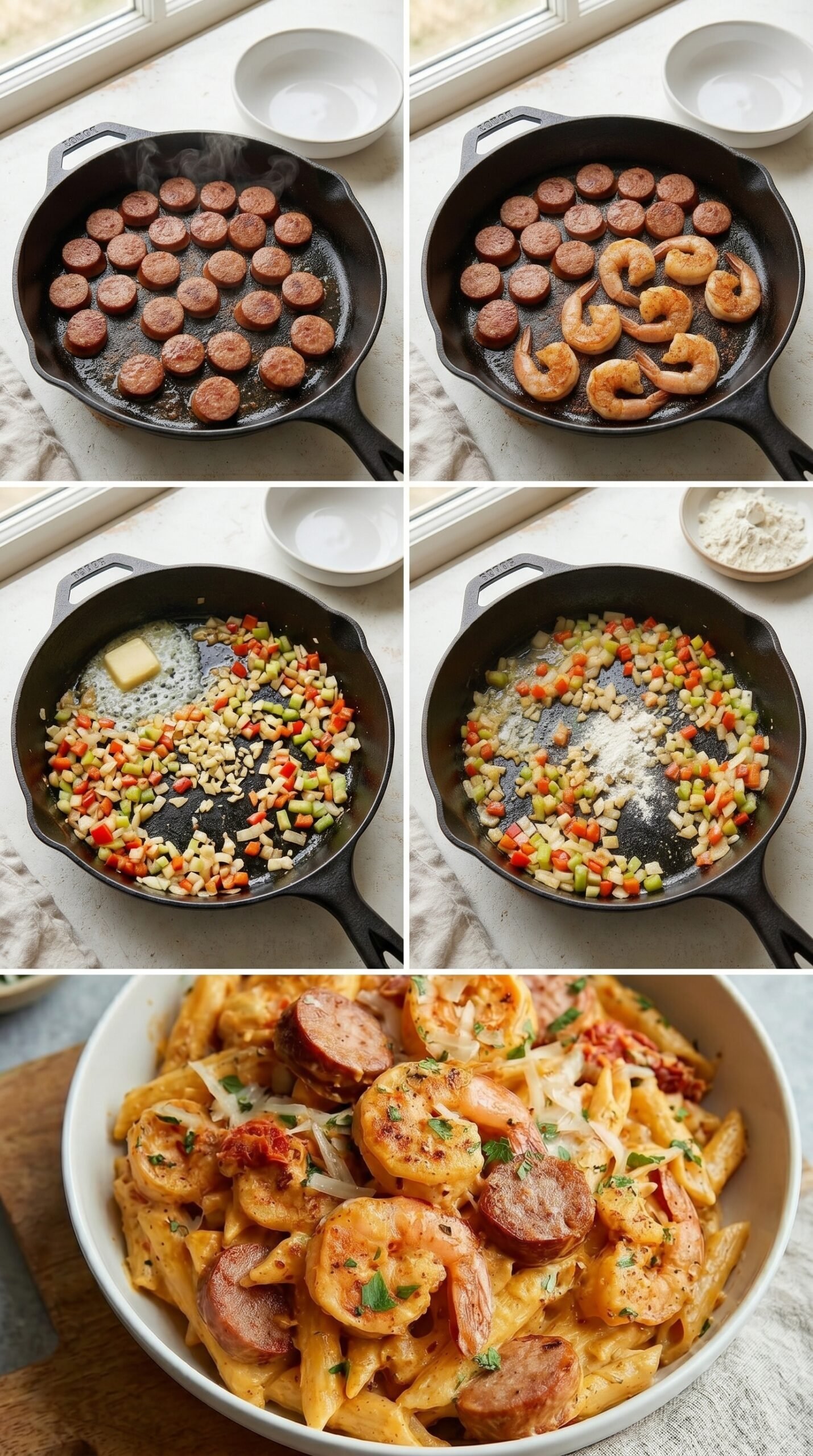
Step 1: Cook the pasta in well-salted boiling water until al dente, then reserve 1 cup of pasta water before draining. Toss the pasta with a little olive oil so it does not clump while the skillet sauce comes together.
Step 2: Brown the sliced Andouille sausage in a large skillet or Dutch oven over medium-high heat. Look for browned edges and a slightly crisp surface; that color means the sauce will have deeper smoky flavor.
Step 3: Cook the shrimp in the same skillet with half of the Cajun seasoning. Remove it when it turns pink and opaque. If the shrimp curls tightly and feels firm, it has gone too far.
Step 4: Lower the heat and soften the onion, bell pepper, and celery in butter. Add garlic only for the final minute, then stir in flour to make a light roux before gradually whisking in the broth.
Step 5: Simmer gently, stir in cream and the remaining Cajun seasoning, then return the sausage, shrimp, and pasta to the skillet. Add Parmesan, loosen with pasta water as needed, and stop when the sauce looks glossy and coats the noodles.
7) Recipe Card: Cajun Shrimp and Sausage Pasta
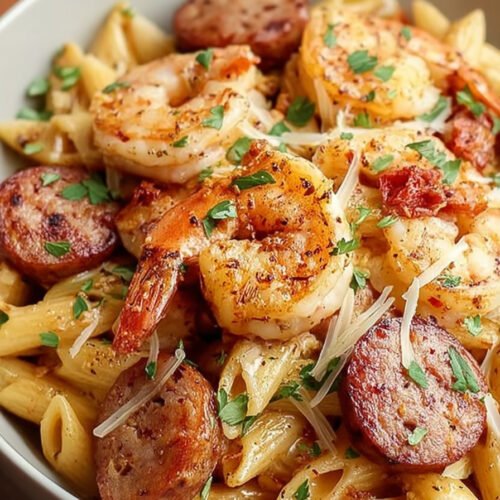
Cajun Shrimp and Sausage Pasta
Ingredients
For the Pasta
- 12 oz linguine or fettuccine, dry, long pasta works well because it catches the creamy Cajun sauce
- 1 tbsp olive oil for tossing pasta, used lightly so the noodles do not clump while the sauce finishes
- 1 tsp salt for pasta water, essential for seasoning the pasta from the inside
For the Shrimp & Sausage
- 1 tbsp olive oil for cooking sausage, enough to help the sausage brown evenly
- 1 lb Andouille sausage sliced into 1/2-inch rounds, cut evenly so the edges crisp at the same rate
- 1 lb large shrimp peeled and deveined, tails on or off, patted dry for better searing
- 1 tbsp Cajun seasoning divided (or more to taste), divided so both the shrimp and sauce get layered flavor
For the Creamy Cajun Sauce
- 2 tbsp unsalted butter, used to soften the vegetables and build the sauce base
- 1/2 large yellow onion finely diced, small dice helps it melt into the sauce
- 1 red bell pepper finely diced, adds sweetness and color against the Cajun spice
- 2 celery stalks finely diced, part of the classic aromatic base and adds savory depth
- 2 cloves garlic minced, added after the vegetables soften so it does not burn
- 1 tbsp all-purpose flour, cooked briefly to thicken the sauce without a raw flour taste
- 1 1/2 cups chicken broth low sodium, lets you control the final salt level
- 1/2 cup heavy cream, gives the sauce body and a smooth finish
- 1/2 cup grated Parmesan cheese plus more for garnish, stirred in off gentle heat for a savory, creamy finish
- 1/4 cup chopped fresh parsley for garnish, adds freshness at the end
- Salt to taste, adjusted after the sausage, Parmesan, and Cajun seasoning are added
- Black pepper to taste, best added near the end for a fresh bite
- Pinch cayenne pepper optional, for extra heat, added only if you want a sharper spicy finish
Instructions
Prepare the Pasta
- Bring a large pot of water to a rolling boil, add 1 teaspoon salt, and cook the linguine or fettuccine according to package directions until al dente. Before draining, reserve 1 cup of the starchy pasta water. Drain the pasta, toss it with 1 tablespoon olive oil to prevent sticking, and set it aside.
Cook the Sausage and Shrimp
- Heat 1 tablespoon olive oil in a large skillet or Dutch oven over medium-high heat. Add the sliced Andouille sausage and cook for 5 to 7 minutes, turning occasionally, until browned with lightly crisp edges. Remove the sausage with a slotted spoon and keep the rendered fat in the pan for flavor.
- Add the shrimp to the same skillet, sprinkle with 1/2 tablespoon Cajun seasoning, and cook for 2 to 3 minutes per side, just until pink, opaque, and curled into a loose C shape. Remove the shrimp and set it with the sausage; avoid cooking until tightly curled because that usually means the shrimp is overdone.
Sauté the Vegetables and Make the Sauce
- Reduce the heat to medium and add the butter to the skillet. Once melted, add the diced onion, red bell pepper, and celery. Sauté for 5 to 7 minutes, stirring often, until the vegetables soften and smell sweet and savory. Add the minced garlic and cook for 1 minute, just until fragrant.
- Sprinkle the flour evenly over the softened vegetables and cook, stirring constantly, for 1 minute to form a light roux. Gradually whisk in the chicken broth while scraping the browned bits from the bottom of the pan. Bring to a gentle simmer, lower the heat, then stir in the heavy cream and the remaining 1/2 tablespoon Cajun seasoning.
Combine and Serve
- Add the cooked sausage, shrimp, and drained pasta to the skillet. Toss until the pasta is coated in sauce, then stir in 1/2 cup grated Parmesan cheese. If the sauce feels too thick, add reserved pasta water a splash at a time until it turns glossy and coats the noodles instead of clumping. Season with salt, black pepper, and optional cayenne to taste.
- Garnish with chopped fresh parsley and extra grated Parmesan cheese if desired. Serve immediately while the sauce is creamy, the shrimp is tender, and the sausage still has crisp browned edges.
8) Tips for Making Cajun Shrimp and Sausage Pasta
Use a wide skillet or Dutch oven so the sausage browns instead of steaming. Crowding the pan traps moisture, and moisture prevents the edges from crisping. Those browned sausage edges are one of the strongest flavor signals in this dish.
Keep the sauce at a gentle simmer after adding broth and cream. A hard boil can make the cream reduce too quickly and can toughen the shrimp when it returns to the pan. Gentle heat gives you more control.
For creamy cajun shrimp pasta with sausage, add reserved pasta water slowly. Start with a splash, toss, and check the sauce. The right texture is glossy and fluid, not soupy and not stiff.
Do the final seasoning after Parmesan melts. Cajun seasoning blends, sausage, broth, and cheese can all contain salt, so early seasoning can push the dish too far before you realize it.
9) Common Mistakes & Fixes
Problem: The shrimp tastes rubbery. Cause: It stayed in the skillet too long or was reheated over high heat. Fix: Cook shrimp only until pink and opaque, remove it, and return it at the end just long enough to warm through.
Problem: The sauce is too thick. Cause: The pasta absorbed moisture or the sauce reduced too much. Fix: Add reserved pasta water a splash at a time and toss until the sauce loosens and turns glossy.
Problem: The sauce tastes flat. Cause: The sausage was not browned enough or the vegetables were rushed. Fix: Let the sausage develop color and give the onion, pepper, and celery time to soften before building the roux.
Problem: The sauce tastes salty. Cause: Salt was added before accounting for Cajun seasoning, Andouille, Parmesan, and broth. Fix: Use low-sodium broth and adjust salt only at the very end.
10) How to Tell Cajun Shrimp and Sausage Pasta Has the Right Texture
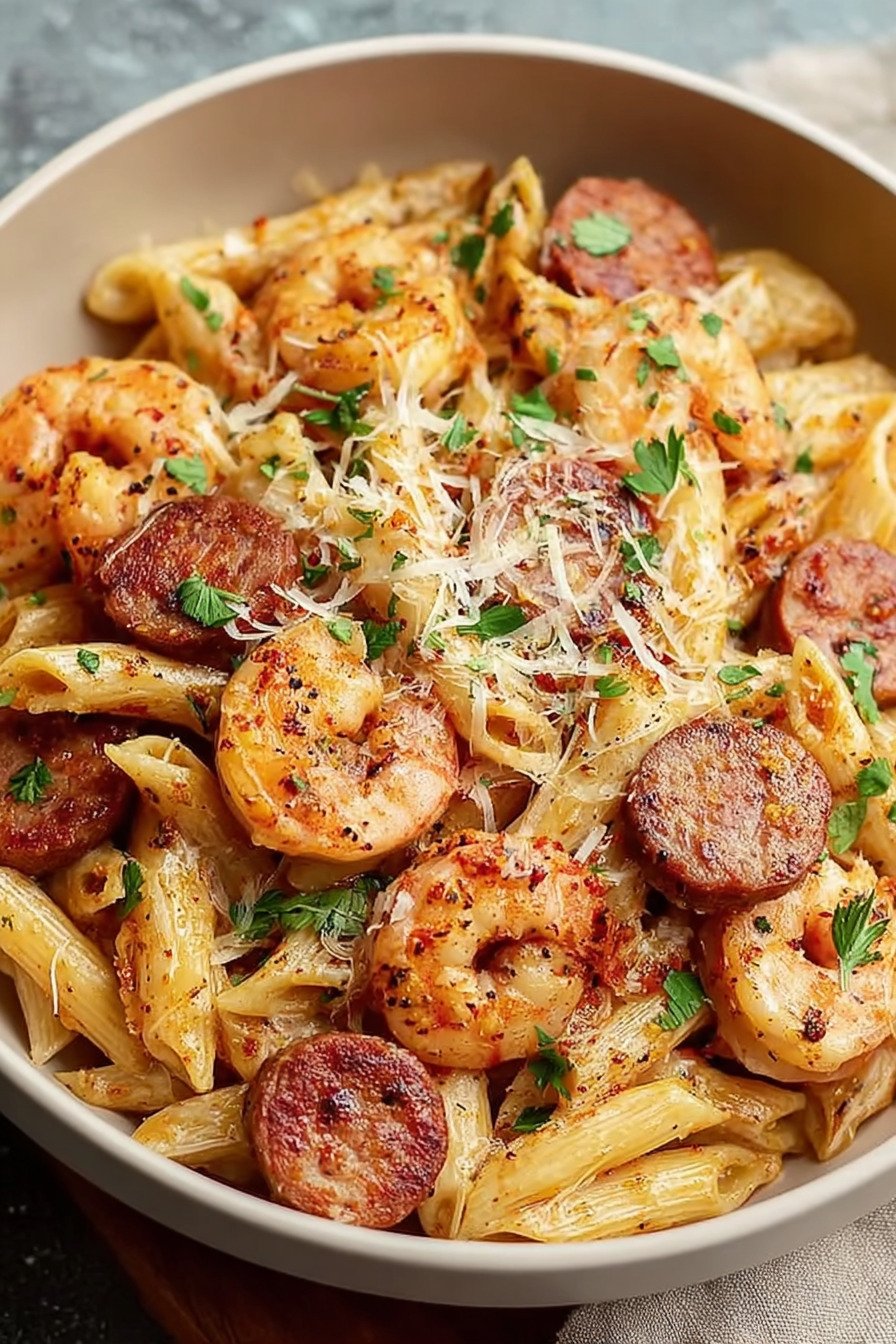
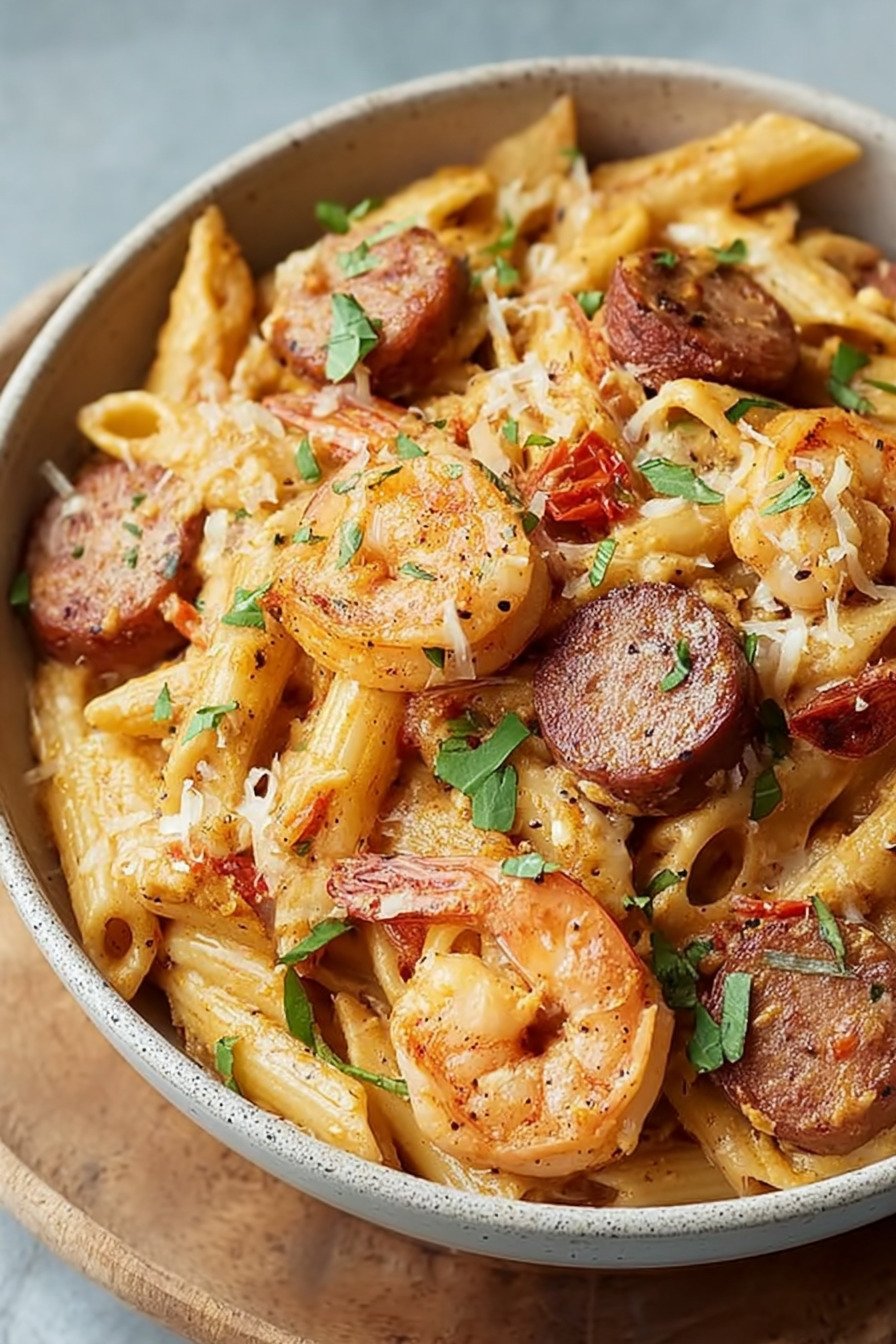
The pasta should be al dente, meaning it has a slight bite without tasting chalky. The sauce should coat the noodles in a smooth layer, leaving them glossy rather than dry or clumpy. When you lift a forkful, the sauce should cling lightly instead of running back into the pan.
The shrimp should look pink and opaque with a gentle curl. A tight curl and bouncy, firm bite usually mean it has cooked too long. The sausage should have browned edges, not pale surfaces, because that color adds smoky depth.
The aroma should be buttery, garlicky, smoky, and lightly spicy. If the garlic smells sharp or bitter, it may have cooked too hot. If the finished pasta tastes heavy, a small splash of pasta water and a fresh parsley finish can bring the sauce back into balance.
11) Professional Secrets Behind Better Cajun Shrimp and Sausage Pasta
The first professional move is sequencing. Sausage can handle higher heat, shrimp cannot, and cream sauce needs control. Cooking each part according to its own timing gives you a better final dish than throwing everything into the pan together.
The second secret is using the pan surface. After browning the sausage and shrimp, the browned bits on the bottom of the skillet are concentrated flavor. Whisking in broth while scraping the pan pulls that flavor into the sauce instead of leaving it behind.
The third secret is sauce correction. Creamy pasta is rarely finished the moment everything is combined. It needs adjustment. Pasta water loosens, Parmesan thickens, salt sharpens, pepper lifts, and parsley freshens the final bite.
12) Best Dishes or Pairings to Serve With Cajun Shrimp and Sausage Pasta
Serve cajun shrimp and sausage pasta with a crisp green salad when you want contrast against the creamy sauce. A lemony vinaigrette works especially well because acidity cuts through the richness without fighting the Cajun seasoning.
Garlic bread is a strong pairing if you want a comfort-food dinner, especially because the sauce is creamy enough to scoop from the plate. For a lighter side, roasted broccoli, green beans, or sautéed zucchini add freshness and color.
If you are serving this for a casual family dinner, keep the sides simple. The pasta already brings protein, starch, spice, creaminess, and smoky flavor, so one crisp or green side is usually enough.
13) Making Cajun Shrimp and Sausage Pasta Ahead of Time
This dish is best served right after the sauce and pasta are combined, but you can prepare parts ahead. Slice the sausage, chop the onion, bell pepper, celery, and garlic, and measure the broth, cream, Parmesan, and seasoning before cooking. That makes the skillet work much calmer.
If making it ahead for reheating, cook the pasta slightly firm and avoid reducing the sauce too much. Creamy pasta thickens as it sits, so plan to reheat it gently with a splash of broth, cream, or reserved pasta water if you saved some.
For the best texture, do not repeatedly reheat shrimp. Warm leftovers slowly just until hot so the shrimp stays as tender as possible.
14) Storing Leftover Cajun Shrimp and Sausage Pasta
Store leftover cajun shrimp and sausage pasta in an airtight container in the refrigerator for up to 3 days. The sauce will thicken as the pasta absorbs moisture, so do not judge the texture straight from the fridge.
Reheat gently on the stovetop over low heat or in short microwave intervals. Add a small splash of broth, cream, milk, or water to loosen the sauce, then stir carefully so the shrimp does not break apart or overcook.
Freezing is not ideal for this dish because cream sauces can separate and shrimp can become firmer after thawing. If you do freeze it, expect to restore the sauce slowly with liquid and gentle heat.
15) FAQ (Real Cooking Questions)
Can I use a different pasta shape? Yes. Linguine and fettuccine are great for creamy sauce, but penne or rotini can also work. Short pasta holds sauce inside ridges and tubes, while long pasta gives a smoother, twirlable texture.
How do I keep shrimp from overcooking? Cook it briefly, remove it from the skillet, and return it only at the end. Shrimp should be pink, opaque, and gently curled, not tightly curled and firm.
Can I make this less spicy? Yes. Use a mild Cajun seasoning, skip the cayenne, and taste before adding more seasoning. The Andouille still brings smoky flavor, so the dish will not taste plain.
Can I make this spicy cajun shrimp and sausage pasta hotter? Add cayenne gradually at the end or use a spicier Cajun seasoning. Adding heat at the end gives better control than making the whole sauce too hot too early.
Why does my creamy sauce get grainy? The heat may be too high when the Parmesan is added. Lower the heat and stir the cheese in gently so it melts into the sauce instead of tightening into small bits.
16) Save This Cajun Shrimp and Sausage Pasta Recipe
If this Cajun Shrimp and Sausage Pasta helped you solve the problem of rubbery shrimp or heavy sauce, save it for a cozy dinner when you want bold flavor without guesswork. The key reminder is: brown the sausage first, cook the shrimp briefly, and use pasta water to bring the sauce back to a glossy finish.
17) Conclusion
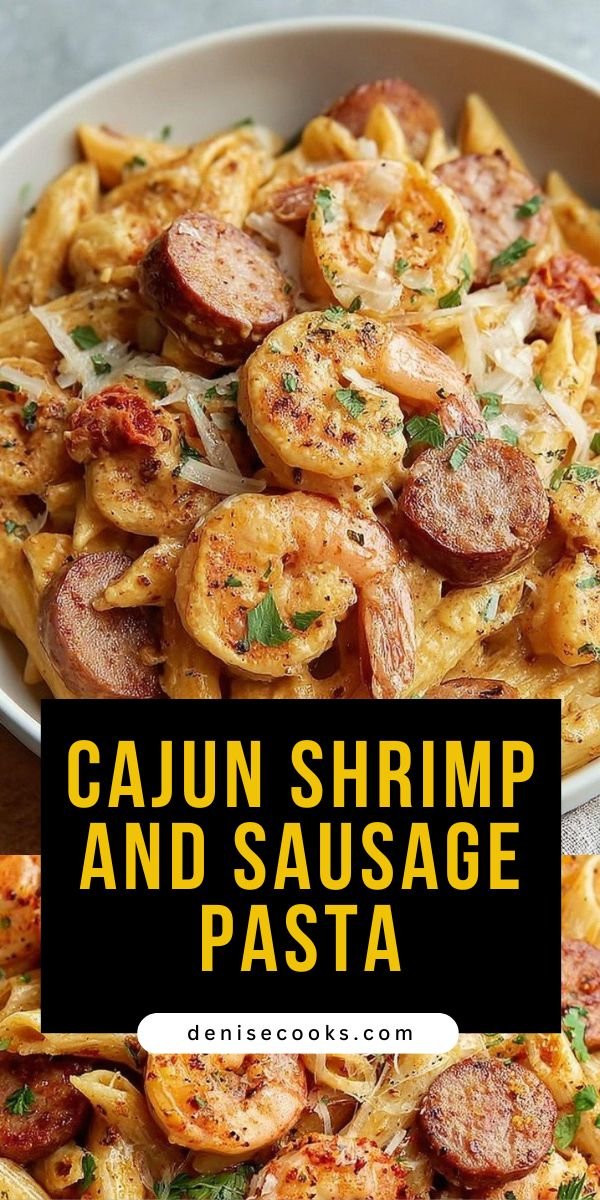
Cajun shrimp and sausage pasta becomes much easier when you understand the order of the pan. Sausage needs browning, shrimp needs restraint, vegetables need softening, and the sauce needs gentle heat. Once those pieces make sense, the dish stops feeling unpredictable and starts feeling controlled.
The real secret is not adding more cream or more seasoning. It is knowing when to remove the shrimp, how to build flavor from the skillet, and how to loosen the sauce at the end. That is what turns a simple shrimp sausage pasta into a creamy, smoky, spicy dinner with the right texture in every bite.
18) Nutrition
Serving Size 1 portion Calories 690 Sugar 4 g Sodium 1180 mg Fat 38 g Saturated Fat 16 g Carbohydrates 50 g Fiber 3 g Protein 37 g Cholesterol 205 mg
Leave a Comment