
1) What I Learned Testing Thai Quinoa Salad
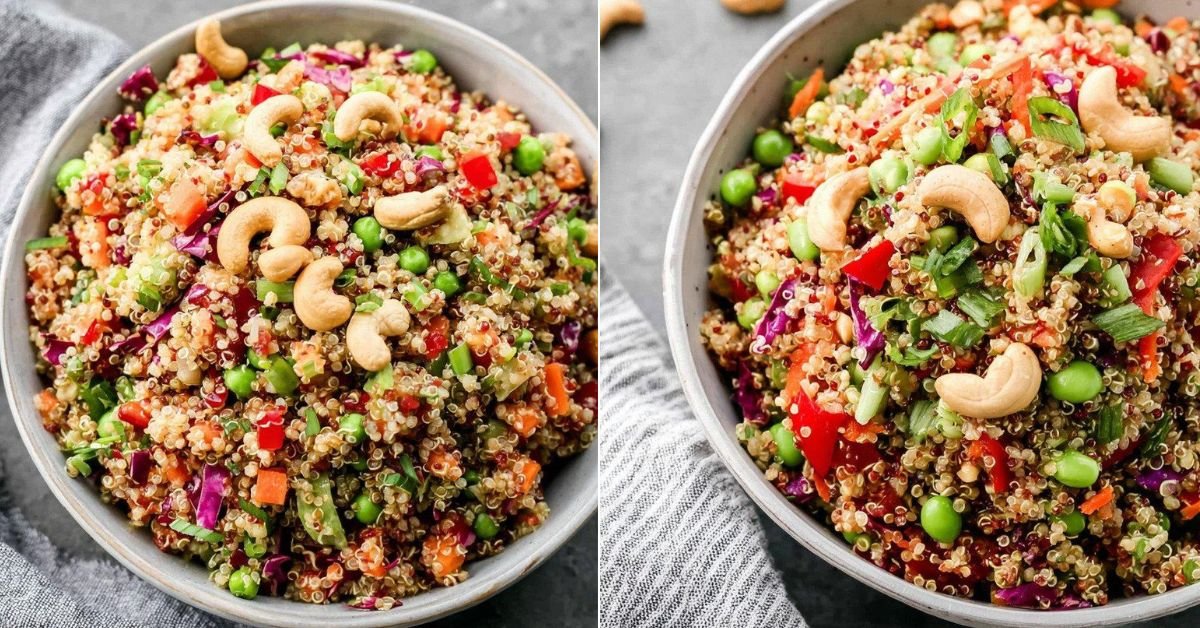
Meal-prep salads can go wrong fast: soggy vegetables, bland quinoa, and dressing that turns heavy by day two. I’m Denise, and my first batch had plenty of color but not enough balance. The quinoa tasted flat, the cabbage lost its snap, and the peanut dressing felt too thick. After testing the order of mixing, cooling the grains fully, and adding the dressing in stages, I found the fix. This high protein quinoa salad became the kind of calm, reliable lunch I want waiting in the fridge: crisp, fresh, filling, and bright like a thai quinoa salad should be.
Table of Contents
- 1) What I Learned Testing Thai Quinoa Salad
- 2) Key Takeaways
- 3) Easy Thai Quinoa Salad Recipe
- 4) Why Most Thai Quinoa Salad Recipes Fail
- 5) Ingredients for Thai Quinoa Salad
- 6) How to Make Thai Quinoa Salad
- 7) Recipe Card: Thai Quinoa Salad
- 8) Tips for Making Thai Quinoa Salad
- 9) Common Mistakes & Fixes
- 10) How to Tell Thai Quinoa Salad Has the Right Texture
- 11) Professional Secrets Behind Better Thai Quinoa Salad
- 12) Best Dishes or Pairings to Serve With Thai Quinoa Salad
- 13) Making Thai Quinoa Salad Ahead of Time
- 14) Storing Leftover Thai Quinoa Salad
- 15) FAQ (Real Cooking Questions)
- 16) Save This Thai Quinoa Salad Recipe
- 17) Conclusion
- 18) Nutrition
2) Key Takeaways
- Cool the quinoa before dressing: Warm quinoa softens the vegetables and makes the peanut dressing feel heavier than it should.
- Dress in stages: Coating the quinoa first builds flavor into the grains, while adding the rest later protects crunch and freshness.
- Use sturdy vegetables: Red cabbage, carrots, bell pepper, edamame, and onion hold texture better than delicate greens in a healthy meal prep quinoa salad.
- Add cashews at the end: Cashews bring the final crisp bite, but they soften if they sit too long in the dressing.
3) Easy Thai Quinoa Salad Recipe
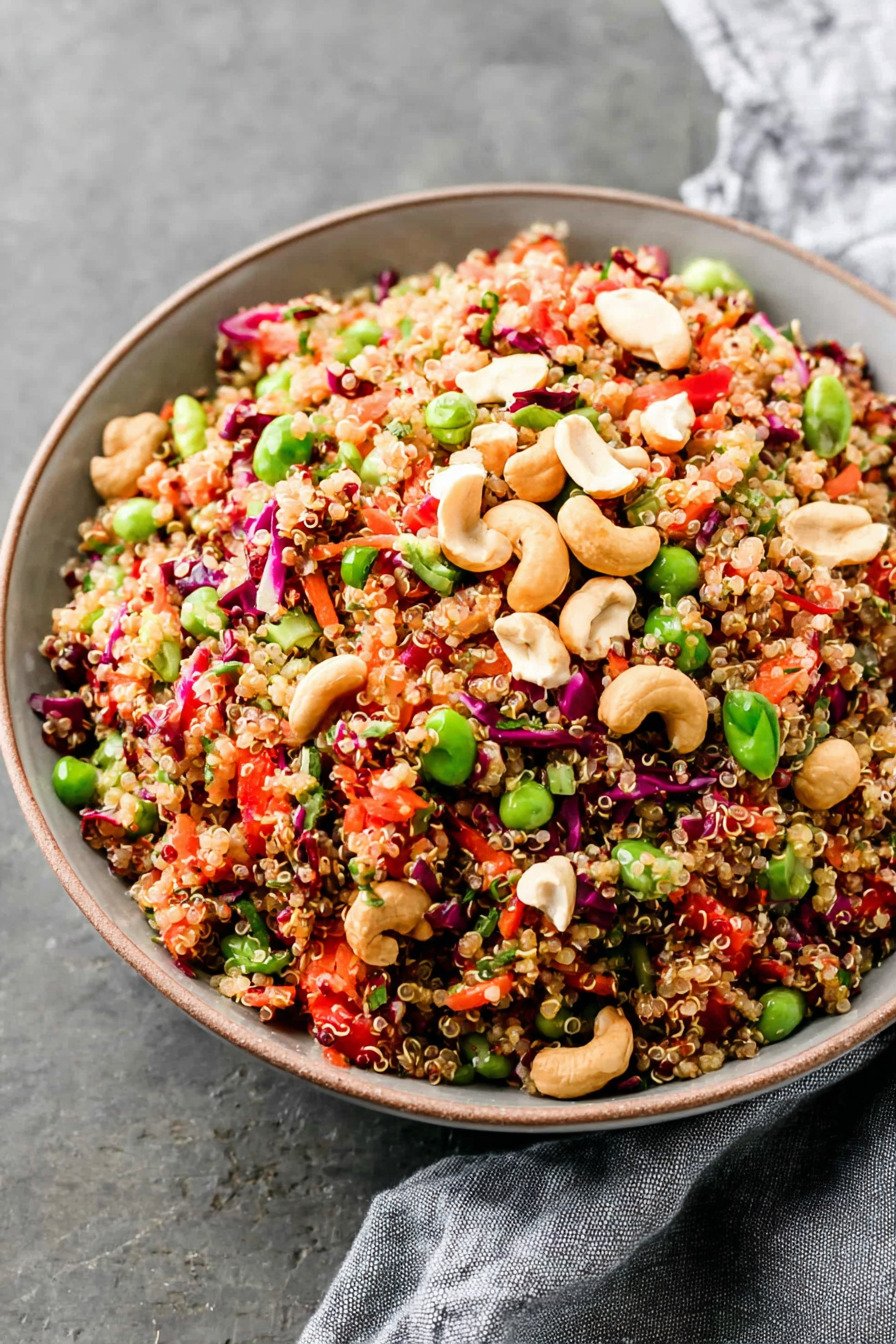
This Thai Quinoa Salad works because it treats quinoa like a flavor sponge instead of just a filler grain. Quinoa has a mild, earthy taste, so it needs salt, acidity, richness, and freshness around it. The peanut butter gives the dressing body, ginger brings sharp warmth, soy sauce seasons the salad, vinegar lifts the flavor, sesame oil adds aroma, and Sriracha gives a controlled heat. Instead of pouring all the dressing over everything at once, this method seasons the cooled quinoa first, then folds it into crisp vegetables. That small order change keeps the salad lively rather than wet.
The goal is not a heavy peanut noodle-style salad. The goal is a cold quinoa salad high protein enough for lunch, bright enough for a side dish, and sturdy enough to hold in the fridge. Edamame adds plant-based protein and a firm bite, red cabbage keeps its crunch, carrots bring sweetness, and cashews create contrast. When the dressing is thinned properly, it should coat the grains without clumping or pooling at the bottom of the bowl.
4) Why Most Thai Quinoa Salad Recipes Fail
The quinoa goes in warm: This is the most common reason the salad turns soft. Warm quinoa releases steam into the bowl, which wilts cabbage, dulls cilantro, and makes the dressing loosen unevenly. Letting the quinoa cool first protects the crisp vegetables and keeps the salad tasting fresh.
The dressing is too thick: Peanut butter varies by brand, and some jars make a dressing that clings in heavy streaks. A little water or olive oil helps the sauce turn smooth and pourable. The dressing should ribbon off a spoon, not sit like paste on top of the quinoa.
Everything gets dressed at once: Pouring all the dressing over the full salad makes it harder to control moisture. Quinoa absorbs dressing, while cabbage and carrots mostly hold it on the surface. Dressing the quinoa first gives deeper flavor without drowning the vegetables.
The vegetables are cut too large: Big pieces make the salad taste separate instead of balanced. Small diced bell pepper, finely chopped red onion, shredded cabbage, and shredded carrots help every bite carry crunch, sweetness, protein, herbs, and dressing.
The cashews sit too long: Cashews are there for texture. If they soak in the peanut dressing for hours, they lose their snap. Add them right before serving or store them separately if you are making this as a vegetarian quinoa salad for meal prep.
5) Ingredients for Thai Quinoa Salad
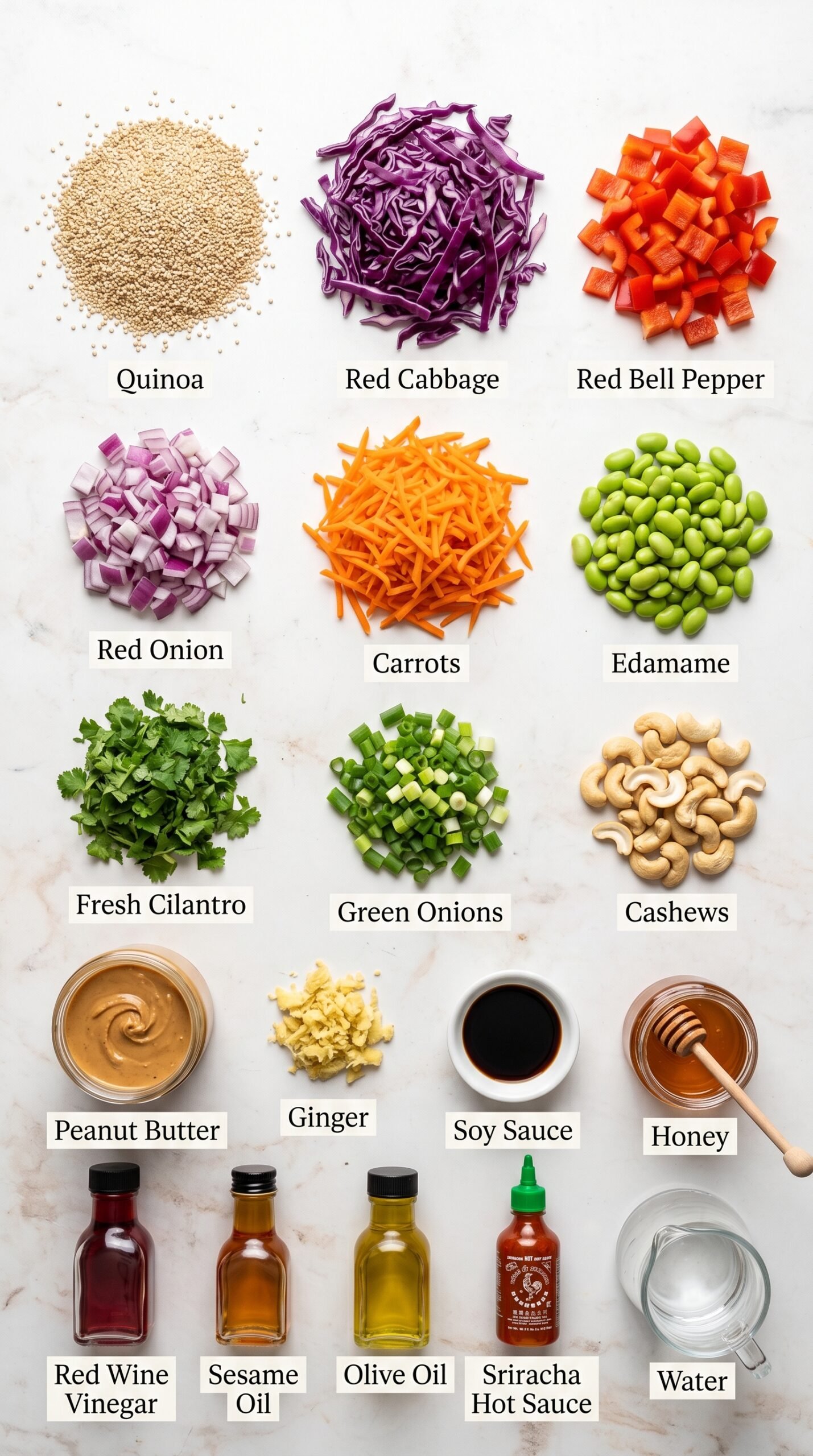
Quinoa: Quinoa forms the base of this high protein quinoa salad because it cooks into tender grains that absorb dressing well. Use it after cooking and cooling; if it is added hot, it can soften the vegetables and make the salad feel damp.
Red cabbage: Red cabbage gives color, crunch, and staying power. It is best shredded so it mixes evenly with the quinoa. If replaced with tender lettuce, the salad will not hold as well for meal prep.
Red bell pepper: Bell pepper adds juicy sweetness and a clean snap. Dice it small so it does not dominate each bite. Green pepper can taste sharper, while red pepper keeps the salad sweeter and more balanced.
Red onion: Red onion adds bite and savory contrast to the creamy peanut dressing. Chop it finely because large pieces can overpower the ginger, cilantro, and sesame aroma.
Carrots: Shredded carrots bring sweetness and a softer crunch. They also help the salad feel colorful and fresh. Thick-cut carrots are harder to distribute, so shredding gives better texture.
Edamame: Shelled edamame adds the main protein boost and gives the salad a satisfying chew. It turns this into a stronger quinoa bowl protein option, especially for lunches.
Fresh cilantro: Cilantro brightens the peanut dressing and keeps the salad from tasting too rich. Add it after chopping, not far in advance, because bruised herbs can darken and lose aroma.
Green onions: Green onions bring a milder onion finish than red onion. They work best as a garnish because their fresh bite is most noticeable at the end.
Cashews: Cashews add nutty crunch and make the salad feel more complete. Add them near serving time so they stay crisp instead of absorbing moisture from the dressing.
Creamy peanut butter: Peanut butter gives the dressing its creamy body. Smooth peanut butter makes the dressing silkier, while crunchy peanut butter adds tiny bits of texture. If it is very thick, thin the dressing slowly.
Fresh ginger: Freshly grated ginger adds warmth and sharpness that powdered ginger cannot match as cleanly. It cuts through the richness of the peanut butter and makes the salad taste brighter.
Low-sodium soy sauce: Soy sauce seasons the dressing and adds savory depth. Low-sodium soy sauce gives better control because peanut butter and cashews already bring richness.
Honey: Honey softens the acidity and heat. Maple syrup can be used as an optional swap when you want a plant-based version, but it gives a slightly deeper, less floral sweetness.
Red wine vinegar: Vinegar keeps the dressing from tasting flat. It balances the peanut butter and helps the salad feel fresh instead of heavy.
Sesame oil: Sesame oil adds a toasted aroma that makes the dressing taste more layered. A little goes a long way, so keep it measured rather than pouring freely.
Olive oil: Olive oil helps loosen the dressing and smooth out the peanut butter. It supports the texture without taking over the flavor.
Sriracha hot sauce: Sriracha adds gentle heat and a little tang. Start with the measured amount, then add more only after tasting the finished dressing.
Water: Water is used only if needed to thin the dressing. Add it in tiny splashes because too much can make the dressing taste diluted.
- Cooked quinoa vs warm quinoa: Cooked and cooled quinoa keeps the salad fresh; warm quinoa traps steam and softens the vegetables.
- Thin dressing vs thick dressing: A pourable dressing coats evenly; a thick dressing clumps onto some bites while leaving others bland.
- Red cabbage vs tender greens: Cabbage keeps crunch for meal prep, while tender greens wilt quickly under peanut dressing.
- Cashews mixed early vs added late: Early cashews soften; late cashews give the crisp finish that makes the salad more satisfying.
6) How to Make Thai Quinoa Salad
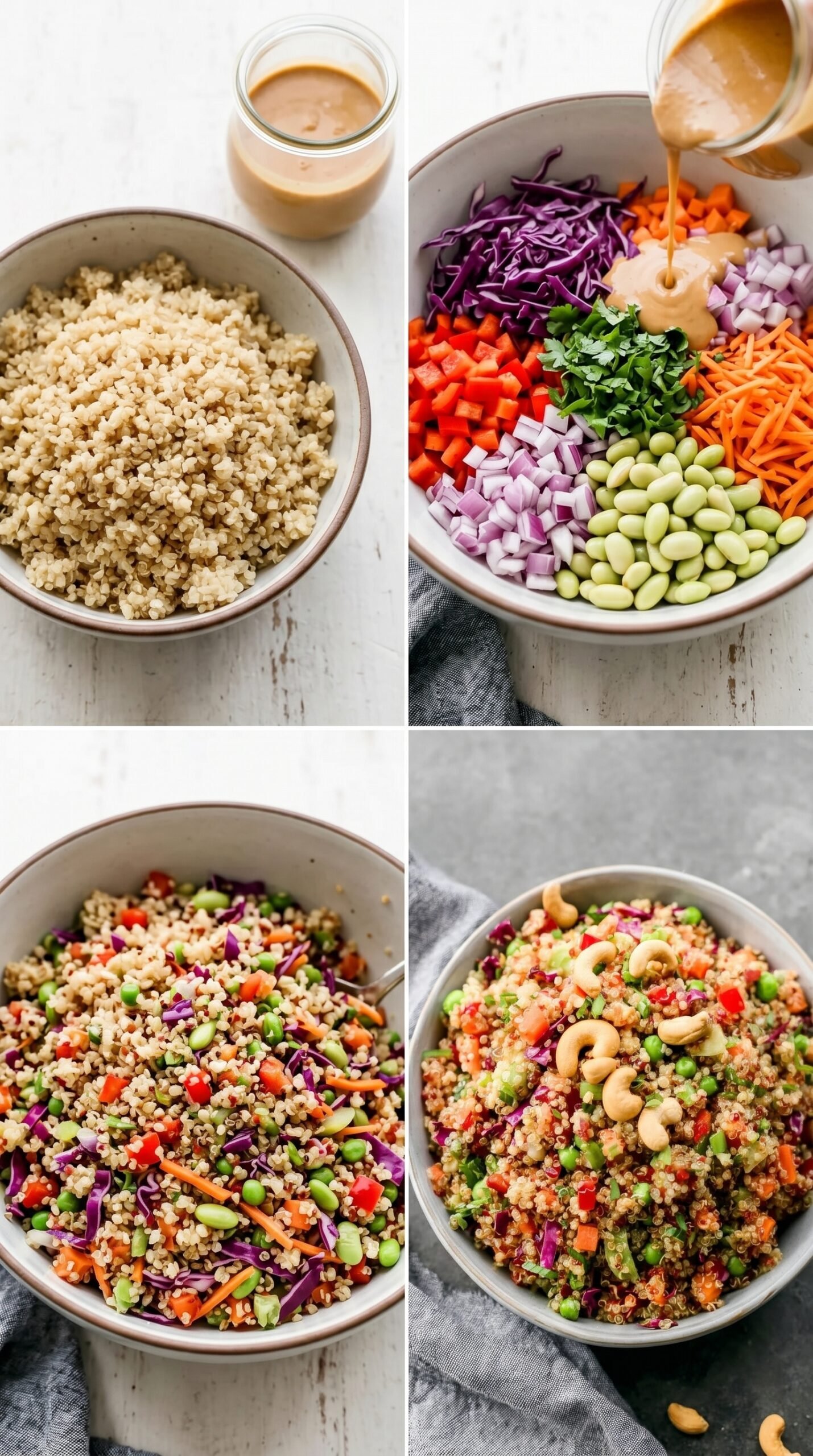
Step 1: Cook the quinoa according to the package directions, then let it cool until it is no longer steaming. You should have a little over 2 cups cooked quinoa. Fluff it gently so the grains do not pack together.
Step 2: Warm the peanut butter and honey briefly in a microwave-safe bowl for about 10 to 20 seconds, just enough to soften them. Stir until smooth before adding the ginger, soy sauce, vinegar, sesame oil, olive oil, and Sriracha. The dressing should look creamy and glossy, not separated.
Step 3: Thin the dressing only if it needs help moving from the spoon. Add a little water or olive oil at a time. Taste before adding more Sriracha because heat becomes stronger once the dressing coats the quinoa.
Step 4: Drizzle half of the dressing over the cooked and cooled quinoa, then toss until the grains are lightly coated. This step seasons the base first and prevents the vegetables from taking all the dressing.
Step 5: Combine the red bell pepper, red onion, cabbage, carrots, edamame, and cilantro in a large bowl. Add the dressed quinoa and as much remaining dressing as you like. Fold gently, add cashews, garnish with green onions, and stop mixing once everything looks evenly coated.
7) Recipe Card: Thai Quinoa Salad
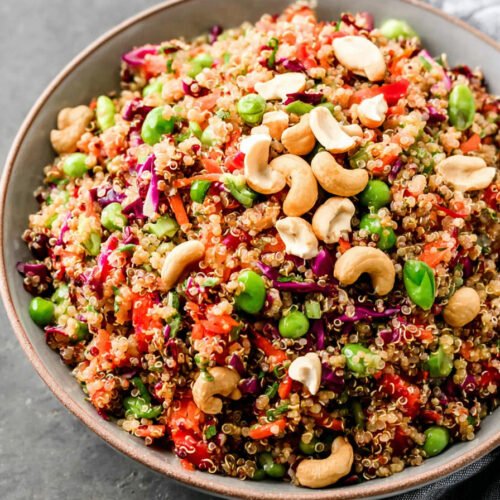
Thai Quinoa Salad with Crunchy Vegetables and Peanut Ginger Dressing
Ingredients
- ¾ cup quinoa, uncooked, rinsed if the package recommends it
- 1 heaping cup red cabbage, shredded for crisp color and crunch
- 1 red bell pepper, diced into small bite-size pieces
- 1/4 cup red onion, chopped finely so it does not overpower the salad
- 1 cup carrots, shredded for sweetness and texture
- 1 cup edamame, shelled, thawed if using frozen
- ½ cup fresh cilantro, chopped just before mixing for the freshest flavor
- 2 green onions, chopped for garnish and mild onion flavor
- ½ cup cashews, halves, added near serving for crunch
For the dressing:
- ¼ cup creamy peanut butter, crunchy or smooth, for body and richness
- 2 teaspoons freshly grated ginger, for fresh warmth
- 3 Tablespoons low-sodium soy sauce, to season without making the salad too salty
- 1 Tablespoon honey, or substitute maple syrup for a plant-based option
- 1 Tablespoon red wine vinegar, for acidity and balance
- 1 teaspoon sesame oil, for toasted aroma
- 1 teaspoon olive oil, to help loosen the dressing
- 1 teaspoon Sriracha hot sauce, plus more to taste if desired
- water to thin, if necessary, added a little at a time
Instructions
- Cook the quinoa according to the package directions until the grains are tender and the little spirals have released. Let it cool completely; you should have a little over 2 cups cooked quinoa. Cooling matters because warm quinoa can soften the vegetables too quickly.
- Add the peanut butter and honey to a microwave-safe bowl and heat for 10 to 20 seconds, just until softened. Stir until smooth, then mix in the grated ginger, soy sauce, red wine vinegar, sesame oil, olive oil, and Sriracha. Whisk until creamy. If the dressing feels too thick to drizzle, loosen it with a small splash of water or a little more olive oil. Taste and add more hot sauce only if you want extra heat.
- Drizzle half of the dressing over the cooked and cooled quinoa, then toss until the grains are lightly coated. This seasons the quinoa first instead of leaving all the flavor on the vegetables.
- In a large bowl, combine the diced red bell pepper, chopped red onion, shredded red cabbage, shredded carrots, shelled edamame, and chopped cilantro. Toss gently so the colors and textures are evenly mixed without bruising the herbs.
- Add the dressed quinoa to the vegetable mixture, then add as much of the remaining dressing as you like, tasting as you go. Fold in the cashew halves near the end so they stay crisp, garnish with chopped green onions, and serve chilled or at room temperature.
8) Tips for Making Thai Quinoa Salad
Let the quinoa cool on a wide plate or shallow tray if you want faster cooling. A deep bowl traps heat, and trapped heat creates steam. Steam is the hidden reason many grain salads lose crunch before they ever reach the table.
Whisk the dressing until the peanut butter fully dissolves into the liquids. If you see streaks of peanut butter, keep stirring before adding it to the quinoa. A smooth dressing coats more evenly and gives the salad a cleaner finish.
Use the remaining dressing by taste, not by obligation. Quinoa absorbs more dressing than cabbage or carrots, so the right amount depends on how thick your peanut butter is and how long the salad will sit before serving.
For a stronger asian quinoa salad flavor, lean on fresh ginger, sesame oil, and vinegar rather than adding too much soy sauce. Extra soy sauce can make the salad salty before it tastes brighter.
If meal prepping, keep a small amount of dressing aside. Quinoa continues to absorb moisture as it sits, and a teaspoon or two of reserved dressing can refresh the salad before lunch without making it soggy.
9) Common Mistakes & Fixes
Problem: The salad tastes bland. Cause: The quinoa was mixed with vegetables before being seasoned. Fix: Coat the cooled quinoa with half the dressing first so the grains absorb flavor before the vegetables are added.
Problem: The vegetables lose crunch. Cause: The quinoa was still warm or the salad was overdressed too early. Fix: Cool the quinoa completely and add the final dressing gradually.
Problem: The dressing is clumpy. Cause: The peanut butter was too thick or not warmed enough. Fix: Warm the peanut butter and honey briefly, whisk until smooth, then thin with small splashes of water or oil.
Problem: The salad tastes too sharp or too salty. Cause: Too much vinegar, soy sauce, or Sriracha was added without tasting. Fix: Balance it with a little more peanut butter or honey, then fold in more quinoa or vegetables if needed.
Problem: The cashews are soft. Cause: They sat in the dressing too long. Fix: Add cashews right before serving, especially when preparing a healthy meal prep quinoa salad.
10) How to Tell Thai Quinoa Salad Has the Right Texture
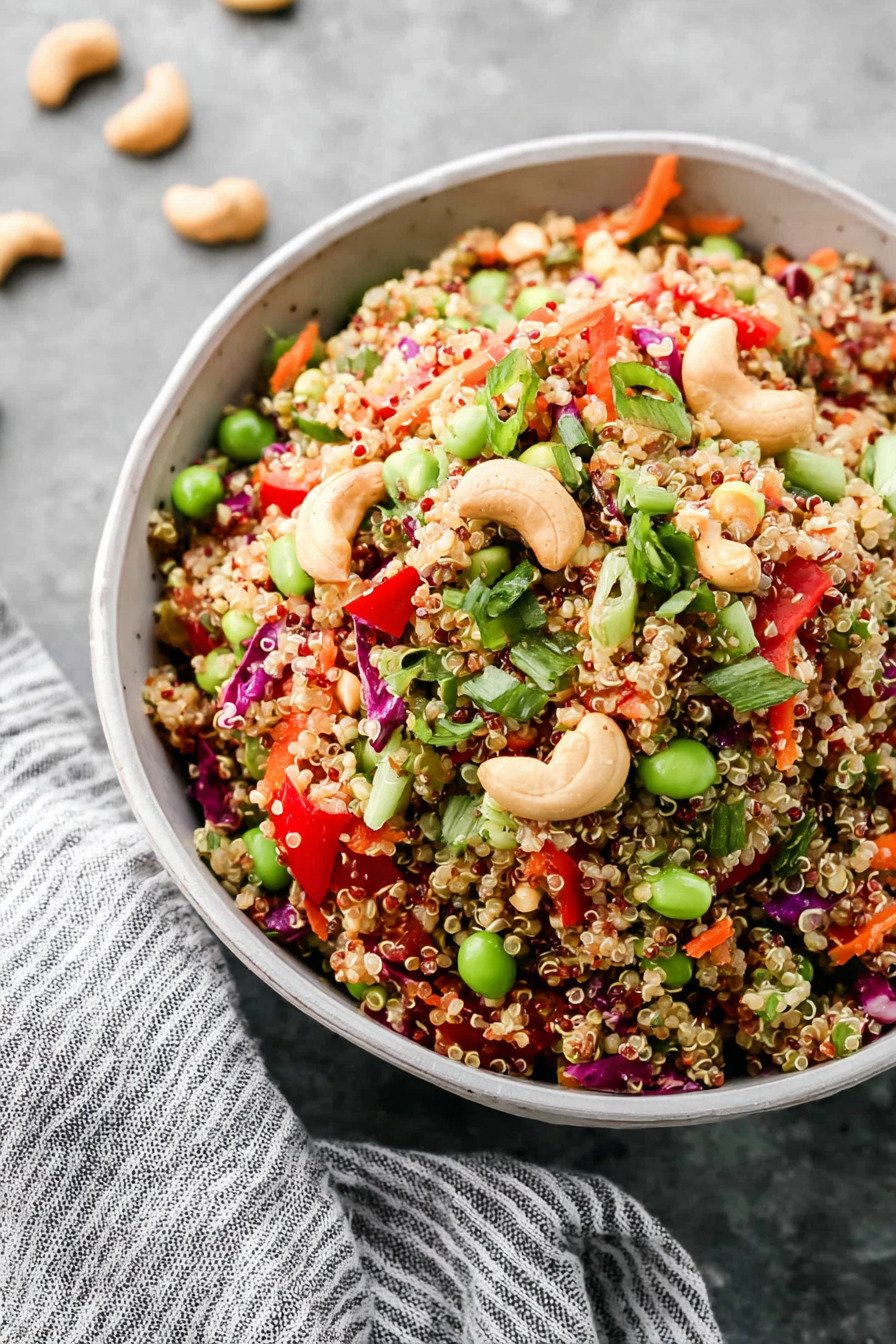
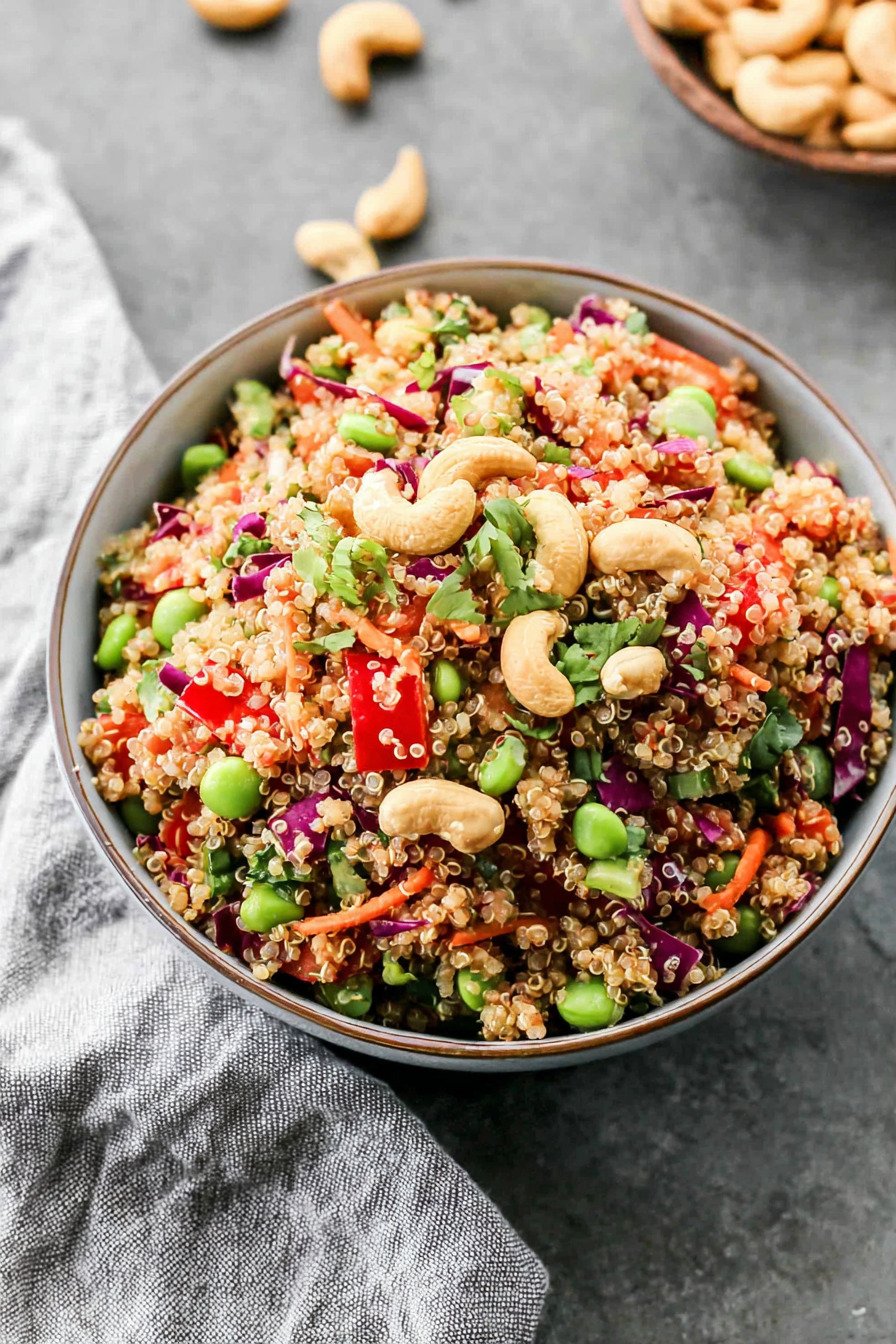
A good Thai Quinoa Salad should look colorful and separated, not compacted. The quinoa should be fluffy, lightly coated, and visible between the vegetables. The cabbage should still have a crisp edge, the carrots should bend without turning limp, and the bell pepper should look juicy rather than wet. When you stir the bowl, there should be no dressing puddle at the bottom. The peanut dressing should cling in a thin layer, not form heavy streaks. The aroma should be nutty, gingery, lightly toasted from sesame oil, and fresh from cilantro and green onion. If the salad tastes dull, it likely needs a small lift from vinegar or ginger. If it tastes heavy, it may be overdressed.
11) Professional Secrets Behind Better Thai Quinoa Salad
The biggest professional habit here is controlling moisture. Grain salads do not fail because the ingredients are wrong; they fail because the temperature, dressing thickness, and mixing order are ignored. Cooled quinoa absorbs dressing more predictably. Shredded vegetables distribute better than chunky ones. A loosened dressing spreads flavor instead of sitting in patches. And a final garnish, like green onions and cashews, gives the salad a fresh top note right before serving.
Another useful trick is tasting the dressing twice: once before it touches the quinoa and once after it has coated the salad. Quinoa mutes seasoning, while cilantro, onion, and vinegar sharpen it. Tasting only at the beginning can lead to a finished salad that feels either flat or too salty. The better checkpoint is the final bite.
12) Best Dishes or Pairings to Serve With Thai Quinoa Salad
This salad can stand alone as a vegetarian lunch, but it also works well beside grilled chicken, baked salmon, shrimp skewers, tofu, lettuce wraps, or a simple bowl of soup. For a lighter meal, serve it in lettuce cups or over chopped romaine. For a more filling quinoa bowl protein meal, add sliced avocado, cucumber, extra edamame, or a soft-boiled egg if that fits your table.
Because the dressing is rich and nutty, pair it with dishes that bring brightness or clean heat. Citrus-marinated proteins, cucumber salads, roasted vegetables, and broth-based soups all help the meal feel balanced instead of heavy.
13) Making Thai Quinoa Salad Ahead of Time
Thai Quinoa Salad is especially useful for make-ahead meals because the main vegetables are sturdy. Cook and cool the quinoa first, then mix it with half the dressing. Combine the vegetables separately if you want the freshest texture, or assemble the salad fully and hold back the cashews until serving. If the dressing thickens in the refrigerator, loosen the salad with a tiny splash of water, vinegar, or reserved dressing before eating.
For the best meal-prep result, store cashews and green onions separately. Add them after the salad has been chilled and stirred. That small final step makes the salad taste freshly made instead of stored.
14) Storing Leftover Thai Quinoa Salad
Store leftovers in an airtight container in the refrigerator for up to 3 days. The flavor usually deepens as the quinoa absorbs the peanut ginger dressing, but the vegetables will gradually soften. Stir before serving because the dressing can settle or thicken around the grains.
Freezing is not recommended for this salad. The cabbage, carrots, bell pepper, cilantro, and dressing lose their fresh texture after thawing. If you want to reuse leftovers, spoon them into lettuce cups, pile them into a grain bowl, or serve them with extra edamame for a cold quinoa salad high protein lunch.
15) FAQ (Real Cooking Questions)
Can I make Thai Quinoa Salad the night before? Yes, but keep the cashews separate until serving. The quinoa and vegetables can sit with the dressing, though the texture is best when the final crunchy ingredients are added later.
Why is my peanut dressing too thick? Peanut butter thickness varies. Warm it briefly with the honey, then whisk in the other dressing ingredients. If it still feels heavy, add water a teaspoon at a time until it drizzles smoothly.
Can I make this vegetarian quinoa salad vegan? Yes. The main swap is using maple syrup instead of honey. Keep the rest of the method the same so the dressing stays balanced and the quinoa absorbs flavor properly.
Can I use frozen edamame? Yes. Thaw it and drain it well before adding it to the salad. Extra moisture from frozen edamame can loosen the dressing and make the salad feel watery.
How do I keep this high protein quinoa salad from getting soggy? Cool the quinoa completely, add dressing in stages, and save the cashews for the end. Those three steps protect the crunch and keep the dressing from overwhelming the vegetables.
16) Save This Thai Quinoa Salad Recipe
If this Thai Quinoa Salad helped you solve the usual soggy meal-prep salad problem, save it for lunch planning, potlucks, or warm-weather dinners. The key reminder is: cool the quinoa first, dress it in stages, and add cashews at the end for crunch.
17) Conclusion
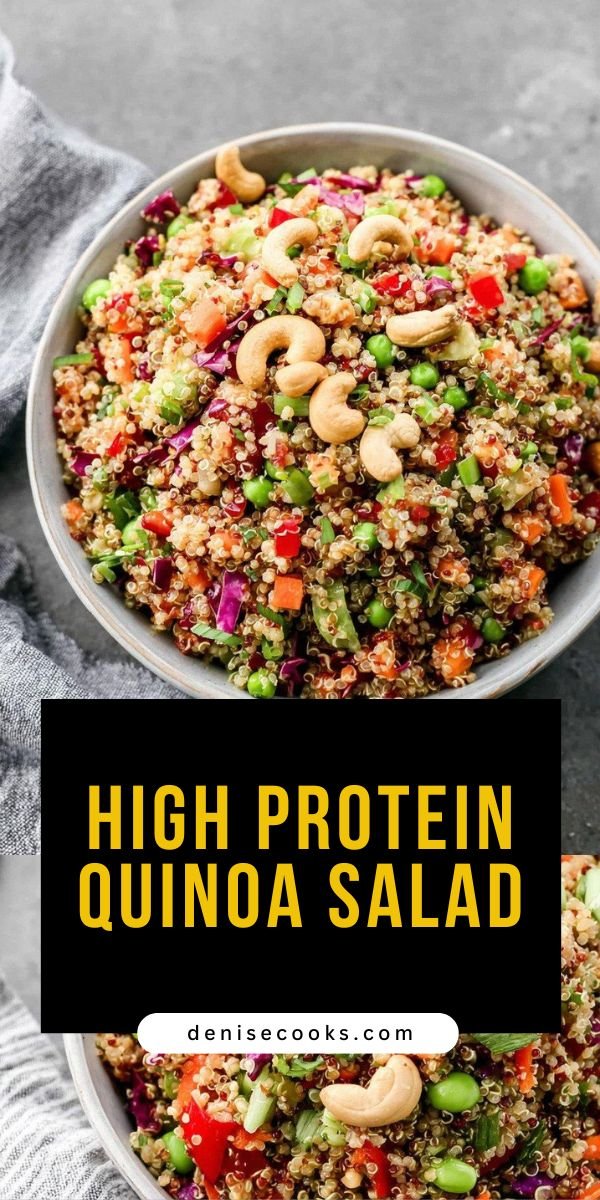
Thai Quinoa Salad becomes much better when you stop treating it like a toss-everything-in-a-bowl recipe. The real difference comes from temperature, dressing texture, and timing. Cool quinoa keeps the vegetables crisp. A smooth peanut ginger dressing seasons without clumping. Cashews added at the end give the final bite its crunch. Once those pieces are in place, this high protein quinoa salad turns from a forgettable fridge container into a fresh, colorful, practical meal you can trust for lunch, dinner sides, or make-ahead bowls.
18) Nutrition
Serving Size 1 portion Calories 315 Sugar 8 g Sodium 520 mg Fat 17 g Saturated Fat 3 g Carbohydrates 32 g Fiber 6 g Protein 12 g Cholesterol 0 mg

Leave a Comment