
1) What I Learned Testing Ultimate Gluten-free Italian Pasta Salad – A Delicious Twist
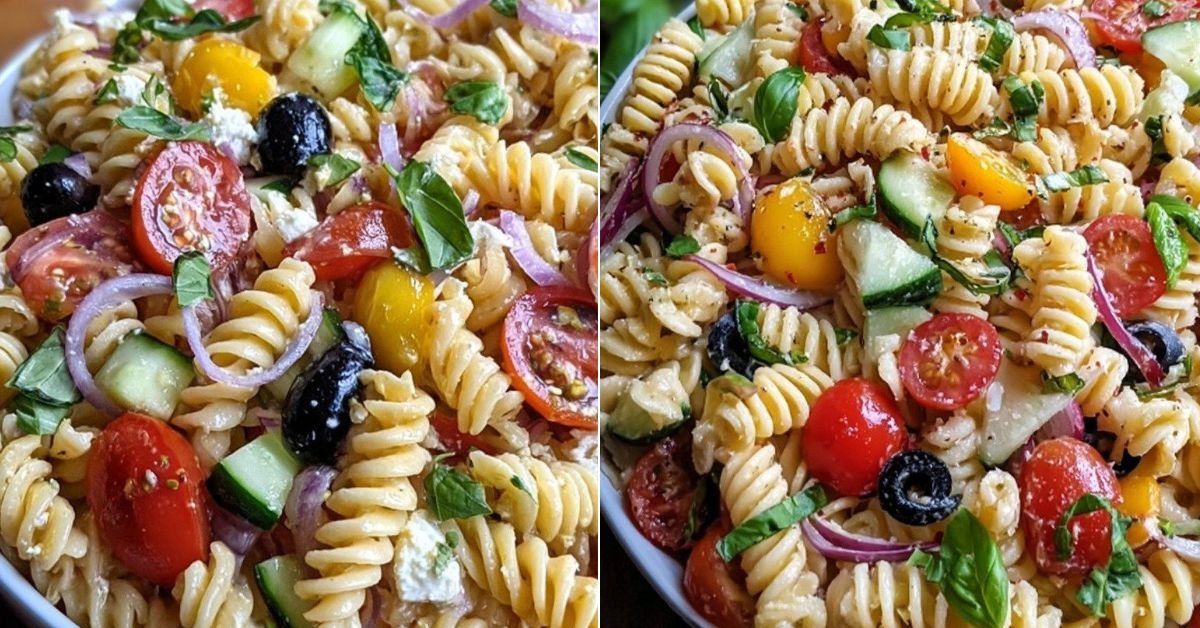
Mushy pasta can ruin a chilled salad before it ever reaches the table. I’m Denise, and my early batches of gluten free italian pasta salad either broke apart after tossing or tasted flat once cold. After testing different pasta shapes, cooling methods, and dressing timing, I discovered that rinsing the gluten-free pasta quickly, draining it well, and tossing gently gives the best texture. This Ultimate Gluten-free Italian Pasta Salad – A Delicious Twist brings me the calm of summer family dinners: crisp vegetables, creamy feta, basil, olives, and a gluten free pasta salad that stays bright after chilling.
Table of Contents
- 1) What I Learned Testing Ultimate Gluten-free Italian Pasta Salad – A Delicious Twist
- 2) Key Takeaways
- 3) Easy Ultimate Gluten-free Italian Pasta Salad – A Delicious Twist Recipe
- 4) Why Most Ultimate Gluten-free Italian Pasta Salad – A Delicious Twist Recipes Fail
- 5) Ingredients for Ultimate Gluten-free Italian Pasta Salad – A Delicious Twist
- 6) How to Make Ultimate Gluten-free Italian Pasta Salad – A Delicious Twist
- 7) Recipe Card: Ultimate Gluten-free Italian Pasta Salad – A Delicious Twist
- 8) Tips for Making Ultimate Gluten-free Italian Pasta Salad – A Delicious Twist
- 9) Common Mistakes & Fixes
- 10) How to Tell Ultimate Gluten-free Italian Pasta Salad – A Delicious Twist Has the Right Texture
- 11) Professional Secrets Behind Better Ultimate Gluten-free Italian Pasta Salad – A Delicious Twist
- 12) Best Dishes or Pairings to Serve With Ultimate Gluten-free Italian Pasta Salad – A Delicious Twist
- 13) Making Ultimate Gluten-free Italian Pasta Salad – A Delicious Twist Ahead of Time
- 14) Storing Leftover Ultimate Gluten-free Italian Pasta Salad – A Delicious Twist
- 15) FAQ (Real Cooking Questions)
- 16) Save This Ultimate Gluten-free Italian Pasta Salad – A Delicious Twist Recipe
- 17) Conclusion
- 18) Nutrition
2) Key Takeaways
- Cook the pasta only until al dente: Gluten-free pasta softens faster than wheat pasta once chilled, so a firm bite at draining protects the final texture.
- Rinse and drain well: Cold water stops carryover cooking, but excess water must be shaken off so the dressing does not taste thin.
- Dress gently, not aggressively: A wide spoon or spatula coats the salad without breaking the pasta or smearing the feta.
- Chill before serving: A 30-minute rest helps the basil, olives, vegetables, feta, and dressing taste like one balanced cold gluten free pasta salad.
3) Easy Ultimate Gluten-free Italian Pasta Salad – A Delicious Twist Recipe
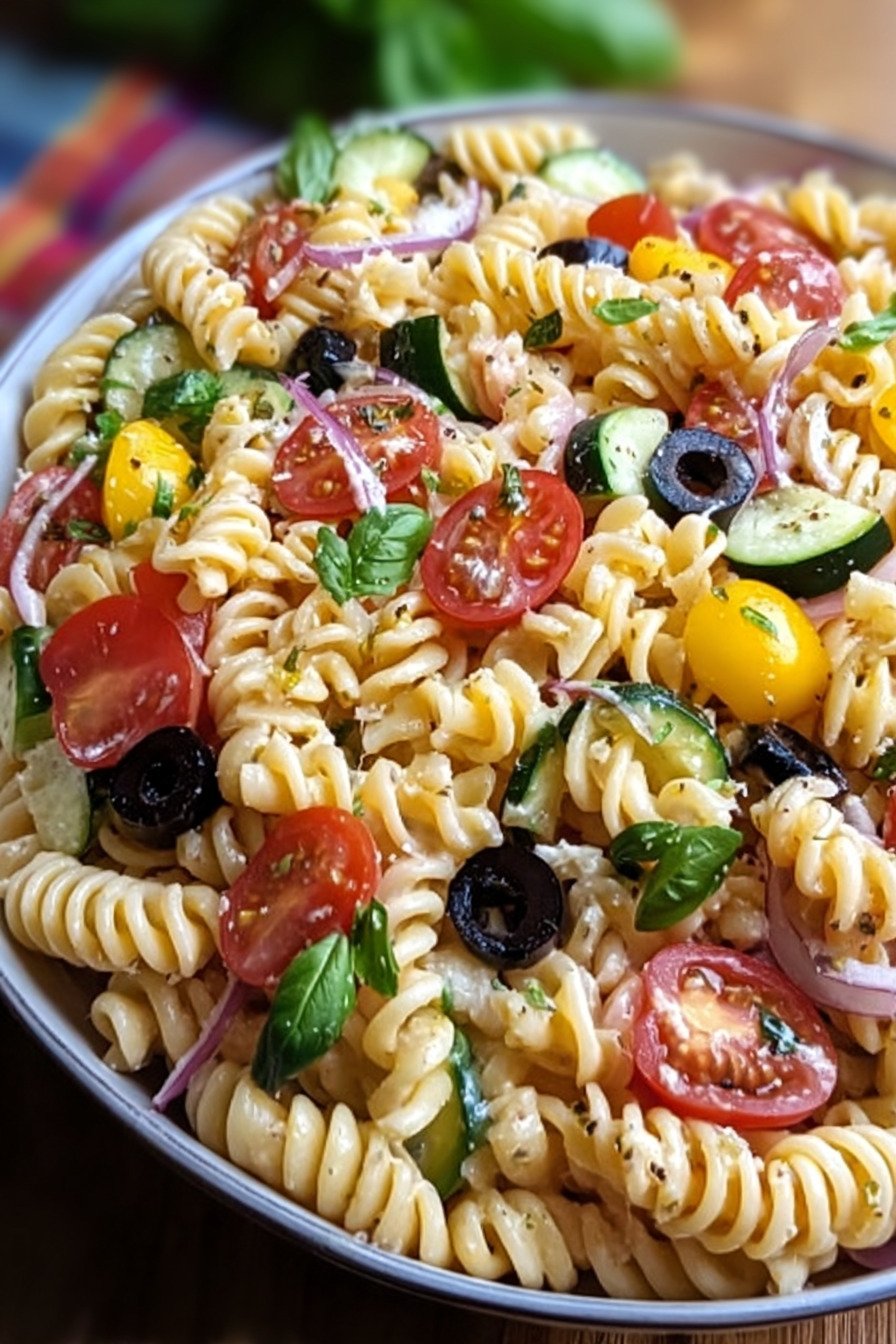
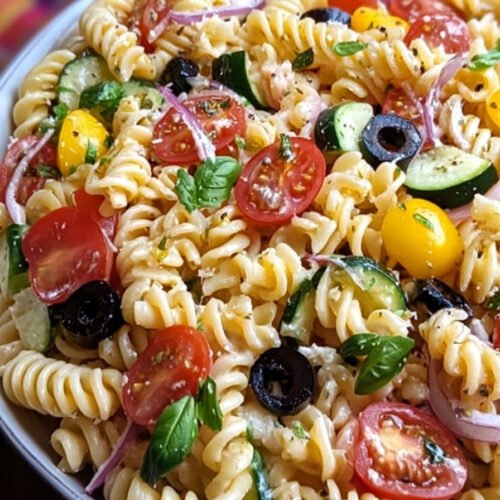
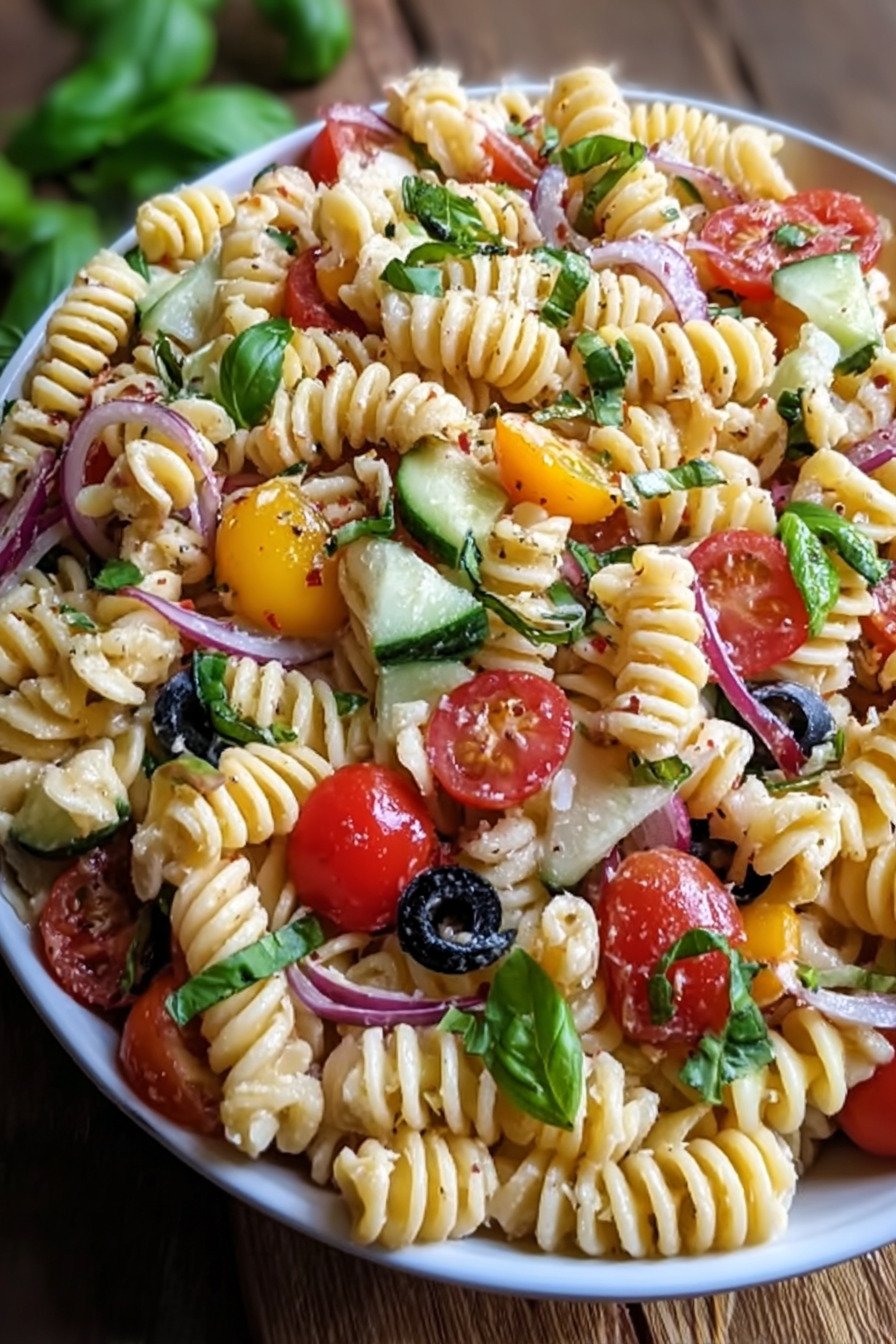
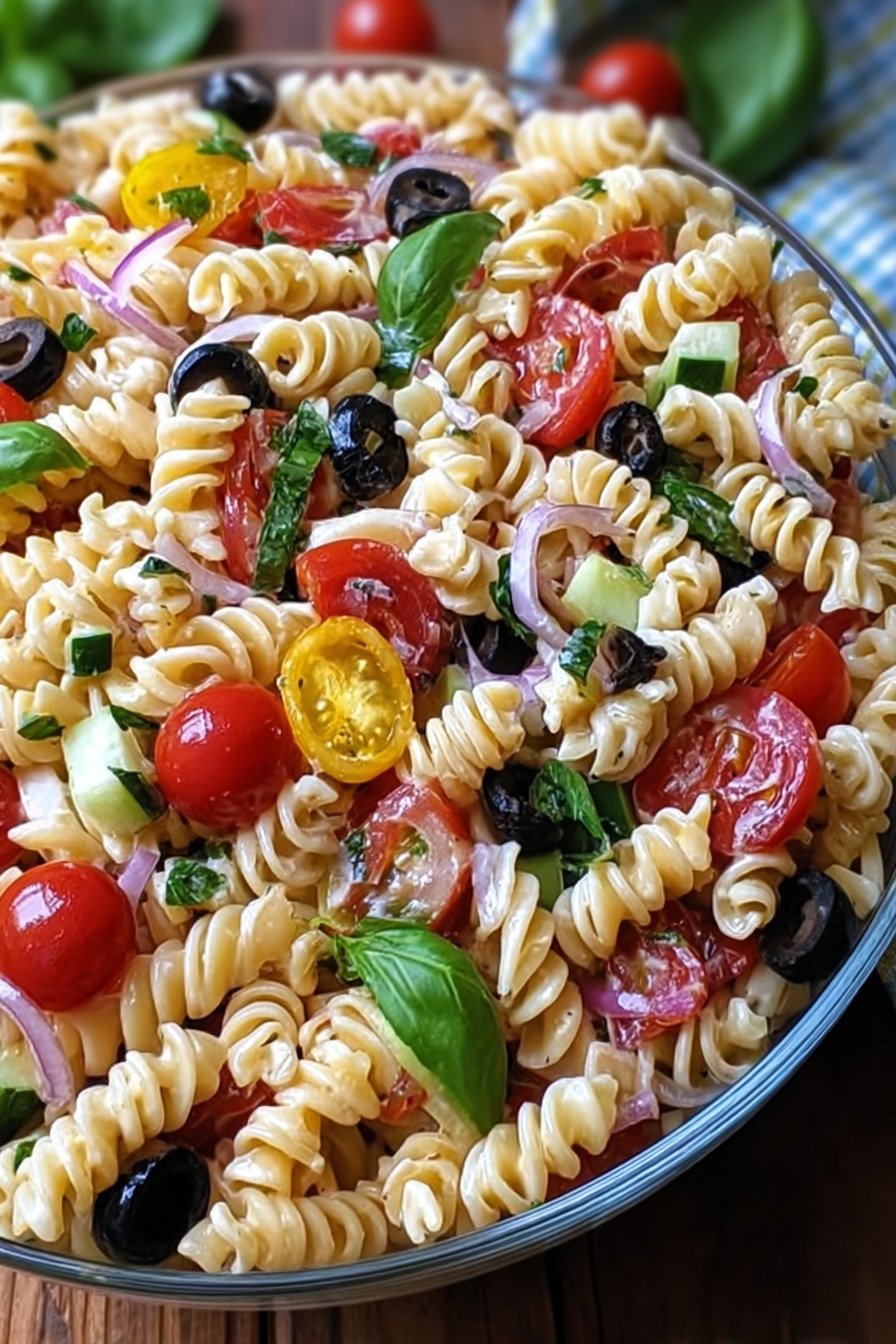
This easy gluten free pasta salad recipe works because it treats gluten-free pasta as its own ingredient, not as a simple swap for regular pasta. The pasta is cooked until firm, cooled immediately, and mixed with vegetables that bring crunch and moisture without turning the bowl soggy. Cherry tomatoes add juice, cucumber keeps the salad fresh, bell pepper gives bite, black olives add briny depth, feta brings creamy saltiness, and basil lifts the whole bowl with a fresh herbal aroma.
The dressing matters too. A zesty italian dressing pasta salad needs enough acidity to brighten the pasta, but not so much that the noodles break down. The goal is a lightly coated salad where every forkful has contrast: tender pasta, crisp vegetables, salty cheese, soft basil, and a chilled dressing that tastes lively instead of heavy.
4) Why Most Ultimate Gluten-free Italian Pasta Salad – A Delicious Twist Recipes Fail
Most gluten free italian pasta salad problems start with overcooked pasta. Gluten-free pasta often has a more delicate starch structure, so if it is boiled until very soft, it can split or turn pasty after chilling. Cooking to al dente gives the pasta enough strength to handle rinsing, dressing, and refrigeration.
Another common failure is watery salad. Rinsing is useful because it stops cooking, but pasta that goes into the bowl dripping wet dilutes the Italian dressing. The salad then tastes flat, even if the ingredients are good. Drain the pasta well and shake the colander so the dressing can cling instead of sliding off.
A third issue is harsh onion or uneven seasoning. Red onion should be chopped small so it spreads through the salad without dominating. Salt should be added after the feta, olives, and dressing because those ingredients already bring salinity. Finally, rough tossing can break the pasta and crush the cheese, so gentle folding keeps the salad colorful and clean.
5) Ingredients for Ultimate Gluten-free Italian Pasta Salad – A Delicious Twist
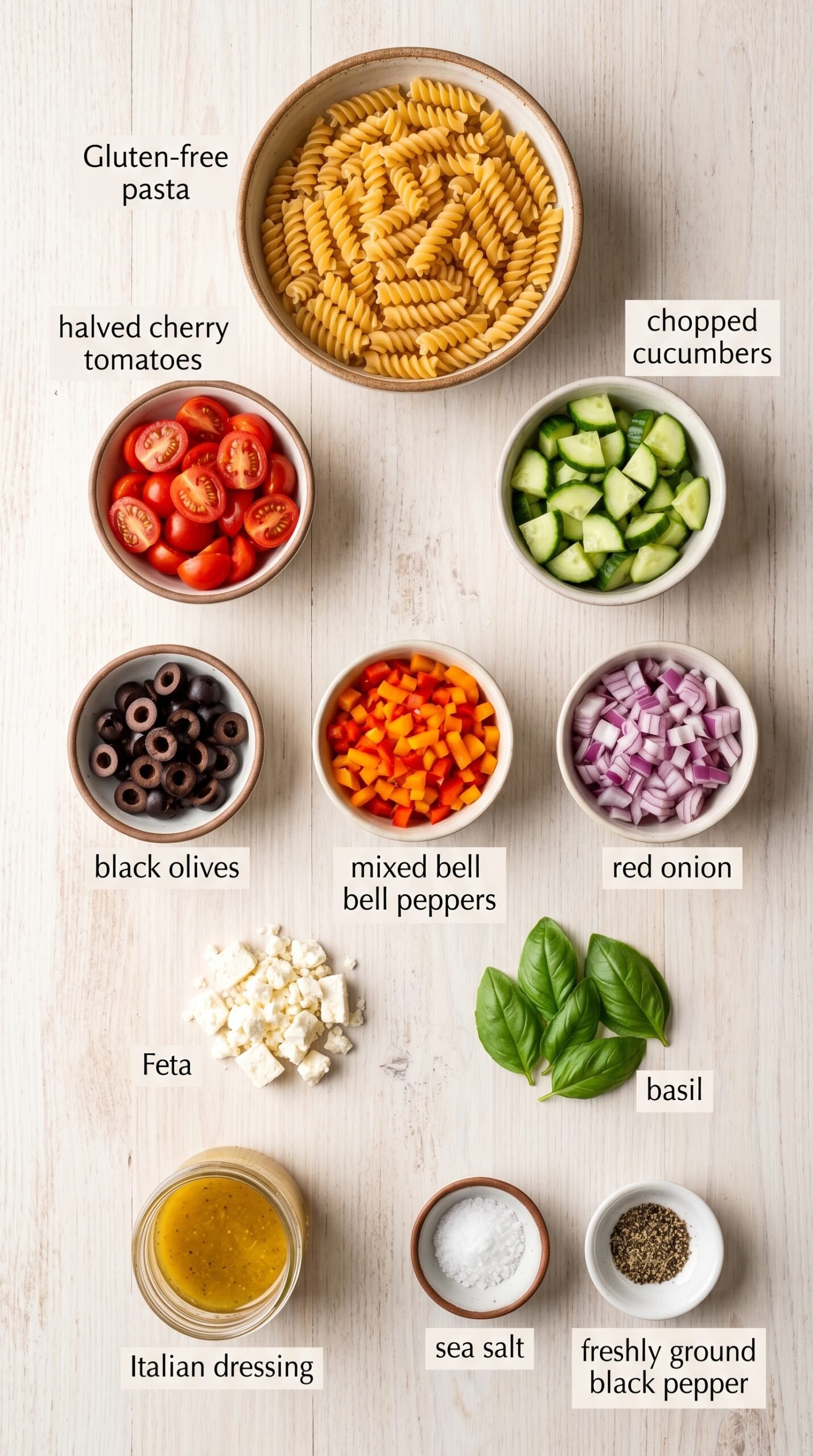
Gluten-free pasta: Use penne or rotini when you want sturdy pieces that hold dressing in ridges and curves. If you use a very thin shape, it may split after rinsing and chilling.
Cherry tomatoes: These add juicy sweetness and a fresh pop against the salty olives and feta. Add them after the pasta cools so their skins stay firm and bright.
Cucumber: Cucumber brings cool crunch. If your cucumber is extra watery, pat the chopped pieces dry so the salad does not become diluted during chilling.
Black olives: Olives give the salad its briny Italian-style flavor. If you reduce them, the salad will taste milder and may need a little more seasoning at the end.
Bell pepper: Bell pepper adds crisp texture and mild sweetness. Use it when you want color and crunch that can survive refrigeration better than delicate greens.
Red onion: Red onion gives sharpness, but it should be chopped small. Large pieces can overpower the more delicate basil and cucumber.
Feta cheese: Feta adds creamy saltiness and helps the salad taste complete without a heavy sauce. Toss gently so it stays in small crumbles instead of dissolving into the dressing.
Fresh basil leaves: Basil gives the salad a fresh aroma that dried herbs cannot match. Slice or tear it close to mixing time so it stays fragrant and green.
Gluten-free Italian dressing: This is the main flavor bridge between the pasta, vegetables, olives, and cheese. Shake it well before adding so the oil, vinegar, and seasonings coat evenly.
Salt and pepper: Season at the end because the dressing, feta, and olives already contain salt. Pepper adds a light bite that keeps the salad from tasting too soft or creamy.
- Rotini vs penne: Rotini catches more dressing in its spirals, while penne gives a cleaner bite and tends to hold its shape well.
- Cold rinse vs no rinse: A cold rinse is helpful here because this is a chilled salad, not a hot pasta dish that needs starch for sauce cling.
- Feta vs softer cheese: Feta gives salty structure; softer cheeses can smear more quickly and make the salad look cloudy.
- Gentle folding vs hard stirring: Gentle folding keeps the gf pasta salad intact, while aggressive stirring can make gluten-free pasta break apart.
6) How to Make Ultimate Gluten-free Italian Pasta Salad – A Delicious Twist
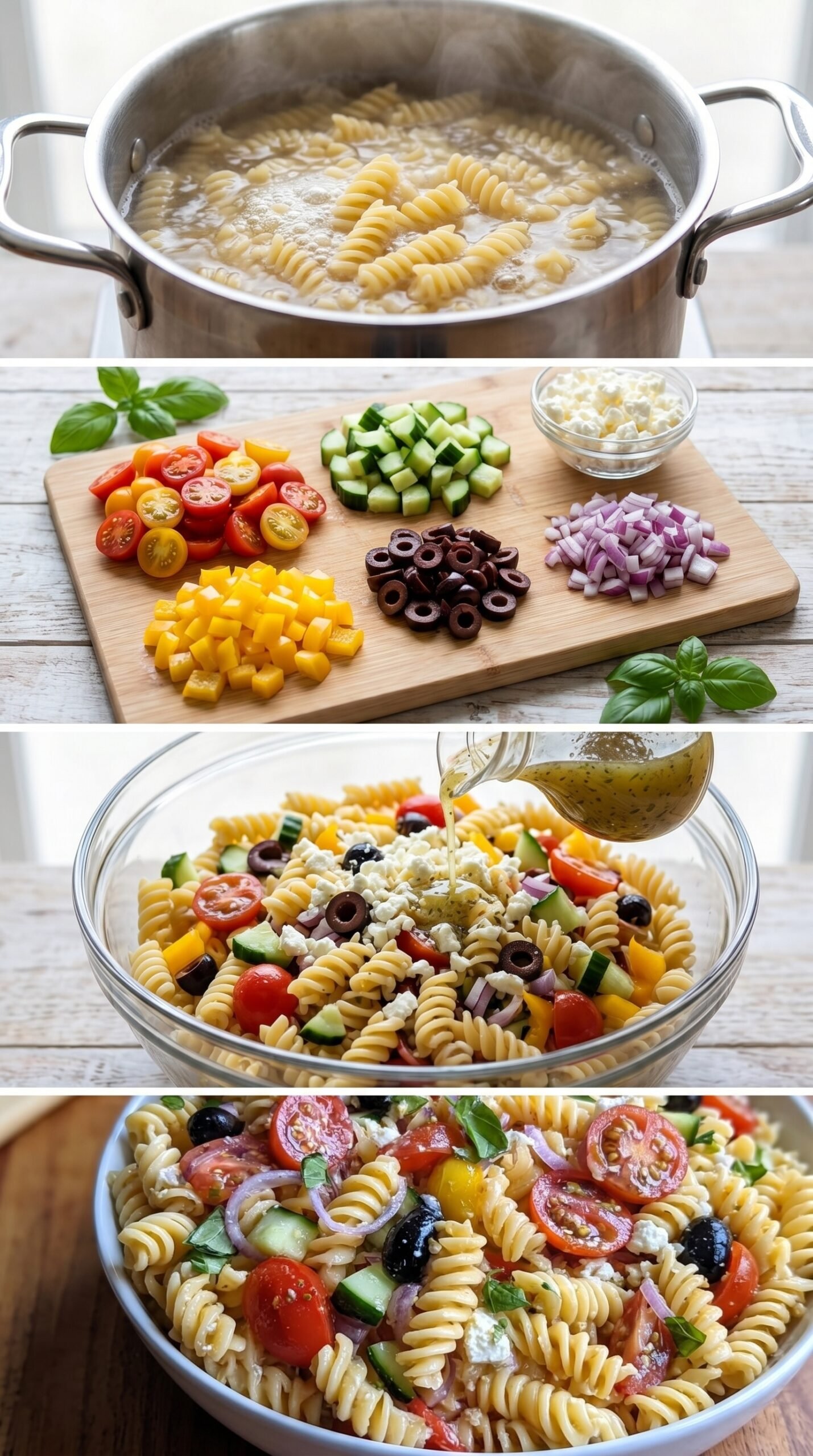
Step 1: Bring a large pot of salted water to a boil and cook the gluten-free pasta according to the package directions for 8 to 10 minutes, stopping when it is al dente. The pasta should feel tender but still firm enough to hold its shape.
Step 2: While the pasta cooks, prepare the vegetables and cheese. Halve the cherry tomatoes, chop the cucumber and bell pepper, finely chop the red onion, slice the black olives, and crumble the feta so the salad can be mixed while the pasta is properly cooled.
Step 3: Drain the pasta and rinse it under cold water to stop the cooking process. Shake the colander well because trapped water is one of the fastest ways to weaken the flavor of a cold gluten free pasta salad.
Step 4: In a large bowl, combine the cooled pasta with the chopped vegetables, sliced olives, feta, and fresh basil. Use a wide bowl if possible so the ingredients can be folded together instead of compressed.
Step 5: Drizzle the gluten-free Italian dressing over the salad and toss gently until coated. Taste after mixing, then season with salt and pepper. Refrigerate for at least 30 minutes so the flavors blend and the salad tastes chilled, bright, and balanced.
7) Recipe Card: Ultimate Gluten-free Italian Pasta Salad – A Delicious Twist
Ultimate Gluten-free Italian Pasta Salad – A Delicious Twist
Ingredients
For the Pasta
- 8 oz Gluten-free pasta e.g., penne or rotini, cooked just until al dente so it holds its shape after chilling
For the Vegetables
- 1 cup Cherry tomatoes halved, for juicy sweetness and color
- 1 cup Cucumber chopped, for cool crunch
- 1/2 cup Black olives sliced, for a salty briny bite
- 1 cup Bell pepper chopped, for crisp texture and mild sweetness
- 1/4 cup Red onion chopped, finely cut so the flavor spreads without overpowering
For the Cheese
- 1 cup Feta cheese crumbled, added gently to keep small creamy pieces throughout
For the Herbs
- 1/4 cup Fresh basil leaves, torn or sliced shortly before mixing for the freshest aroma
For the Dressing
- 1/2 cup Italian dressing ensure gluten-free, shaken well before adding so the oil and vinegar are evenly blended
For Seasoning
- to taste Salt, added after dressing because feta and olives are already salty
- to taste Pepper, freshly cracked if possible for better aroma
Instructions
- Bring a large pot of salted water to a full boil. Add the gluten-free pasta and cook according to the package directions, usually 8–10 minutes, until al dente. Avoid overcooking because gluten-free pasta softens more as it chills, then drain well.
- While the pasta cooks, halve the cherry tomatoes, chop the cucumber and bell pepper, finely chop the red onion, slice the black olives, and crumble the feta so every ingredient is ready before mixing.
- Rinse the drained pasta under cold water to stop the cooking and cool it quickly. Shake off excess water so the salad does not taste diluted. In a large bowl, combine the cooled pasta with the vegetables, olives, feta, and fresh basil.
- Pour the gluten-free Italian dressing over the pasta mixture. Toss gently with a wide spoon or spatula until everything is lightly coated, taking care not to crush the pasta or smear the feta. Taste and adjust with salt and pepper.
- Cover and refrigerate the salad for at least 30 minutes before serving. Stir gently once more before serving so the dressing redistributes and the flavors taste bright, chilled, and balanced.
8) Tips for Making Ultimate Gluten-free Italian Pasta Salad – A Delicious Twist
Use a pasta shape with structure. Penne and rotini are better for gluten free italian pasta salad because they are less fragile than thin noodles and they give the dressing places to cling. Start checking the pasta at the lower end of the package time; once it loses its raw center but still has bite, drain it immediately.
Keep the vegetables crisp by cutting them evenly. Smaller pieces distribute flavor more consistently, but pieces that are too tiny can release moisture faster. For the best balance, chop cucumber, bell pepper, and onion small enough to fit on a fork with pasta, but not so small that they disappear.
Do not season heavily before chilling. Feta, olives, and dressing continue to flavor the pasta as it rests. Taste the salad cold, then adjust with salt and pepper only if needed. This small timing detail keeps the final bowl from becoming overly salty.
9) Common Mistakes & Fixes
Problem: The pasta breaks apart. Cause: It was cooked too long, stirred too hard, or tossed while too warm. Fix: Cook only until al dente, rinse under cold water, drain well, and fold with a wide spoon.
Problem: The salad tastes watery. Cause: Rinsed pasta or chopped vegetables carried too much moisture into the bowl. Fix: Shake the pasta dry and pat watery vegetables lightly before mixing.
Problem: The flavor tastes flat after chilling. Cause: Cold foods need stronger seasoning balance, and pasta absorbs dressing as it rests. Fix: Let the salad chill for 30 minutes, stir gently, then adjust with pepper, a small splash of dressing, or a pinch of salt.
Problem: The red onion tastes too sharp. Cause: Pieces are too large or uneven. Fix: Chop the onion finely so it seasons the salad in small bites instead of overwhelming it.
10) How to Tell Ultimate Gluten-free Italian Pasta Salad – A Delicious Twist Has the Right Texture
The right texture is tender, chilled, and lively, not mushy or stiff. Visually, the pasta should hold its shape, the vegetables should look bright, and the dressing should lightly coat the ingredients without pooling at the bottom of the bowl. The feta should remain in soft crumbles rather than turning into a paste.
When you taste it, the pasta should have a clean bite, the cucumber and bell pepper should still crunch, and the tomatoes should feel juicy rather than collapsed. The aroma should be fresh from basil and tangy from the Italian dressing. Failure signs include broken pasta pieces, watery dressing, dull basil, overly salty bites, or a heavy oily coating.
11) Professional Secrets Behind Better Ultimate Gluten-free Italian Pasta Salad – A Delicious Twist
The biggest professional habit is controlling moisture at every stage. Pasta, cucumber, and tomatoes all carry water, and water weakens dressing. That is why the pasta must be rinsed but thoroughly drained, and why the vegetables should be chopped cleanly instead of crushed.
Another secret is seasoning in layers without overdoing it. The cooking water seasons the pasta from within, while olives, feta, dressing, salt, and pepper finish the flavor. If you add salt too early, you may miss how much salinity the cheese and olives release after the salad rests.
Finally, fold instead of stir. A salad like this should look fresh and separated, with visible tomatoes, cucumber, basil, feta, olives, and pasta. Gentle handling keeps the final gluten free pasta salad visually appealing and texturally clean.
12) Best Dishes or Pairings to Serve With Ultimate Gluten-free Italian Pasta Salad – A Delicious Twist
This salad works well with grilled chicken, lemony fish, turkey burgers, roasted vegetables, or simple skewers because its chilled acidity balances smoky and savory foods. It is also one of the more practical side dishes for bbq because it can be made ahead, served cold, and portioned easily.
For a lighter meal, serve it with a green salad, grilled zucchini, or fresh fruit. For a heartier plate, pair it with gluten-free garlic bread, roasted chicken, or Mediterranean-style kebabs. The feta and olives make the salad flavorful enough to stand beside simple proteins without needing a heavy sauce.
13) Making Ultimate Gluten-free Italian Pasta Salad – A Delicious Twist Ahead of Time
This salad is best made 30 minutes to 4 hours ahead. That gives the dressing enough time to season the pasta without making the vegetables too soft. If preparing earlier in the day, keep it covered in the refrigerator and stir gently before serving.
If the salad looks a little dry after chilling, add a small splash of gluten-free Italian dressing and fold gently. Do not add too much at once; gluten-free pasta can absorb liquid unevenly, and a lightly coated salad tastes fresher than one sitting in excess dressing.
14) Storing Leftover Ultimate Gluten-free Italian Pasta Salad – A Delicious Twist
Store leftovers in an airtight container in the refrigerator for up to 3 days. The vegetables will soften slightly as they sit, but the salad should still taste fresh if it was not overdressed at the beginning. Stir gently before serving so the dressing redistributes.
Freezing is not recommended because cucumber, tomatoes, feta, and gluten-free pasta lose their texture after thawing. For leftover reuse, spoon the salad over greens, serve it beside grilled protein, or refresh it with extra basil and a small amount of dressing.
15) FAQ (Real Cooking Questions)
Can I make this gluten free italian pasta salad the night before? Yes, but for the freshest texture, make it the same day if possible. If making it the night before, reserve a little dressing to refresh the salad before serving.
Why did my gluten-free pasta get mushy? It was likely overcooked or left warm too long after draining. Cook to al dente, rinse with cold water right away, and drain thoroughly before mixing.
Can I use a different cheese instead of feta? You can, but feta gives this salad its salty, creamy contrast. A milder cheese will make the salad softer in flavor and may need extra seasoning.
How do I keep a gf pasta salad from drying out? Chill it lightly dressed, then stir before serving. If needed, add a small splash of gluten-free Italian dressing after the pasta has absorbed the first coating.
Is this a good cold gluten free pasta salad for cookouts? Yes, it is designed to be served chilled. Keep it refrigerated until serving, especially during warm weather, and return leftovers to the refrigerator promptly.
16) Save This Ultimate Gluten-free Italian Pasta Salad – A Delicious Twist Recipe
If this Ultimate Gluten-free Italian Pasta Salad – A Delicious Twist helped you solve the problem of mushy gluten-free pasta, save it for summer dinners, meal prep, and cookouts. The key reminder is: cook the pasta al dente, cool it fast, drain it well, and toss gently.
17) Conclusion
A good gluten free italian pasta salad is not just about swapping in gluten-free pasta. It is about controlling texture from the boiling pot to the serving bowl. Once you understand how quickly gluten-free pasta softens, why moisture matters, and when to season, the salad becomes much more reliable. This method turns the usual problems of broken pasta, watery dressing, and flat flavor into a chilled, colorful, practical salad with fresh crunch, creamy feta, basil aroma, and a balanced Italian-style finish.
18) Nutrition
Serving Size 1 portion Calories 245 Sugar 4 g Sodium 520 mg Fat 13 g Saturated Fat 4 g Carbohydrates 27 g Fiber 3 g Protein 7 g Cholesterol 18 mg
Leave a Comment