
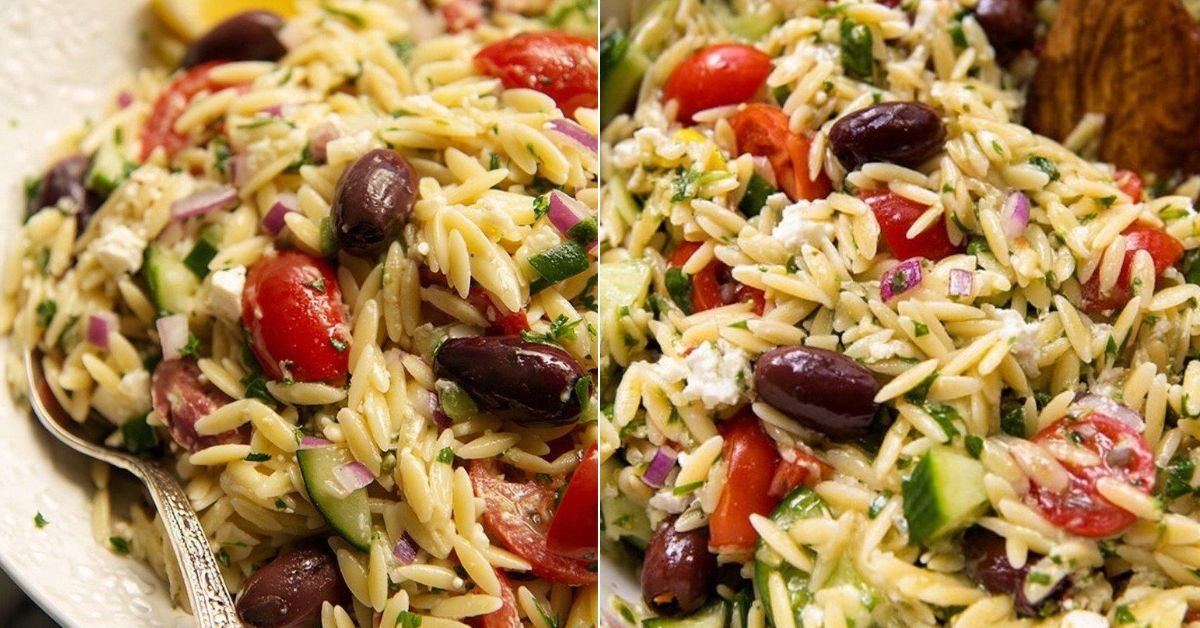
1) What Makes This Greek Orzo Pasta Salad Worth Saving
Flat pasta salad usually happens when the dressing sits on the outside instead of flavoring every bite. I’m Denise, and after testing this greek orzo pasta salad through a few watery, under-seasoned batches, I discovered the fix was marinating the tomatoes, feta, olives, onion, garlic, herbs, oil, and vinegar before adding the cooled orzo. That one adjustment made the salad brighter, less oily, and much more balanced. It reminds me of calm summer dinners where the side dish can sit on the table, still taste fresh, and make the whole meal feel effortless.
Table of Contents
- 1) What Makes This Greek Orzo Pasta Salad Worth Saving
- 2) Key Takeaways
- 3) Easy Greek Orzo Pasta Salad Recipe
- 4) Why Most Greek Orzo Pasta Salad Recipes Fail
- 5) Ingredients for Greek Orzo Pasta Salad
- 6) How to Make Greek Orzo Pasta Salad
- 7) Recipe Card: Greek Orzo Pasta Salad
- 8) Tips for Making Greek Orzo Pasta Salad
- 9) Common Mistakes & Fixes
- 10) How to Tell Greek Orzo Pasta Salad Has the Right Texture
- 11) Professional Secrets Behind Better Greek Orzo Pasta Salad
- 12) Best Dishes or Pairings to Serve With Greek Orzo Pasta Salad
- 13) Making Greek Orzo Pasta Salad Ahead of Time
- 14) Storing Leftover Greek Orzo Pasta Salad
- 15) FAQ (Real Cooking Questions)
- 16) Save This Greek Orzo Pasta Salad Recipe
- 17) Conclusion
- 18) Nutrition
2) Key Takeaways
- Marinating the tomatoes, feta, olives, onion, garlic, herbs, oil, and vinegar first gives this salad deeper flavor before the orzo is added.
- Cold-rinsed orzo must be drained very well, or the extra water will thin the dressing and make the salad taste flat.
- The final lemon, salt, and pepper adjustment matters because chilled pasta naturally dulls acidity and seasoning.
- Cucumber and green pepper should be added after the orzo cools so they stay crisp instead of softening in warm pasta.
3) Easy Greek Orzo Pasta Salad Recipe
This greek orzo pasta salad works because it treats the dressing like a quick marinade instead of something poured over pasta at the last second. The olive oil carries the parsley, oregano, garlic, and onion flavor, while the red wine vinegar pulls juice from the tomatoes and softens the sharper edges of the onion. By the time the orzo is cooked, rinsed cold, and drained, the bowl already has a seasoned base waiting for it.
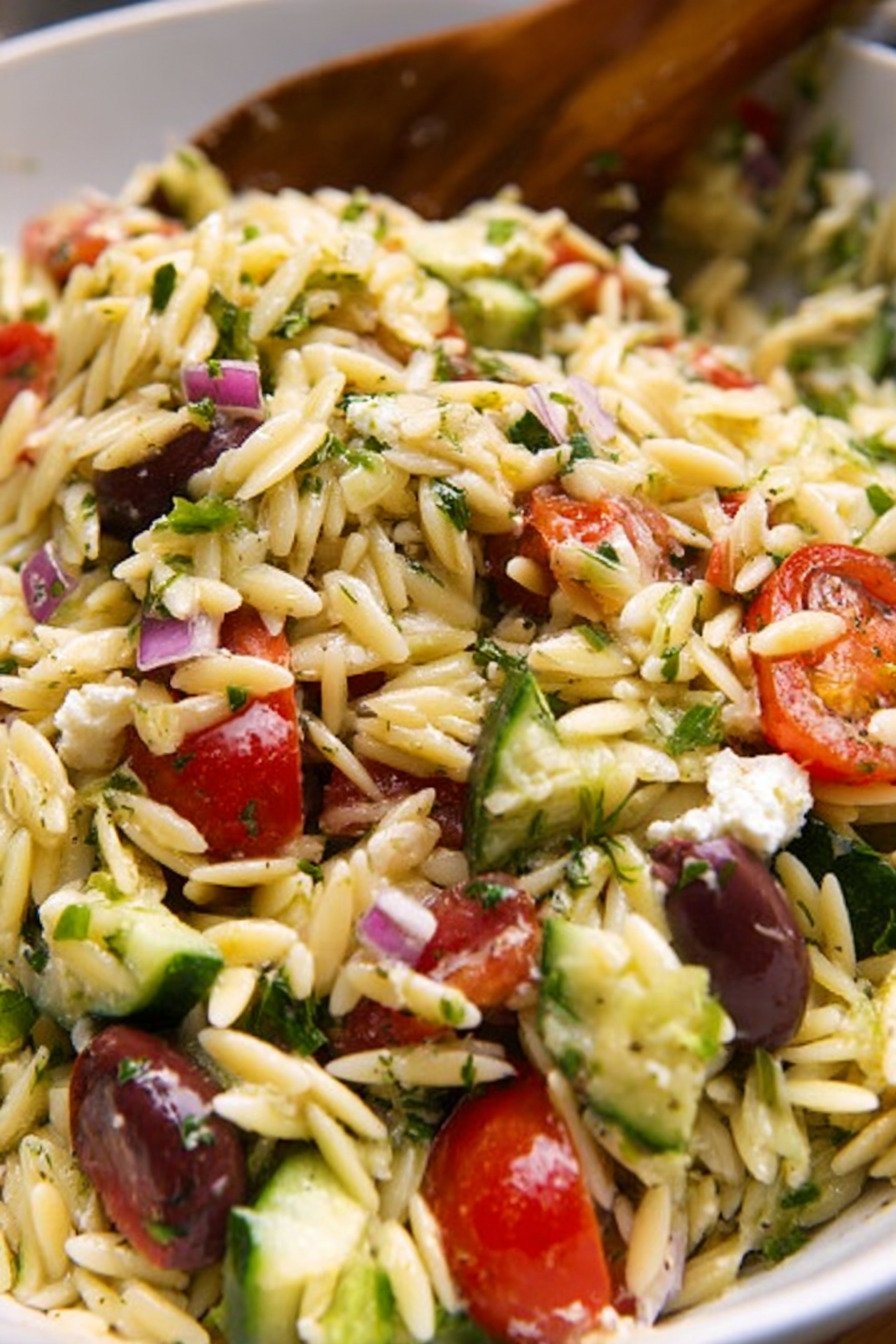
The goal is a chilled orzo salad that tastes bright, briny, and fresh, not heavy or greasy. The feta should stay in distinct little creamy bites, the olives should add saltiness without dominating, and the cucumber and green pepper should give a clean crunch. This is why the order matters: marinate first, cool the pasta completely, then finish with lemon and seasoning.
4) Why Most Greek Orzo Pasta Salad Recipes Fail
Most greek orzo pasta salad problems come from moisture, timing, and seasoning. The first common failure is watery pasta. Orzo is small, so it holds rinse water easily; if it is not shaken and drained well, that water weakens the oil and vinegar dressing. The salad may look glossy at first, but it tastes thin after a few minutes.
The second issue is bland flavor. Pasta absorbs seasoning unevenly when the dressing has no time to develop. Marinating the tomatoes, feta, olives, onion, garlic, parsley, oregano, oil, and vinegar first lets the acidic and salty ingredients season each other before the orzo joins the bowl.
The third issue is harsh onion or garlic. Very finely dicing both helps them blend into the dressing instead of hitting in sharp chunks. The vinegar also gently tames the onion during the marinating time.
The fourth issue is soft vegetables. If warm orzo is added, cucumber loses its snap and feta can smear into the salad. Rinsing the orzo until completely cool protects the fresh texture. The final issue is under-seasoning at the end. Lemon, salt, and pepper are not just garnish here; they are the final layer that makes the whole salad taste awake.
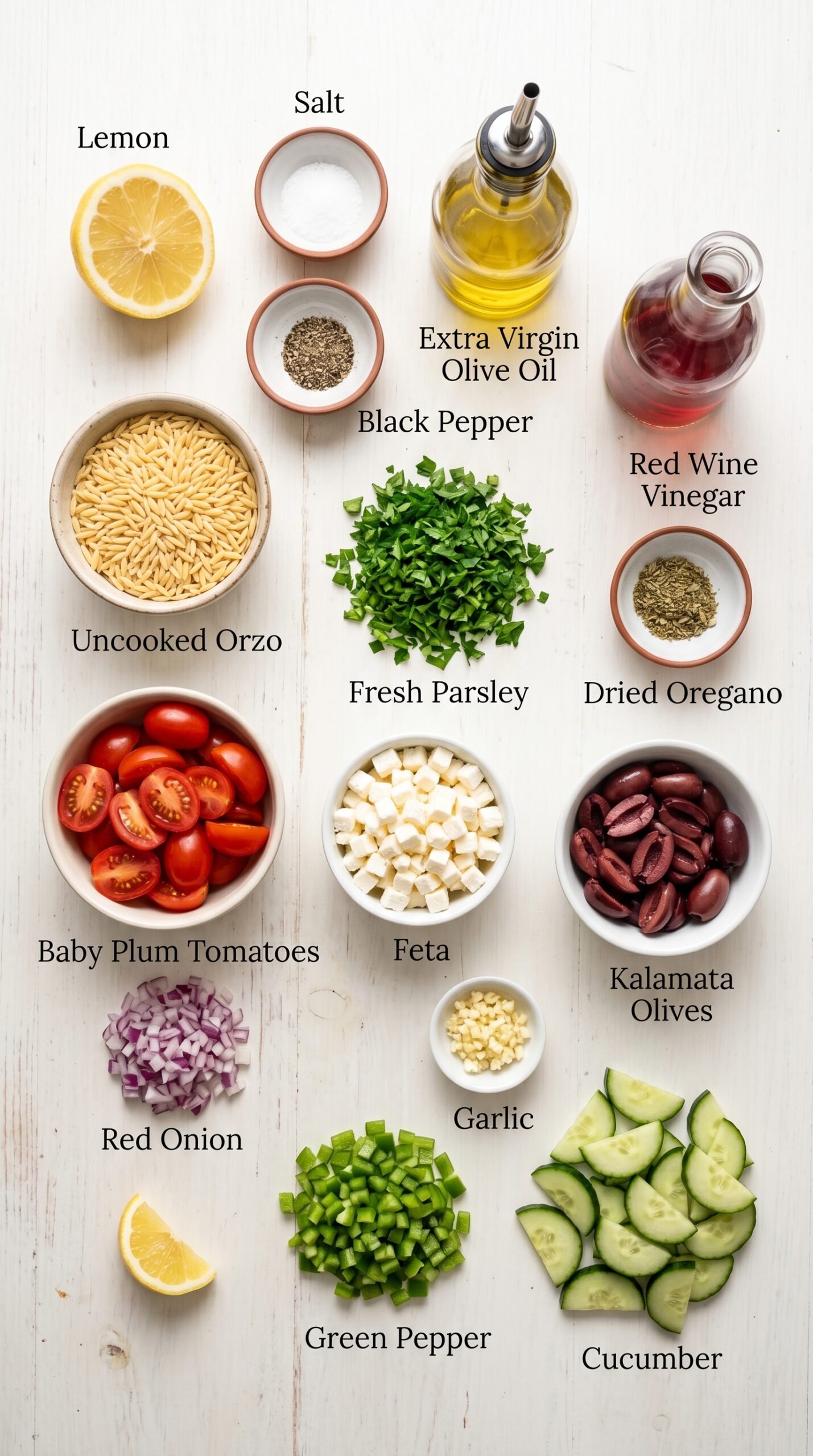
5) Ingredients for Greek Orzo Pasta Salad
Extra virgin olive oil: This forms the body of the dressing and carries the oregano, parsley, garlic, and onion flavor through the orzo. Use it at the start so the marinated vegetables have time to season the oil. A very bitter oil can make the salad taste heavy, so choose one that tastes fruity and clean.
Red wine vinegar: This gives the salad its tang and helps balance the rich feta and olives. It also softens the raw edge of the red onion while the mixture rests. If you reduce it too much, the salad can taste oily rather than bright.
Fresh parsley and dried oregano: Parsley brings freshness while oregano gives the salad its familiar Greek-style aroma. Add them directly to the dressing so they hydrate and release flavor. If the herbs sit only on top at the end, the flavor will taste scattered instead of built into the salad.
Salt and black pepper: These season the dressing first and then get adjusted at the end. Cold orzo can mute seasoning, so the first amount starts the flavor and the final taste check finishes it. Skipping the final adjustment is one reason cold orzo salad recipes taste flat.
Baby plum tomatoes: Halved tomatoes release juice into the dressing while they marinate. That tomato juice blends with the oil, vinegar, herbs, and feta, giving the orzo more flavor later. Whole tomatoes would not season the dressing as effectively.
Feta: Tiny cubes give salty, creamy pockets throughout the salad. Add it before marinating so it lightly seasons the dressing, but stir gently so it does not break down too much. A very soft feta may make the salad cloudier, while a firmer feta keeps cleaner cubes.
Kalamata olives: These bring briny depth and make the salad taste more savory. Halving them spreads their flavor more evenly. If you substitute a milder olive, the salad may need extra salt or lemon to regain balance.
Red onion and garlic: Both should be very finely diced so they season the dressing instead of creating harsh bites. Use them in the marinade stage, not at the end. Larger pieces can overpower the cucumber, tomato, and feta.
Orzo: Orzo gives this greek orzo salad recipe its tender pasta base. Cook it in salted boiling water, rinse it cold, and drain it aggressively. If it is overcooked, it can turn soft and heavy once mixed with the dressing.
Green pepper and cucumber: These are added after the orzo cools because their job is crunch and freshness. If they sit too long in warm pasta, they lose their clean bite. Thin cucumber quarter pieces distribute better than large chunks.
Lemon: Lemon is the final brightness check. Add it after everything is mixed, then taste. More lemon can refresh the salad after chilling, but too much can overpower the feta and vinegar, so add gradually.
- Orzo vs larger pasta: Orzo gives small, spoonable bites and catches herbs well; larger pasta shapes need more dressing and can make the salad feel less delicate.
- Warm orzo vs cold orzo: Warm orzo absorbs quickly but softens fresh vegetables; fully cooled orzo keeps the cucumber crisp and the feta cleaner.
- Marinated vegetables vs last-minute mixing: Marinating first creates deeper dressing flavor, while last-minute mixing often leaves oil, vinegar, and pasta tasting separate.
- Fresh lemon vs extra vinegar: Lemon brightens the finish, while too much vinegar can make the salad sharper without adding the same fresh aroma.
6) How to Make Greek Orzo Pasta Salad
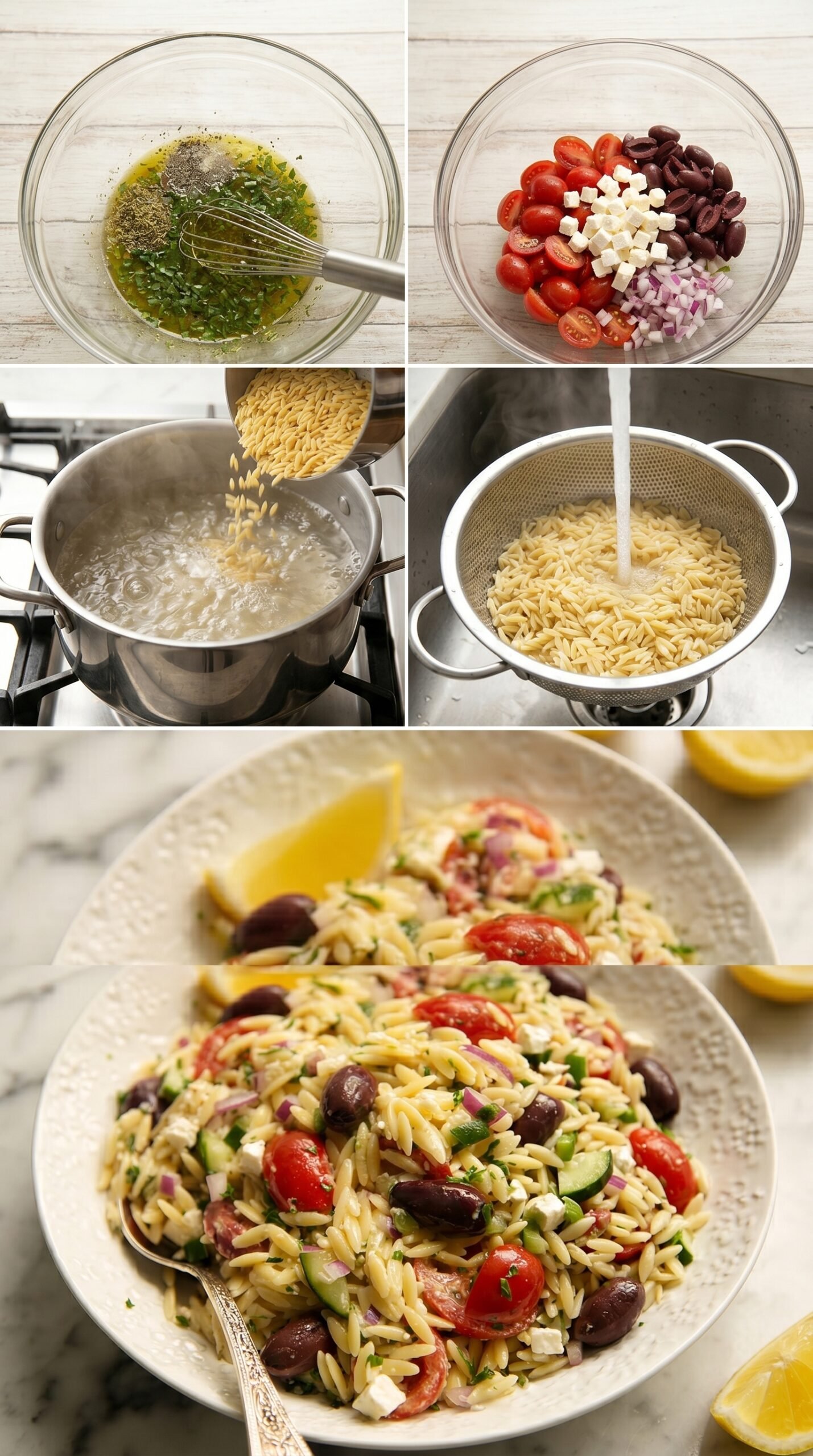
Step 1: Start by whisking the extra virgin olive oil, red wine vinegar, parsley, oregano, salt, and black pepper in a large salad bowl. The dressing should look evenly speckled with herbs, not separated into dry clumps of oregano.
Step 2: Stir in the halved tomatoes, feta cubes, Kalamata olives, finely diced red onion, and finely diced garlic. Let this mixture marinate for at least an hour if possible. During this time, the tomatoes release juice, the onion softens, and the feta seasons the dressing.
Step 3: Cook the orzo in salted boiling water according to the package directions. Aim for tender orzo that still holds its shape. Overcooked orzo can break and make the finished salad feel heavy.
Step 4: Drain the orzo and rinse it under cold water until it is completely cool. Shake the colander well to remove trapped water. This is one of the most important steps because excess water weakens the dressing and dulls the flavor.
Step 5: Add the cooled orzo to the marinated mixture, then stir in the green pepper and cucumber. Finish with the juice of half a lemon, taste, and adjust with more salt, pepper, or lemon if needed. Stop mixing once everything is evenly coated so the feta stays in small pieces.
7) Recipe Card: Greek Orzo Pasta Salad
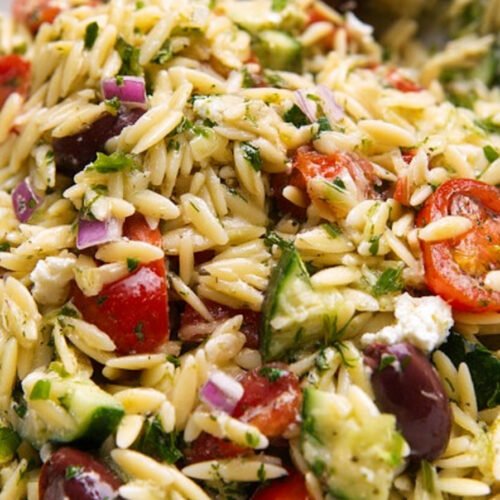
Greek Orzo Pasta Salad with Feta, Olives, and Lemon
Ingredients
- 80ml / 1/3 cup Extra Virgin Olive Oil, using a fruity oil for the cleanest dressing flavor
- 3 tbsp Red Wine Vinegar, for sharpness that balances the feta and olives
- 1 small bunch Fresh Parsley, finely diced (1oz/30g), chopped small so it spreads through the dressing
- 1 heaped tsp Dried Oregano, rubbed lightly between your fingers to wake up the aroma
- 1/4 tsp EACH: Salt, Black Pepper, plus more to taste if desired, added in layers for better balance
- 150g / 5.3oz Baby Plum Tomatoes, halved, so their juices can mingle with the dressing
- 100g / 3.5oz Feta, sliced into tiny cubes, for salty creamy bites throughout the salad
- 100g / 3.5oz Kalamata Olives, halved, to bring briny depth without overpowering the orzo
- 3 tbsp very finely diced Red Onion (1/2 small/medium onion), cut small to avoid harsh bites
- 1 small clove of Garlic, very finely diced, so the flavor infuses the dressing evenly
- 300g / 1 1/2 cups uncooked Orzo, cooked until just tender and cooled well
- 75g / 2.6oz Green Pepper, finely diced, for crisp freshness
- 75g / 2.6oz Cucumber, sliced into thin quarter pieces, added after cooling to keep it crunchy
- 1/2 Lemon, plus more to taste, for the final bright seasoning layer
Instructions
- In a large mixing or salad bowl, whisk together the extra virgin olive oil, red wine vinegar, parsley, dried oregano, salt, and black pepper until the dressing looks evenly combined. Add the tomatoes, feta, olives, red onion, and garlic, then stir gently so everything is coated. Let the mixture marinate for at least 1 hour if possible; keep it at room temperature for that short time, or cover and refrigerate for longer, up to overnight. Stir occasionally so the tomato juices, feta, herbs, and dressing combine evenly.
- Cook the orzo in well-salted boiling water according to the package instructions, aiming for tender but not mushy pasta. Drain, then rinse under cold water until completely cool. Shake the colander very well to remove excess water, because trapped water can make the salad taste thin. Add the cooled orzo to the marinated mixture, then stir in the finely diced green pepper and sliced cucumber.
- Squeeze in the juice of half a lemon, stir thoroughly, then taste the salad before serving. Adjust with more salt, black pepper, or lemon juice as needed; this final seasoning is what makes the herbs, feta, olives, and vegetables taste bright instead of muted.
8) Tips for Making Greek Orzo Pasta Salad
The step most cooks skip is the resting time before the pasta goes in. Even 30 minutes helps, but an hour gives the dressing more character. If you have time, stir the marinating mixture once or twice so the tomato juice, vinegar, oil, herbs, and feta redistribute through the bowl.
Salt the boiling water for the orzo because pasta needs seasoning from the inside. The dressing seasons the outside, but the pasta itself will taste dull if cooked in plain water. This small detail makes a noticeable difference in an orzo pasta salad greek style dish.
Do not rely only on measuring spoons for the final flavor. The saltiness of feta and olives can vary, and cold pasta can make acidity taste softer. Taste after the lemon goes in, then decide whether the salad needs more salt, pepper, or another squeeze of lemon.
If making this for a picnic or packed lunch, keep the salad chilled until serving. The texture is best when the cucumber stays crisp and the dressing remains bright rather than warm and oily.
9) Common Mistakes & Fixes
Problem: The salad tastes watery. Cause: The orzo was rinsed but not drained well enough. Fix: Shake the colander firmly and let the orzo sit for a minute before adding it to the bowl.
Problem: The onion tastes too sharp. Cause: The onion pieces were too large or did not marinate long enough. Fix: Dice the onion very finely and let it sit in the vinegar and oil mixture before adding the pasta.
Problem: The salad tastes bland after chilling. Cause: Cold pasta mutes salt and acidity. Fix: Refresh it with a small squeeze of lemon, a pinch of salt, and a little black pepper before serving.
Problem: The cucumber feels soft. Cause: It was mixed with warm orzo or stored too long in the dressed salad. Fix: Cool the orzo completely and add the cucumber near the final mixing stage.
Problem: The feta disappears into the dressing. Cause: The salad was stirred too aggressively or the feta was very soft. Fix: Use tiny cubes and fold gently once the orzo is added.
10) How to Tell Greek Orzo Pasta Salad Has the Right Texture
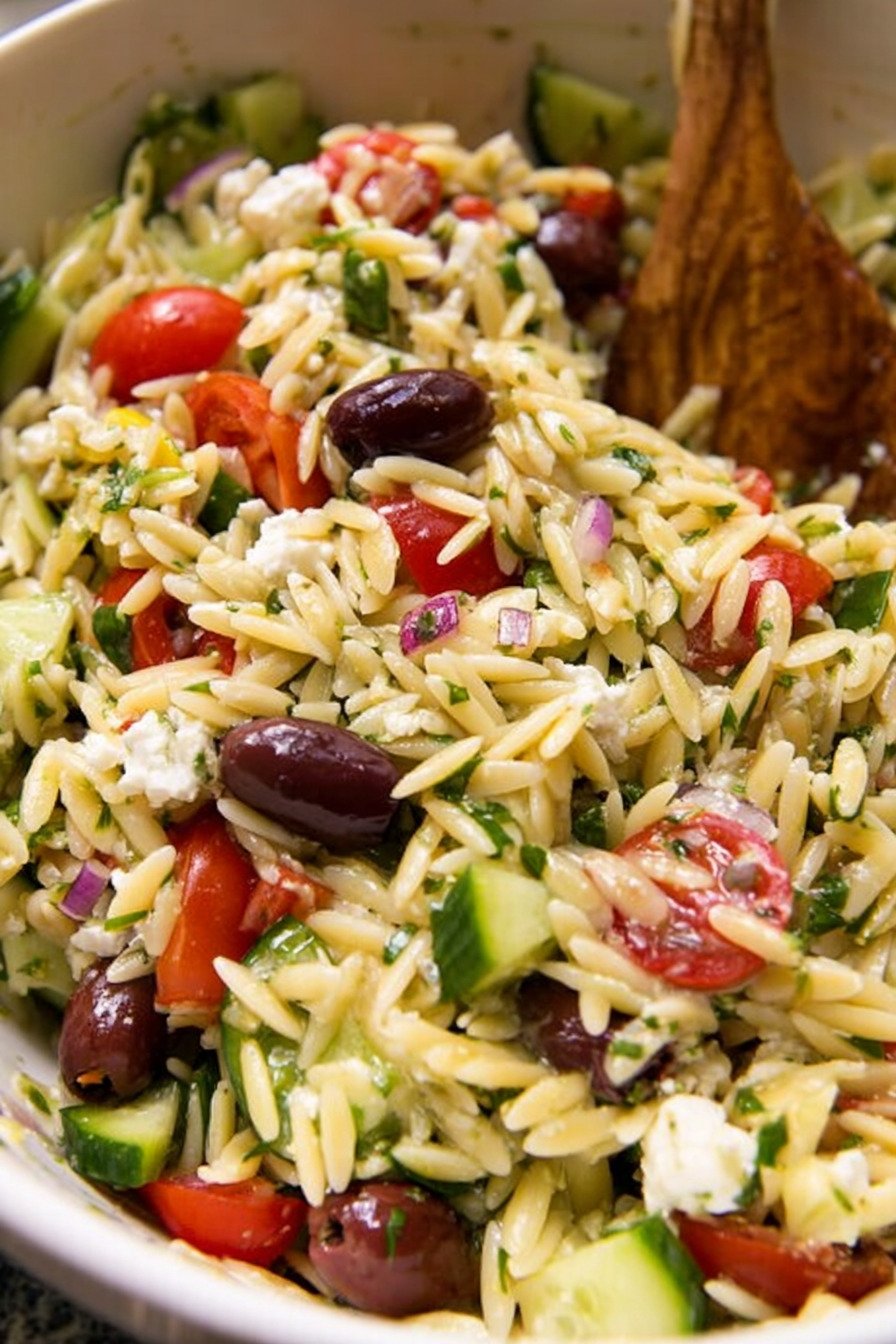
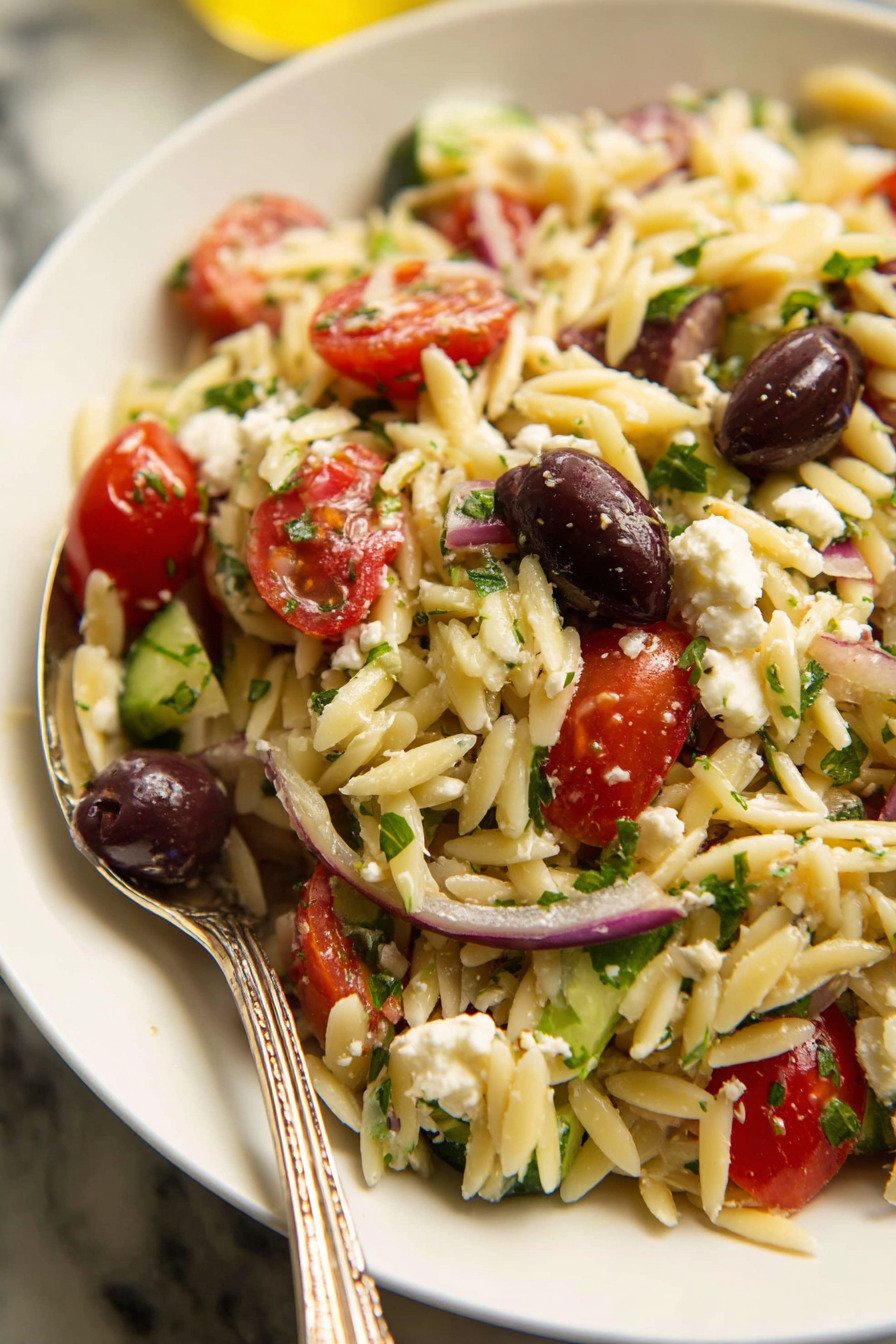
Greek orzo pasta salad has the right texture when the orzo is tender but still separate, the cucumber and green pepper are crisp, and the dressing lightly coats everything without pooling at the bottom of the bowl. The feta should appear as small creamy cubes rather than a paste, and the tomatoes should look juicy but not collapsed.
The aroma should be fresh and herbal, with oregano, parsley, lemon, olive oil, and a gentle garlic note. The flavor should move from tangy to salty to bright, not oily or harsh. Failure signs include watery liquid under the pasta, mushy orzo, sharp raw onion bites, dull flavor, or a greasy finish that means the salad needs more acid or seasoning.
11) Professional Secrets Behind Better Greek Orzo Pasta Salad
The best professional-style trick for this kind of salad is building flavor before the starch arrives. When tomatoes, feta, olives, onion, garlic, herbs, oil, and vinegar sit together, they create a more complex dressing than oil and vinegar alone. That makes the final salad taste intentional rather than tossed together.
Another useful technique is controlling water at every stage. Pasta salad often fails because cooks treat rinsing as the final step, but draining after rinsing matters just as much. Orzo is small and slippery, so it traps moisture. Removing that water keeps the dressing clean and helps the lemon, salt, pepper, and herbs stay noticeable.
Finally, fold instead of stirring hard. Once the orzo, feta, cucumber, and tomato are in the bowl together, heavy mixing breaks the creamy and juicy elements. Gentle folding keeps the salad visually fresh and gives every spoonful better contrast.
12) Best Dishes or Pairings to Serve With Greek Orzo Pasta Salad
This greek orzo pasta salad works well with grilled chicken, lemony fish, shrimp skewers, lamb burgers, falafel, pita, hummus, roasted vegetables, or simple grilled halloumi. It also makes a strong lunch bowl with extra greens or chickpeas added on the side.
For a summer table, serve it beside grilled meats and a crisp green salad. For meal prep, pair it with protein that does not need a heavy sauce, because the orzo already brings acidity, herbs, saltiness, and freshness. For potlucks, keep it chilled and give it one final stir before serving so the dressing redistributes.
13) Making Greek Orzo Pasta Salad Ahead of Time
This is a practical make-ahead salad, but the timing changes the texture. The marinated tomato, feta, olive, onion, garlic, herb, oil, and vinegar mixture can be made several hours ahead or covered and refrigerated overnight. That step improves the dressing and makes the final assembly faster.
For the freshest texture, cook and cool the orzo the same day you plan to serve it, then mix in the cucumber and green pepper near the end. If the whole salad is made ahead, taste it before serving and refresh with lemon, salt, and pepper. This is especially helpful for anyone learning how to make greek orzo salad that still tastes bright after chilling.
14) Storing Leftover Greek Orzo Pasta Salad
Store leftover greek orzo pasta salad in an airtight container in the refrigerator for 2 to 3 days. The flavor may deepen as it sits, but the cucumber will gradually lose some crunch. Stir before serving because the dressing can settle at the bottom.
Freezing is not recommended for this salad. The cucumber, tomato, feta, and cooked orzo will lose their clean texture after thawing. To revive leftovers, add a small squeeze of lemon and a light drizzle of olive oil only if the pasta seems dry. Taste before adding salt because feta and olives continue seasoning the salad as it rests.
15) FAQ (Real Cooking Questions)
Can I make this greek orzo pasta salad the night before? Yes, but for the best texture, marinate the tomato, feta, olive, onion, garlic, herb, oil, and vinegar mixture ahead, then add the cooled orzo, cucumber, green pepper, and lemon closer to serving.
Should orzo be rinsed for pasta salad? Yes. For cold pasta salad, rinsing stops the cooking and cools the orzo quickly. The important detail is draining it very well afterward so the dressing does not become watery.
Why does my orzo cold salad taste bland after chilling? Cold pasta dulls salt and acidity. Taste the salad after it has chilled, then adjust with lemon, salt, and black pepper. A small final adjustment often makes the herbs, feta, and olives taste clearer.
Can I use another pasta shape instead of orzo? You can use a small pasta shape, but the texture will change. Orzo gives a spoonable, delicate salad. Larger shapes may need more dressing and longer tossing to distribute the feta, herbs, and vegetables evenly.
How do I keep the feta from breaking apart? Cut it into tiny cubes and fold the salad gently once the orzo is added. Very soft feta will naturally blend more into the dressing, while firmer feta keeps more defined pieces.
16) Save This Greek Orzo Pasta Salad Recipe
If this Greek Orzo Pasta Salad helped you solve bland or watery pasta salad, save it for summer dinners, potlucks, meal prep, or picnic sides. The key reminder is: marinate the vegetables and feta first, then add fully cooled, well-drained orzo for brighter flavor and better texture.
17) Conclusion
A good greek orzo pasta salad is not just about tossing pasta with vegetables. The difference comes from building flavor in the bowl before the orzo arrives, cooling and draining the pasta properly, and finishing with lemon, salt, and pepper only after everything is mixed. Once you understand those checkpoints, the salad becomes much easier to control. Instead of watery, dull, or oily pasta salad, you get a fresh bowl with briny olives, creamy feta, crisp vegetables, bright herbs, and a dressing that tastes balanced from the first bite to the last.
18) Nutrition
Serving Size 1 portion Calories 365 Sugar 4 g Sodium 540 mg Fat 22 g Saturated Fat 5 g Carbohydrates 34 g Fiber 3 g Protein 9 g Cholesterol 15 mg



Leave a Comment